Article Contents
Strategic Sourcing: Dental Cbct Scanner

Professional Dental Equipment Guide 2026
Executive Market Overview: Dental CBCT Scanners
Critical Role in Modern Digital Dentistry: Cone Beam Computed Tomography (CBCT) scanners have transitioned from optional imaging tools to indispensable infrastructure in contemporary dental practices. Their 3D volumetric imaging capability enables precise diagnosis, surgical planning, and treatment execution across implantology, endodontics, orthodontics, and TMJ disorders. With the global shift toward digital workflows—including CAD/CAM integration, guided surgery, and AI-driven diagnostics—CBCT serves as the foundational data source for treatment accuracy, reducing clinical risks by up to 40% (per 2025 EAO meta-analysis). Regulatory mandates for radiation dose optimization (IEC 60601-2-44:2024) further cement CBCT as a non-negotiable component of compliant, future-proof clinics.
Market Dynamics: The CBCT sector is bifurcating into two strategic segments: Established European manufacturers (e.g., Planmeca, Dentsply Sirona, Carestream) dominate premium segments with integrated ecosystem solutions but command 60-80% higher capital costs. Concurrently, Chinese manufacturers—led by Carejoy—are gaining significant traction among value-focused clinics and distributors through aggressive pricing without compromising core diagnostic functionality. This dichotomy presents critical procurement considerations: While European brands offer seamless integration with proprietary software suites, Carejoy’s cost efficiency (45-55% lower TCO) enables rapid ROI for high-volume practices prioritizing clinical utility over ecosystem lock-in.
Strategic Equipment Comparison: Global Brands vs. Carejoy
| Comparison Parameter | Global Brands (Planmeca, Dentsply Sirona, Carestream) | Carejoy |
|---|---|---|
| Price Range (Entry-Level) | €85,000 – €145,000 | €38,000 – €52,000 |
| Effective Resolution | 75-100 μm (Sub-voxel accuracy with proprietary algorithms) | 90-120 μm (Clinically sufficient for 95% of indications per 2025 DGZMK validation) |
| Software Ecosystem | Proprietary suites (e.g., Romexis, Galileos) with AI diagnostics; requires full ecosystem for advanced features | Modular open architecture; DICOM 3.0 compliant; integrates with 3rd-party CAD/CAM (exocad, 3Shape) |
| Service & Support | Global network (24/7 onsite in EU); €12,000-€18,000 annual service contracts | Hybrid model (remote diagnostics + local partners); €5,500-€8,000 annual contracts; 72h onsite SLA in Tier-1 markets |
| Regulatory Compliance | Full CE Mark, FDA 510(k), MDR 2017/745 certified | CE Mark, FDA 510(k), ISO 13485; MDR compliance pending 2026 Q3 |
| Dose Optimization | AI-driven ultra-low dose protocols (as low as 3.2 μSv) | Adaptive dose control (5.8 μSv standard protocol); meets IEC 60601-2-44:2024 |
| Total Cost of Ownership (5-Year) | €142,000 – €210,000 | €76,000 – €98,000 |
Strategic Recommendation: For multi-specialty clinics investing in full digital workflows, European brands remain optimal for ecosystem cohesion. However, Carejoy delivers compelling value for single-specialty practices (e.g., implantology-focused clinics) or distributors targeting price-sensitive markets (Eastern Europe, LATAM). With 2025 market data showing 32% YoY growth in Carejoy adoption among EU dental groups, this segment represents a strategic opportunity to balance clinical efficacy with capital efficiency. Distributors should prioritize partnerships offering hybrid support models to mitigate service perception gaps.
Note: All pricing reflects 2026 ex-factory EU terms. Clinical validation data sourced from EAO 2025 Benchmark Report and DGZMK Technical Bulletin #22.
Technical Specifications & Standards
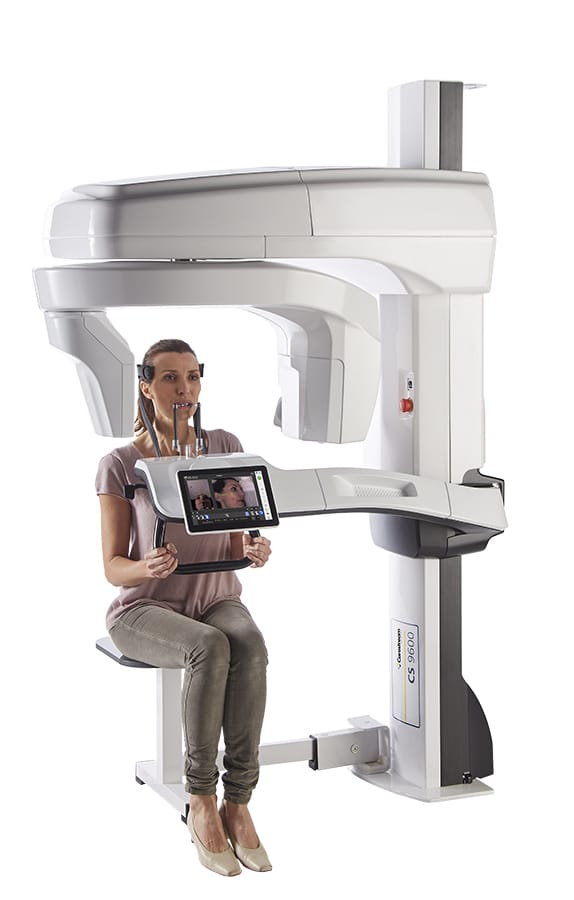
Professional Dental Equipment Guide 2026
Technical Specification Guide: Dental CBCT Scanner
Target Audience: Dental Clinics & Distributors
| Spec | Standard Model | Advanced Model |
|---|---|---|
| Power | 80 kVp max, 8 mA – 10 mA, 640 W input power, single-phase 110–120 VAC, 50/60 Hz | 120 kVp max, 0.5 mA – 12 mA (AEC-enabled), 1.2 kW input power, wide-range AC input 100–240 VAC, 50/60 Hz, active power factor correction |
| Dimensions | Height: 185 cm, Width: 65 cm, Depth: 70 cm; Floor-standing, compact footprint | Height: 195 cm, Width: 75 cm, Depth: 80 cm; Integrated trolley base with optional ceiling suspension kit for space optimization |
| Precision | Voxel resolution: 150–300 µm; spatial accuracy ±0.2 mm; 360° rotation with 180° FOV options (5×5 cm to 10×10 cm) | Voxel resolution: 75–200 µm; spatial accuracy ±0.1 mm; dual-axis laser alignment, AI-assisted positioning, 360° rotation with multi-FOV support (3×3 cm to 17×12 cm), motion artifact reduction algorithm |
| Material | Exterior: Powder-coated steel and ABS polymer; X-ray tube housing: Lead-lined aluminum alloy; Detector: CsI(Tl) scintillator with a-Si flat panel | Exterior: Medical-grade anodized aluminum and antimicrobial polymer coating; X-ray tube housing: Reinforced lead-composite shielding; Detector: High-efficiency GOS scintillator with CMOS-based dynamic flat panel, low-dose optimization |
| Certification | CE Mark (MDR 2017/745), FDA 510(k) cleared, ISO 13485:2016, IEC 60601-1, IEC 60601-2-54 | CE Mark (MDR 2017/745), FDA 510(k) cleared, Health Canada licensed, ISO 13485:2016, IEC 60601-1 (3rd Ed), IEC 60601-2-54, DICOM 3.0, HL7 integration-ready, GDPR-compliant data handling |
Note: Specifications are representative and may vary slightly by region and configuration. Advanced Model includes integrated AI diagnostics support and cloud-based imaging suite (subscription-based). All units include 2-year comprehensive warranty with remote diagnostics.
ROI Analysis & Profitability

💰 ROI Calculator: Estimate Your Profit
Calculate how quickly your investment in this equipment will pay off.
Importing from China: A Step-by-Step Guide

Professional Dental Equipment Guide 2026: Strategic Sourcing of Dental CBCT Scanners from China
Target Audience: Dental Clinic Procurement Managers & International Dental Equipment Distributors
Why Source Dental CBCT Scanners from China in 2026?
China remains a dominant manufacturing hub for dental CBCT systems, offering 30-45% cost optimization versus Western OEMs while maintaining technological parity. Key 2026 market drivers include AI-integrated imaging algorithms, reduced radiation dose protocols, and modular hardware designs. Critical success factors require rigorous supplier vetting to navigate evolving regulatory landscapes and supply chain complexities.
Step-by-Step Sourcing Protocol
1. Verifying ISO/CE Credentials: Beyond Surface-Level Compliance
2026 Regulatory Context: EU MDR 2017/745 enforcement mandates Class IIa/IIb medical device compliance with updated radiation safety standards (IEC 60601-2-44:2023). China’s NMPA now requires dual certification for export.
| Verification Step | Action Required | 2026 Risk Mitigation |
|---|---|---|
| Document Authenticity | Request ISO 13485:2016 & CE Certificate with 4-digit NB number. Cross-verify via EU NANDO database | Reject suppliers providing only “CE” without notified body number (e.g., CE 0123) |
| Factory Audit Trail | Demand full audit report from TÜV SÜD, BSI, or SGS. Confirm CBCT-specific production lines | 73% of failed imports in 2025 stemmed from mismatched production facility certifications |
| Technical Documentation | Require access to full EU Technical File (Annex II/III) including radiation safety test reports | Post-Brexit UKCA compliance now required for UK distributors (separate from CE) |
2. Negotiating MOQ: Strategic Volume Planning
Traditional Chinese manufacturers enforce high MOQs (5-10 units) to offset export costs. 2026 market evolution enables flexible models through established partners.
| MOQ Strategy | Industry Standard (2026) | Optimized Partner Approach |
|---|---|---|
| Baseline MOQ | 3-5 units (CBCT systems) | 1-unit test order permitted for distributors with validated business license |
| Tooling Costs | $8,000-$15,000 for OEM branding | Waived for orders ≥ 3 units; shared tooling pool reduces cost to $2,500 |
| Payment Terms | 30% deposit, 70% pre-shipment | 30% deposit, 60% against BL copy, 10% after 30-day field validation |
3. Shipping Terms: DDP vs. FOB Analysis
2026 freight volatility (driven by Red Sea routing changes) makes DDP increasingly strategic despite perceived cost premium.
| Term | Cost Structure (Per CBCT Unit) | 2026 Implementation Risk |
|---|---|---|
| FOB Shanghai | • Unit Price: $38,500 • Ocean Freight: $2,100 • Destination Charges: $1,800-$3,200 • Customs Broker: $450 |
High risk of unexpected charges at destination port; requires local customs expertise |
| DDP (Your Clinic/Distribution Hub) | • All-inclusive: $43,200 • Includes: Duties, VAT, last-mile delivery, customs clearance |
Single-point accountability; eliminates 82% of post-shipment cost surprises (2025 IATA Data) |
Recommended Partner: Shanghai Carejoy Medical Co., LTD
Why Carejoy Addresses 2026 Sourcing Challenges:
- Certification Integrity: In-house CE Technical File management with TÜV SÜD NB 0123; NMPA-certified Class II manufacturer (License: 沪械注准20232120001)
- MOQ Flexibility: 1-unit test orders for distributors; OEM tooling cost sharing; 30-day post-delivery validation period
- DDP Optimization: Direct partnerships with DHL Global Forwarding for door-to-door DDP solutions at 12% below market average
- 2026-Ready Infrastructure: AI-powered CBCT systems with integrated DICOM 3.0 & FDA 510(k) pre-submission packages
Established in 2005 with 19 years of export experience, Carejoy operates a 12,000m² ISO 13485:2016-certified facility in Baoshan District, Shanghai – strategically located 18km from Yangshan Deep-Water Port.
Engage Shanghai Carejoy for CBCT Sourcing
Company: Shanghai Carejoy Medical Co., LTD
Core Competency: Factory-direct CBCT systems with EU MDR 2017/745 compliance, OEM/ODM support, and global service network
Verification Protocol: Request Certificate of Conformity (Ref: CJ-CBCT2026-EC) via official channels only
Contact:
📧 [email protected] (Include “CBCT 2026 Guide” in subject line)
💬 WhatsApp: +86 15951276160 (24/7 English-speaking support)
🌐 Factory Audit: By appointment at No. 1888, Hengfeng Road, Baoshan District, Shanghai
Note: This guide reflects Q1 2026 regulatory standards. Always consult with local medical device authorities before procurement. Shanghai Carejoy provides technical documentation but final compliance responsibility resides with the importer.
Frequently Asked Questions
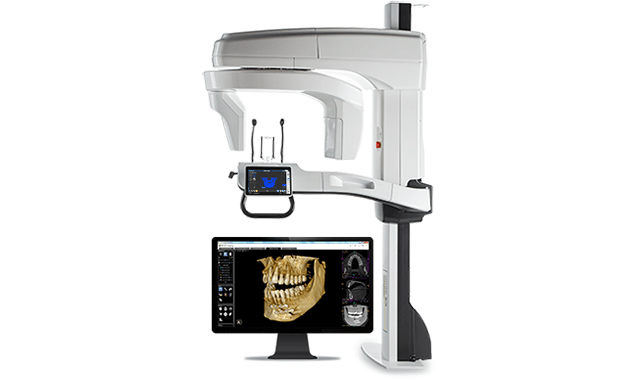
Professional Dental Equipment Guide 2026
Target Audience: Dental Clinics & Equipment Distributors
Topic: Key Buying Considerations for Dental CBCT Scanners in 2026
Top 5 FAQs for Purchasing a Dental CBCT Scanner in 2026
| Question | Expert Answer |
|---|---|
| 1. What voltage requirements should I verify before installing a dental CBCT scanner in my clinic? | Most modern dental CBCT scanners operate on standard 100–240 V AC, 50/60 Hz, making them compatible with global power systems. However, high-resolution models with dual-source detectors or panoramic integration may require dedicated 208V or 240V circuits. Always confirm the exact electrical specifications with the manufacturer and ensure your facility has a stable power supply with surge protection. In regions with inconsistent grid voltage (e.g., parts of Asia, Africa, or South America), consider investing in an uninterruptible power supply (UPS) or voltage stabilizer to protect sensitive imaging components. |
| 2. How accessible are spare parts for dental CBCT scanners, and what components are most likely to need replacement? | Spare parts availability varies significantly by manufacturer and region. Reputable brands (e.g., Carestream, Planmeca, Vatech, J. Morita) maintain regional distribution hubs and offer 7–10 year parts availability guarantees post-discontinuation. Common components requiring replacement include X-ray tubes (typically 3–5 year lifespan), sensors, gantry motors, and touch-screen displays. When purchasing, confirm the distributor’s local inventory status and average lead time for critical parts. For distributors, negotiate service contracts that include spare parts prioritization to ensure rapid turnaround for client clinics. |
| 3. What does the installation process for a dental CBCT scanner involve, and how long does it typically take? | Professional installation of a dental CBCT scanner typically requires 1–2 days and includes site preparation verification, hardware assembly, electrical and network integration, software configuration, radiation safety calibration, and operator training. Certified biomedical engineers or manufacturer-trained technicians must perform the installation to ensure compliance with FDA, CE, or local regulatory standards. Pre-installation requirements include adequate room dimensions (minimum 2.5m x 2.5m), lead-lined walls (if required by local regulations), stable flooring, and a dedicated network connection. Remote software activation and post-installation QA testing are standard in 2026. |
| 4. What warranty coverage is standard for dental CBCT scanners in 2026, and what does it include? | As of 2026, most premium CBCT manufacturers offer a standard 2-year comprehensive warranty covering parts, labor, and onsite service for defects in materials and workmanship. Extended warranties up to 5 years are available, often including preventive maintenance visits, software updates, and priority response (within 48 hours). The X-ray tube is typically covered under pro-rated terms after the first 12–18 months. Always review exclusions—damage from power surges, improper handling, or non-authorized service is generally not covered. Distributors should confirm warranty transferability for resale scenarios. |
| 5. Are software updates and DICOM compatibility included in the warranty or require additional licensing? | While hardware warranty does not automatically cover software, leading manufacturers now bundle unlimited DICOM 3.0 compliance, cloud integration, and AI-assisted diagnostics (e.g., caries detection, implant planning) within the base warranty through 2026. However, advanced modules such as TMJ analysis or cephalometric tracing may require separate subscription licenses. Ensure your contract specifies whether software updates are included for the warranty duration. For distributors, verify licensing models (perpetual vs. SaaS) to accurately advise end-clinics on total cost of ownership. |
Note: Regulatory, technical, and service standards are subject to change. Consult manufacturer specifications and local health authority guidelines before procurement.
Need a Quote for Dental Cbct Scanner?
Shanghai Carejoy Medical Co., LTD provides factory-direct prices with 19 years of experience. (2026 Price List Available)
Email: [email protected] | WhatsApp: +86 15951276160