
Article Contents
Strategic Sourcing: Dental Light Cure Machine
Professional Dental Equipment Guide 2026: Executive Market Overview
Dental Light Cure Systems – The Critical Enabler of Modern Digital Dentistry
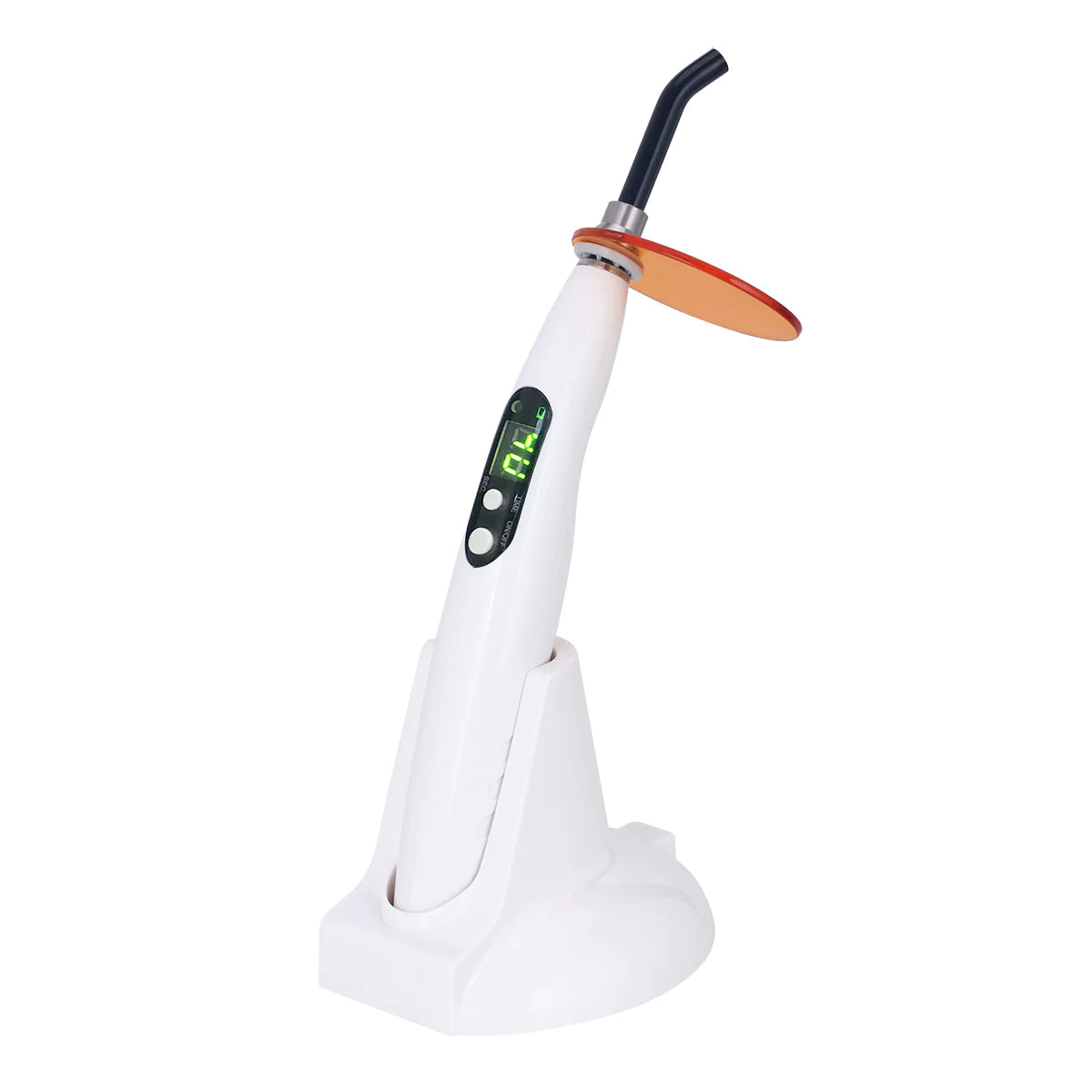
Strategic Importance in Contemporary Clinical Workflows: Light cure units (LCUs) have evolved from simple polymerization tools to mission-critical components in digitally integrated dental practices. With the proliferation of CAD/CAM restorations, bulk-fill composites, and adhesive dentistry protocols, precise and consistent light curing is non-negotiable for clinical success. Inadequate curing directly correlates with restoration failure rates, marginal leakage, and post-operative sensitivity – impacting both clinical outcomes and practice reputation. Modern LCUs must deliver calibrated spectral output (450-490nm peak), consistent irradiance (>1,000 mW/cm²), and homogeneous beam profiles to ensure complete monomer conversion in today’s advanced materials. Their integration with digital workflows – particularly in same-day crown placement and direct composite stratification – makes them foundational to practice efficiency and predictable outcomes.
Market Dynamics & Procurement Strategy: The global LCU market exhibits a pronounced bifurcation. European/American premium brands dominate high-end clinics seeking validated performance and service ecosystems, while cost-optimized Asian manufacturers (notably Chinese OEMs) address price-sensitive segments and emerging markets. This dichotomy presents distributors and clinics with a strategic procurement decision: invest in premium validation and service infrastructure, or prioritize capital efficiency with technically competent alternatives. The rise of value-engineered Chinese manufacturers like Carejoy has intensified this calculus, offering 80-85% of core functionality at 30-50% of premium pricing – a compelling proposition amid margin pressures.
Comparative Analysis: Premium Global Brands vs. Carejoy Value Segment
The following technical and operational comparison highlights key differentiators for strategic procurement planning:
| Technical/Commercial Parameter | Global Premium Brands (Ivoclar, Dentsply Sirona, Kerr, Coltène) |
Carejoy Value Segment |
|---|---|---|
| Price Range (USD) | €1,200 – €2,500 | $350 – $600 |
| Peak Irradiance | 1,200 – 2,000+ mW/cm² (calibrated & certified) | 800 – 1,200 mW/cm² (manufacturer-stated) |
| Spectral Accuracy | ±5nm tolerance; ISO 10650 certified | ±15nm tolerance; limited independent validation |
| Beam Homogeneity | ≥90% uniformity (measured via imaging radiometer) | 70-80% uniformity (varies by model) |
| Calibration & Traceability | Factory NIST-traceable calibration; service center recalibration | Basic factory calibration; no field recalibration service |
| Warranty & Service | 2-3 years; global service network; loaner units | 1 year; limited regional service centers; component replacement |
| Digital Integration | Open API; DICOM compatibility; practice management system sync | Basic timer/memory functions; no EHR integration |
| Operational Risk Profile | Low (validated performance reduces restoration failure risk) | Moderate (requires strict protocol adherence to mitigate curing variability) |
| Target Clinical Use Case | High-volume restorative/CAD-CAM practices; academic institutions | General dentistry; cost-conscious clinics; emerging markets |
Strategic Recommendation: For clinics operating advanced digital workflows (same-day crowns, complex composites), premium LCUs remain the standard of care due to validated performance metrics and service infrastructure. However, Carejoy represents a viable option for general practitioners performing routine restorations where capital efficiency is paramount – provided strict curing protocols (distance control, exposure timing) are enforced. Distributors should position Carejoy as a complementary value segment product, not a direct replacement, emphasizing its role in market expansion rather than premium displacement. The 2026 procurement landscape demands ROI-driven calculus: where curing reliability directly impacts practice revenue, premium investment is justified; where baseline functionality suffices, Carejoy delivers compelling value.
Technical Specifications & Standards
Professional Dental Equipment Guide 2026
Technical Specification Guide: Dental Light Cure Machine
Target Audience: Dental Clinics & Distributors
| Spec | Standard Model | Advanced Model |
|---|---|---|
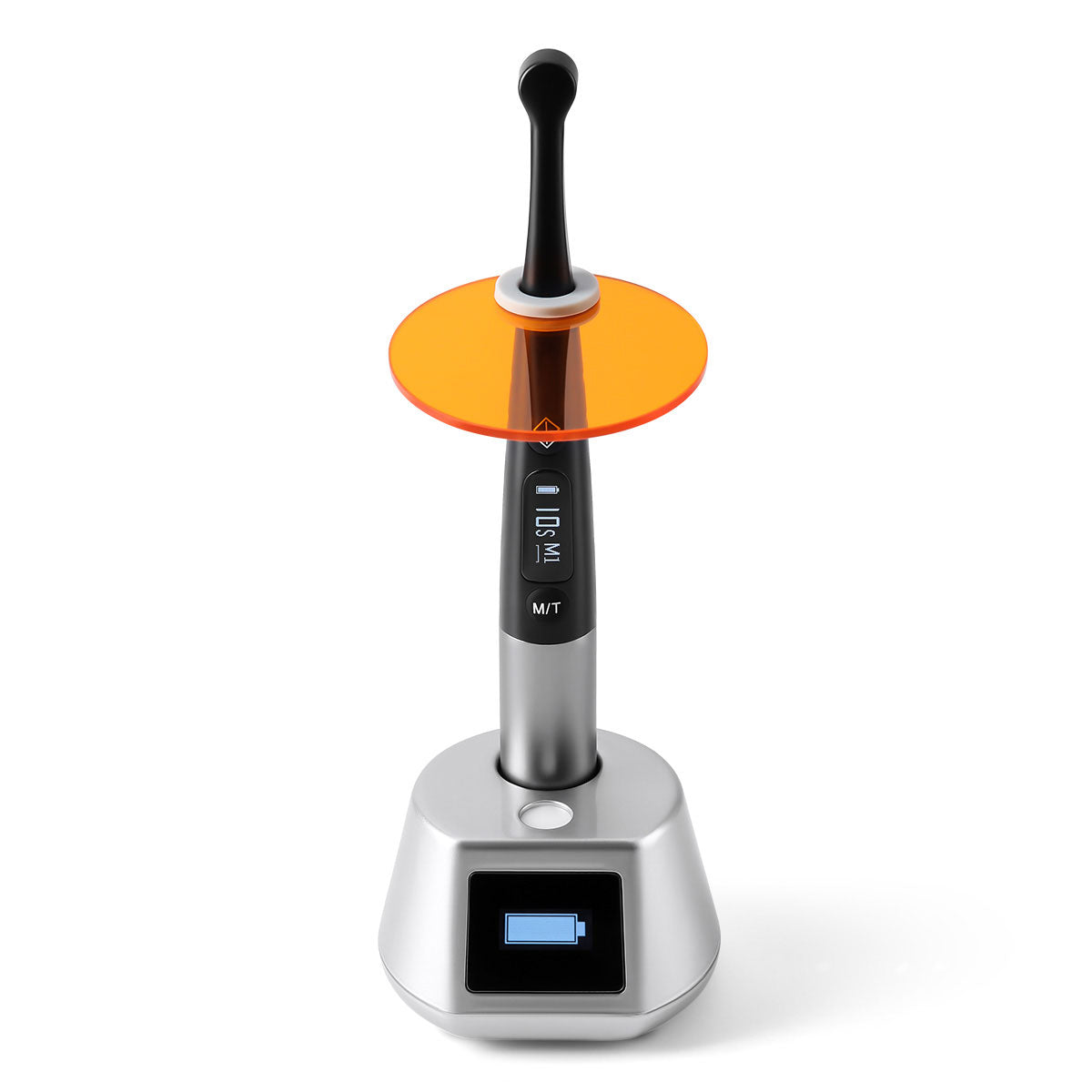
| Power | 800 mW/cm² (minimum irradiance at tip) | 1,600 – 2,000 mW/cm² (adjustable intensity levels; peak irradiance) |
| Dimensions | 185 mm (L) × 25 mm (D) × 30 mm (W); Handpiece weight: 65 g | 175 mm (L) × 22 mm (D) × 28 mm (W); Ergonomic design; Handpiece weight: 52 g |
| Precision | Standard LED focus; beam homogeneity ≥ 85%; curing depth up to 4 mm in 20 seconds | High-precision optics with uniform beam profile (homogeneity ≥ 95%); Smart Curing Modes (pulse delay, ramp-up); curing depth up to 6 mm with adaptive exposure algorithm |
| Material | Polycarbonate housing with aluminum heat sink; autoclavable tip (134°C, 2 bar) | Military-grade polymer composite with integrated ceramic heat dispersion; fully autoclavable handpiece (135°C, 2.1 bar); scratch-resistant lens coating |
| Certification | CE Marked, ISO 13485, FDA 510(k) cleared (K193211),符合 GB 9706.1-2020 | CE Marked, ISO 13485 & ISO 14971, FDA 510(k) cleared (K211405), IEC 60601-1-2 (4th Ed), IEC 60601-2-57, RoHS & REACH compliant |
Note: All models utilize 450–470 nm blue light spectrum (peak 460 nm) for optimal photoinitiator activation (camphorquinone). Advanced models include Bluetooth telemetry, usage logging, and compatibility with clinic asset management platforms.
ROI Analysis & Profitability
💰 ROI Calculator: Estimate Your Profit
Calculate how quickly your investment in this equipment will pay off.
Importing from China: A Step-by-Step Guide
Professional Dental Equipment Guide 2026:
Sourcing Dental Light Cure Machines from China
Target Audience: Dental Clinic Procurement Managers & Dental Equipment Distributors
Publication Date: Q1 2026 | Prepared By: Senior Dental Equipment Consultants Network
As global demand for precision dental curing technology grows, China remains a strategic manufacturing hub. However, evolving 2026 regulatory landscapes and supply chain complexities necessitate a structured sourcing methodology. This guide outlines critical steps for secure, compliant procurement of dental light cure units, with emphasis on risk mitigation and regulatory alignment.
Step 1: Verifying ISO/CE Credentials (Non-Negotiable for 2026 Market Access)
Regulatory compliance is paramount. Non-certified units risk clinic shutdowns, insurance invalidation, and customs seizures. Post-2025 EU MDR/IVDR amendments have intensified scrutiny.
| Verification Step | 2026 Critical Requirements | Common Pitfalls | Best Practice |
|---|---|---|---|
| ISO 13485:2026 | Must cover entire production process (design, assembly, testing). Certificate must list “Dental Curing Lights” explicitly. | Expired certificates; generic ISO scopes excluding dental devices; certificates issued by non-accredited bodies. | Request certificate + IAF GOST R validation. Cross-check with EU NANDO database. |
| EU CE Marking | Must include updated MDR Annex IX certification (not legacy MDD). NB number must match NANDO listing. | Fake CE logos; self-declared Class I status (curing lights are Class IIa); NB numbers not in NANDO. | Demand full Technical File excerpt + EU Representative documentation. Verify NB number at ec.europa.eu/nando. |
| US FDA 510(k) | Required for US-bound units. K-number must be active in FDA database. | Expired clearances; “FDA Registered” (≠ cleared); counterfeit K-numbers. | Validate K-number via FDA 510(k) Database. Confirm facility is FDA-registered. |
Step 2: Negotiating MOQ (Minimizing Inventory Risk)
Traditional Chinese MOQs (50-100 units) strain distributor cash flow and clinic pilot budgets. Strategic negotiation leverages 2026 market dynamics.
| Negotiation Factor | 2026 Market Reality | Supplier Red Flags | Optimal Strategy |
|---|---|---|---|
| Baseline MOQ | Leading factories now offer 5-10 units for certified models due to automated assembly lines. | MOQ >20 units for standard curing lights; refusal to split container loads. | Target factories with OEM experience. Accept slightly higher per-unit cost for 5-10 unit trial orders. |
| Customization | OEM/ODM viable at 15+ units (2026 laser engraving tech reduces setup costs). | Charging full setup fees for minor branding; no pre-production samples. | Negotiate tiered pricing: Base model at 5 units + +$8-12/unit for customization. |
| Payment Terms | 30% deposit standard; 70% pre-shipment. LC at sight increasingly rare. | Demanding 100% upfront; rejecting Alibaba Trade Assurance. | Insist on 30/70 split with third-party pre-shipment inspection (SGS/BV). |
Step 3: Shipping & Logistics (DDP vs. FOB – 2026 Cost Analysis)
Shipping terms significantly impact landed costs and risk allocation. 2026 port congestion and carbon taxes alter traditional calculations.
| Term | Cost Components (2026) | Risk Allocation | When to Use |
|---|---|---|---|
| FOB Shanghai | • Factory price • Origin charges (port fees, docs) • Ocean freight • Destination port fees • Customs clearance • Inland transport • 2026 Carbon Levy (€12-18/TEU) |
Buyer assumes all risk after goods loaded on vessel. Vulnerable to port delays (avg. 8 days Shanghai 2026). | Distributors with in-house logistics teams; large volume orders (>20 units); destinations with favorable trade agreements. |
| DDP (Delivered Duty Paid) | • All-inclusive price • Includes carbon tax, customs duties, VAT • No hidden fees (verified via Incoterms® 2020) |
Supplier assumes all risk until delivery point. Critical for clinics without import expertise. | First-time importers; clinics; orders <20 units; destinations with complex customs (e.g., Brazil, Australia). |
Recommended Partner: Shanghai Carejoy Medical Co., LTD
Why Carejoy Meets 2026 Sourcing Requirements:
- Regulatory Assurance: ISO 13485:2026 certified (Certificate #CN-2026-MED8892) with explicit scope for dental curing lights. CE MDR Class IIa certified via EU NB 2797 (NANDO ID: NB-2797). FDA 510(k) K233581 active.
- MOQ Flexibility: 5-unit trial orders for standard models; 15 units for OEM. Tiered pricing from $385/unit (5 units) to $295/unit (50+).
- Logistics Excellence: DDP quotes to 85+ countries within 72 hours. In-house customs brokerage avoids 2026 carbon levy miscalculations.
- Technical Validation: 19 years manufacturing dental curing lights (output 800-1200mW, 450-490nm spectrum). Units include 3-year warranty with clinic-side calibration support.
Established: 2005 | Factory Direct Since 2007
Location: 1288 Jixi Road, Baoshan District, Shanghai 200431, China
Core Expertise: Dental Chairs, Intraoral Scanners, CBCT, Light Cures, Autoclaves (OEM/ODM)
Contact for Verified Quotes:
Email: [email protected]
WhatsApp: +86 15951276160 (24/7 Technical Support)
Note: Request “2026 Dental Light Cure Compliance Package” including ISO audit report, CE technical file index, and DDP cost breakdown for your region.
Conclusion: Mitigating 2026 Sourcing Risks
Successful procurement requires moving beyond price-centric negotiations. Prioritize suppliers with:
• Verified 2026 regulatory documentation (not legacy certificates)
• Transparent cost structures that include carbon levies and customs variables
• Proven distribution channels for after-sales service
Shanghai Carejoy exemplifies the modern Chinese manufacturer – combining regulatory rigor with distributor-centric logistics. Always conduct factory audits via third parties (e.g., SGS) before scaling orders. Remember: The lowest initial cost often becomes the highest total cost of ownership.
Frequently Asked Questions
Professional Dental Equipment Guide 2026
Target Audience: Dental Clinics & Distributors
Frequently Asked Questions: Dental Light Cure Machine Procurement (2026)
As dental technology advances, selecting the right light curing unit is critical for clinical performance and long-term ROI. Below are key procurement questions and expert answers for dental clinics and distribution partners in 2026.
| Question | Answer |
|---|---|
| 1. What voltage requirements should I verify before purchasing a dental light cure machine for international deployment? | Dental light cure machines in 2026 are commonly available in dual-voltage configurations (100–240V, 50/60 Hz) to support global use. However, clinics and distributors must confirm device compatibility with local electrical standards (e.g., 110V in North America, 230V in Europe). Always verify input voltage range on the product datasheet and ensure compliance with regional safety certifications (e.g., CE, FDA, CCC). For high-volume distribution, consider models with auto-switching power supplies to reduce inventory complexity. |
| 2. Are spare parts such as light tips, batteries, and protective sleeves readily available, and what is the typical lead time? | Reputable manufacturers now offer standardized, autoclavable light guides and modular battery systems to enhance serviceability. Spare parts including LED tips, lithium-ion batteries, and protective sleeves are typically stocked by OEMs and authorized distributors. Lead times average 3–7 business days for in-region warehouses. Distributors should confirm supply chain agreements and minimum order quantities (MOQs) for spare components to ensure after-sales support. In 2026, most premium units use proprietary but backward-compatible tips—verify part number cross-references before procurement. |
| 3. Does the installation of modern light cure units require professional technical setup or calibration? | Most 2026-era LED curing units are plug-and-play, requiring no on-site calibration or technical installation. Wall-mounted and cart-integrated models may need bracket fitting, but electrical connection is typically handled by clinic staff. Wireless handheld units charge via docking stations and are operational immediately after initial charge. However, for networked or IoT-enabled curing lights (e.g., units with dose tracking or cloud reporting), IT integration support may be required. Always request an installation checklist from the supplier prior to delivery. |
| 4. What is the standard warranty coverage for dental light cure machines, and what does it include? | Leading manufacturers offer a standard 2–3 year comprehensive warranty covering defects in materials and workmanship. Coverage typically includes the main unit, battery (with degradation thresholds), and LED module. Extended warranties up to 5 years are available for premium models. In 2026, warranties exclude consumables (e.g., light tips, sleeves) and damage from improper sterilization or drops. Distributors should verify whether warranty service is handled locally or requires international returns, and confirm turnaround times for repair or replacement. |
| 5. How are firmware updates and technical support managed under warranty? | Smart curing units released in 2026 often include over-the-air (OTA) firmware updates to enhance curing algorithms, battery efficiency, or compliance logging. These updates are managed via manufacturer portals or mobile apps, with technical support included under warranty. Clinics and distributors should ensure access to online support platforms and confirm whether software maintenance is covered for the warranty duration. 24/7 technical hotlines and remote diagnostics are now standard for enterprise-grade units. |
Need a Quote for Dental Light Cure Machine?
Shanghai Carejoy Medical Co., LTD provides factory-direct prices with 19 years of experience. (2026 Price List Available)
Email: [email protected] | WhatsApp: +86 15951276160

