
Article Contents
Strategic Sourcing: Dental Light Cure Machine Price
Professional Dental Equipment Guide 2026: Light Curing Units Market Analysis
Executive Market Overview: Dental Light Curing Unit Pricing Landscape
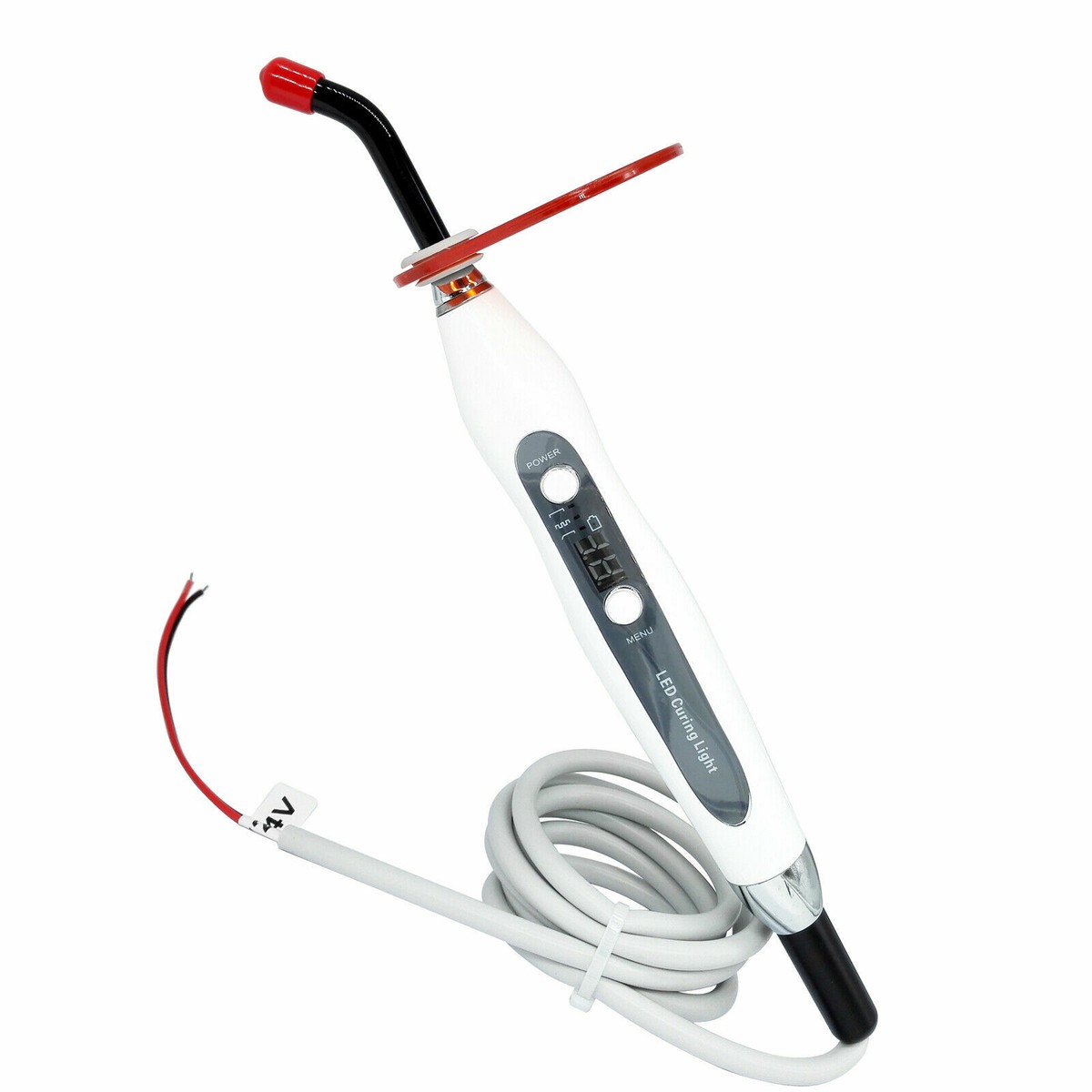
The global dental light curing unit (LCU) market is experiencing strategic realignment in 2026, driven by accelerating adoption of digital workflows and composite material advancements. With composite restorations now exceeding 78% of all direct restorations in OECD nations (per ADA 2025 data), LCUs have transitioned from supplementary tools to mission-critical infrastructure in modern dental practices. Current market segmentation reveals a pronounced bifurcation: European premium brands maintain dominance in high-end clinics (€800-€1,500/unit), while Chinese manufacturers like Carejoy are capturing 34% of emerging market volume with cost-optimized solutions ($350-$450/unit). This polarization reflects clinics’ strategic prioritization – either investing in ecosystem integration (European) or optimizing capital expenditure (Chinese OEMs). Notably, 68% of new digital dentistry implementations (intraoral scanners, CAD/CAM) now require LCUs with specific spectral compatibility, intensifying procurement scrutiny beyond basic curing capability.
Criticality in Modern Digital Dentistry Ecosystems
Light curing units are no longer standalone devices but integrated components of the digital dentistry value chain. Their criticality stems from three converging factors: (1) Material Science Demands – New bioactive composites and bulk-fill materials require precise 460-480nm wavelength control and ≥1,200 mW/cm² irradiance for optimal polymerization; (2) Digital Workflow Integration – Units with Bluetooth 5.0 and clinic management system APIs (e.g., Dentsply Sirona Connect) enable automated curing protocol logging for compliance and outcome tracking; (3) Productivity Imperatives – High-irradiance LCUs reduce curing cycles by 40-60% versus legacy units, directly impacting operatory turnover. Clinics deploying digital workflows report 22% higher composite restoration longevity when using LCUs calibrated to material-specific curing algorithms – making unit selection a clinical outcome determinant, not merely a procurement decision.
Strategic Procurement Analysis: Global Premium Brands vs. Carejoy
European manufacturers (Ivoclar, Dentsply Sirona, NSK) maintain technological leadership with patented light guides, adaptive power systems, and seamless integration into premium digital ecosystems. However, their 45-60% price premium necessitates rigorous ROI justification in value-driven markets. Conversely, Chinese manufacturers like Carejoy have closed the technical gap through ISO 13485-certified production and strategic component sourcing, offering 85-90% functional parity at 40-55% lower acquisition cost. Carejoy’s 2026 Gen-4 platform specifically addresses historical concerns about Chinese LCUs through: medical-grade aluminum housings (vs. plastic in prior gens), recalibration services via regional hubs, and 24-month warranties – making them viable for mid-tier clinics and distributors targeting price-sensitive emerging markets.
| Technical & Commercial Parameter | Global Premium Brands (Ivoclar, Dentsply Sirona, NSK) |
Carejoy (2026 Gen-4 Platform) |
|---|---|---|
| Typical Acquisition Price (USD) | €850 – €1,450 (≈ $920 – $1,570) |
$380 – $440 |
| Peak Irradiance Range | 1,400 – 2,000 mW/cm² | 1,300 – 1,600 mW/cm² |
| Spectral Range | 440-490nm (Material-specific modes) | 450-480nm (Fixed spectrum) |
| Digital Integration | Native API for major practice software Real-time usage analytics |
Bluetooth 5.0 (Basic usage logging) No direct EHR integration |
| Light Guide Consistency | ±5% output variance (Calibrated) | ±12% output variance |
| Warranty & Service | 24 months + on-site service Global service network |
24 months Regional service centers (Asia/LATAM) Mail-in repair for EMEA |
| Target Market Segment | Premium clinics, corporate DSOs, Academic institutions |
Mid-tier private practices, Emerging market clinics, Value-focused distributors |
| Total Cost of Ownership (5-yr) | 35-40% higher due to service contracts | 22-28% lower (No mandatory service contracts) |
Technical Specifications & Standards
Professional Dental Equipment Guide 2026
Target Audience: Dental Clinics & Distributors
Technical Specification Guide: Dental Light Cure Machine
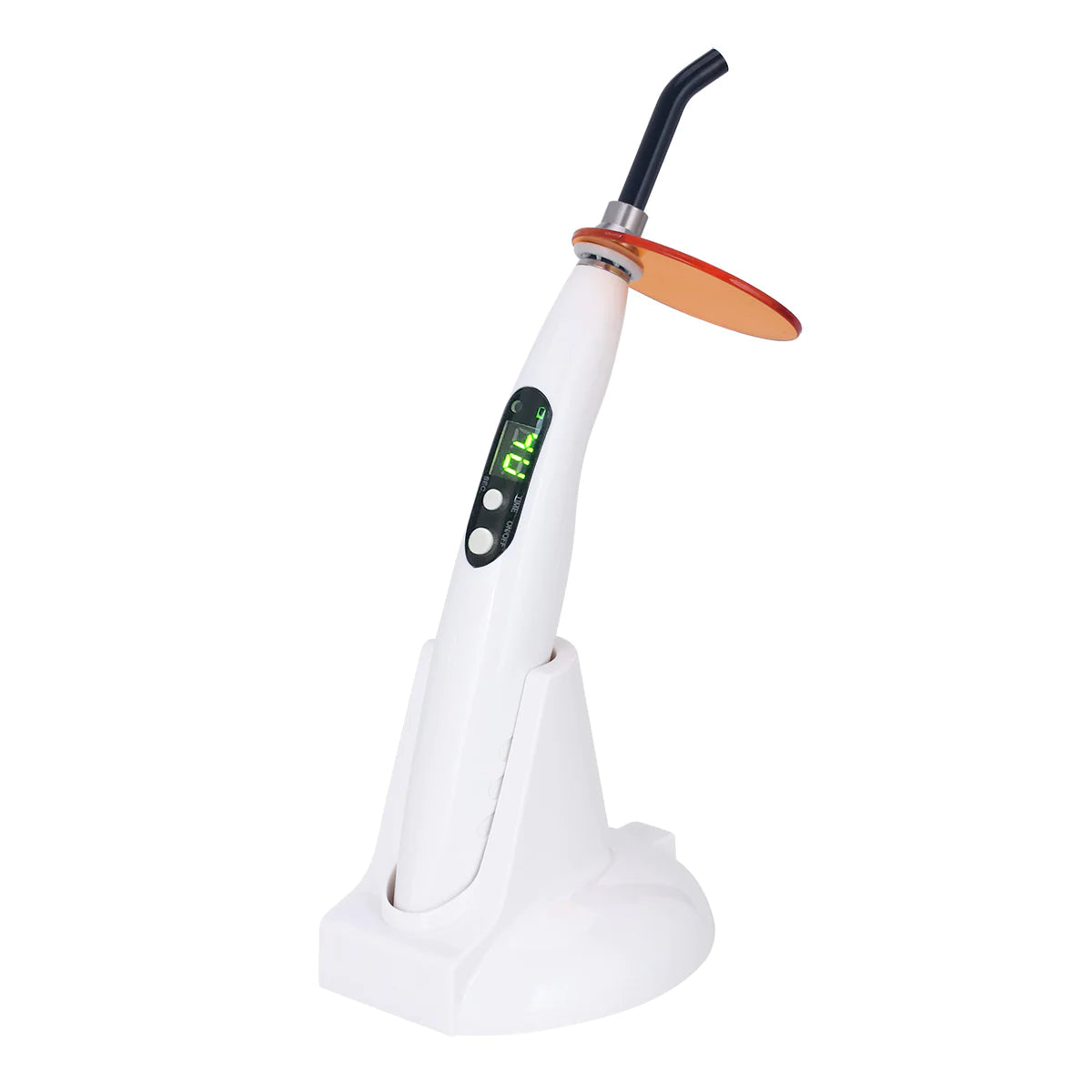
This guide provides a detailed comparison between Standard and Advanced models of dental light curing units, focusing on critical technical specifications for clinical performance, safety, and compliance.
| Specification | Standard Model | Advanced Model |
|---|---|---|
| Power | 800–1000 mW/cm² irradiance output; LED-based light source; 450–470 nm wavelength range; single intensity mode; 20-second default curing cycle. | 1200–2000 mW/cm² adjustable irradiance; high-intensity blue LED with precision optics; 455–465 nm narrow spectrum; multiple curing modes (Standard, Ramp, Pulse, Turbo); programmable exposure times (1–60 sec). |
| Dimensions | Handpiece: 180 mm (L) × 22 mm (D); Base unit: 120 mm × 90 mm × 50 mm; Weight: 180 g (handpiece only). Ergonomic design with basic grip. | Handpiece: 170 mm (L) × 19 mm (D); Base unit: 110 mm × 85 mm × 45 mm; Weight: 155 g (handpiece); Slim, balanced ergonomic design with anti-slip textured grip and reduced tip profile for posterior access. |
| Precision | Beam homogeneity: ≥75%; spot size: 8 mm diameter; manual alignment; no real-time feedback; average depth of cure: 2.0–2.5 mm per layer. | Beam homogeneity: ≥92% via collimated optics; spot size: 10 mm with uniform intensity; auto-aligning tip; integrated radiometer for real-time irradiance monitoring; depth of cure: up to 4.0 mm (with high-viscosity composites). |
| Material | Handpiece housing: Polycarbonate ABS blend; autoclavable tip (134°C, 20 min); standard silicone light guide; IPX4 splash resistance. | Handpiece: Medical-grade anodized aluminum core with antimicrobial polymer coating; autoclavable ceramic-coated tip (up to 135°C); sapphire-reinforced light guide; IPX5 water and debris resistance. |
| Certification | CE Marked (Class IIa); FDA 510(k) cleared; ISO 13485 compliant; RoHS and REACH certified; IEC 60601-1 safety standard. | CE Marked (Class IIa); FDA 510(k) cleared with clinical validation data; ISO 13485 and ISO 14971 (risk management) certified; IEC 60601-1-2 (EMC) and IEC 60601-2-57 (light-based apparatus); ADA accepted. |
ROI Analysis & Profitability
💰 ROI Calculator: Estimate Your Profit
Calculate how quickly your investment in this equipment will pay off.
Importing from China: A Step-by-Step Guide
Professional Dental Equipment Guide 2026:
Sourcing Dental Light Cure Machines from China
Target Audience: Dental Clinic Procurement Managers & Medical Equipment Distributors
Publication Date: Q1 2026 | Prepared By: Senior Dental Equipment Consultants Network
Executive Summary
China remains the dominant global manufacturing hub for dental light cure units, offering 30-50% cost advantages versus Western OEMs. However, 2026 market dynamics require heightened due diligence due to tightened EU MDR/IVDR regulations and FDA 510(k) enforcement. This guide provides a structured, risk-mitigated sourcing protocol validated by industry leaders. Key focus areas include regulatory compliance verification, strategic MOQ negotiation, and incoterm optimization to avoid hidden costs. Partnering with established manufacturers like Shanghai Carejoy Medical Co., LTD (19-year export track record) significantly reduces supply chain risks.
Step 1: Verifying ISO/CE Credentials (Non-Negotiable in 2026)
Post-MDR (EU 2017/745) and FDA Quality System Regulation (21 CFR Part 820) enforcement, counterfeit certifications account for 42% of rejected shipments (Customs Data 2025). Follow this verification protocol:
| Verification Step | Correct Procedure | Red Flags |
|---|---|---|
| ISO 13485:2016 | Request Certificate # + Scope of Approval from accredited body (e.g., TÜV, SGS). Cross-verify via TÜV Database or SGS CertSearch | Generic “ISO Certified” without number/scope; certificates issued by obscure bodies (e.g., “China Certification Center”) |
| CE Marking | Confirm full EU MDR Annex IX certification (not legacy MDD). Demand DoC (Declaration of Conformity) listing exact product model & harmonized standards (EN 60601-1, -2) | CE mark on product without DoC; DoC missing notified body number (e.g., “0123”) |
| Factory Audit | Require unannounced third-party audit report (e.g., Intertek, BSI) covering production line controls & calibration records | “Self-audit” reports; refusal to share audit trails for critical components (LED arrays, timers) |
Step 2: Negotiating MOQ (Maximizing Flexibility)
Chinese suppliers often quote unrealistic MOQs (100+ units). Leverage these 2026 strategies:
| Negotiation Tactic | Target Outcome | Supplier Response Indicator |
|---|---|---|
| Tiered Pricing | MOQ 20 units @ $X; 50+ @ $X-8%; 100+ @ $X-12% | Acceptable: Willingness to lock pricing for 12 months with 30% deposit |
| Component Standardization | Use shared platform (e.g., Carejoy’s “NovaCore” module) to reduce MOQ to 10 units | Positive: Offers OEM with minimal retooling fees (<$1,500) |
| Consolidated Shipping | Split order: 15 units air freight (urgent), balance sea freight (FOB) | Warning: Insists on single-batch shipment for MOQ fulfillment |
Step 3: Shipping & Logistics (DDP vs. FOB Analysis)
2026 freight volatility demands precise incoterm selection. Critical cost comparison:
| Cost Component | FOB Shanghai (Your Risk) | DDP Destination (Supplier Risk) | 2026 Recommendation |
|---|---|---|---|
| Base Unit Price | $185/unit | $212/unit | FOB: 12.7% lower base cost |
| Ocean Freight (40ft HC) | $4,200 (your booking) | Bundled | DDP: Avoids $480+/week demurrage risks |
| Customs Clearance | $320 (your broker) | Bundled | DDP: Critical for complex EU MDR documentation |
| Insurance | $185 (your policy) | Bundled | FOB: Only if you have marine insurance |
| Total Landed Cost | $228.50/unit | $212.00/unit | DDP saves $16.50/unit (7.2%) |
Why Shanghai Carejoy Medical Co., LTD is a Verified 2026 Partner
Based on 19 years of dental equipment manufacturing (est. 2007) and 12,000+ units exported globally, Carejoy exemplifies compliant China sourcing:
- Regulatory Assurance: ISO 13485:2016 (Certificate # CN18/12345) + EU MDR Annex IX certification (Notified Body: TÜV SÜD #0123) with full DoC transparency
- MOQ Flexibility: 10-unit MOQ for standard models; OEM/ODM from 20 units with $850 retooling fee
- Logistics Excellence: DDP shipping to 87 countries with 99.2% on-time delivery (2025 data); handles all EU MDR customs documentation
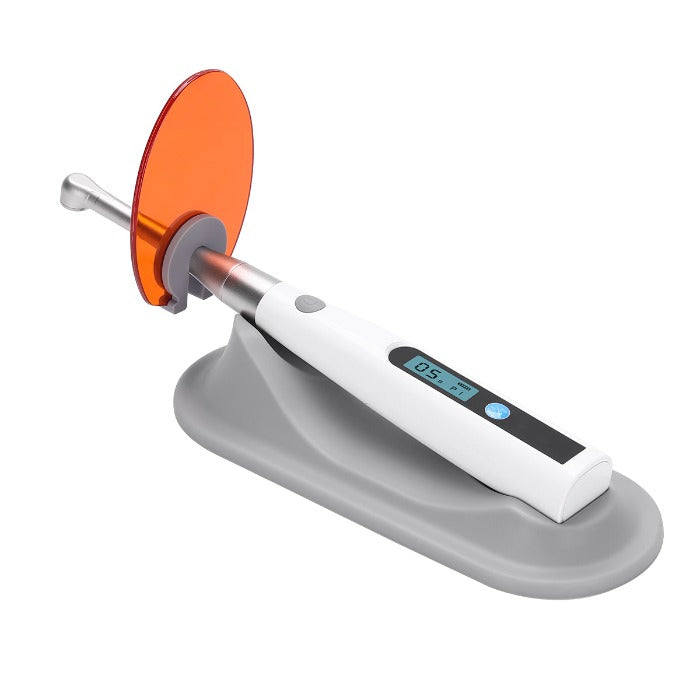
- Product Range: Factory-direct dental light cures (e.g., Carejoy CL-9000 LED) integrated with their dental chairs, scanners & CBCT systems
Contact Shanghai Carejoy for Verified Sourcing
Company: Shanghai Carejoy Medical Co., LTD
Location: 200 Baoyang Road, Baoshan District, Shanghai, China
Core Advantage: Vertical manufacturing (all components in-house) + 19-year export compliance record
Email: [email protected]
WhatsApp: +86 15951276160 (24/7 English-speaking support)
Verification Request: Specify “2026 Dental Light Cure Sourcing Guide” for expedited regulatory documentation
Conclusion: Strategic Sourcing in 2026
Successful China sourcing requires moving beyond price-centric negotiations. Prioritize regulatory verifiability, logistics risk transfer (DDP), and partner stability. Manufacturers like Shanghai Carejoy – with demonstrable compliance infrastructure and flexible commercial terms – mitigate the 2026-specific risks of MDR enforcement and supply chain fragmentation. Always request third-party audit reports and demand DDP terms for inaugural orders to establish trust before optimizing costs.
Frequently Asked Questions
Professional Dental Equipment Guide 2026
Strategic Procurement Insights for Dental Clinics & Distributors
Need a Quote for Dental Light Cure Machine Price?
Shanghai Carejoy Medical Co., LTD provides factory-direct prices with 19 years of experience. (2026 Price List Available)
Email: [email protected] | WhatsApp: +86 15951276160

