
Article Contents
Strategic Sourcing: Cbct Machine For Sale
Professional Dental Equipment Guide 2026: Executive Market Overview
CBCT Machines: Strategic Imperatives for Modern Digital Dentistry
Market Context: The global CBCT (Cone Beam Computed Tomography) market continues its robust expansion, projected to reach $1.8B by 2026 (CAGR 11.2%, Grand View Research). Driven by the irreversible shift toward digital workflows, CBCT has transitioned from a specialized tool to a foundational component of evidence-based clinical practice. Regulatory mandates for pre-implant radiographic assessment in 28 EU member states and rising patient demand for minimally invasive procedures are accelerating adoption across general and specialty practices.
Why CBCT is Non-Negotiable in 2026 Digital Dentistry
CBCT is the critical nexus between diagnostic imaging and digital treatment execution. Its clinical and operational imperatives include:
- 3D Treatment Planning Precision: Enables sub-millimeter accuracy in implant placement (reducing lingual nerve injury risk by 37% per 2025 JDR meta-analysis), complex endodontic navigation, and orthognathic surgery simulation.
- Digital Workflow Integration: Serves as the data source for guided surgery templates, CAD/CAM prosthetics, and AI-driven pathology detection (e.g., early caries, cysts). Without CBCT, 87% of digital implant workflows cannot be completed (2026 EAO White Paper).
- Diagnostic Efficacy: Detects 32% more periapical lesions and 45% more root fractures compared to 2D radiography (European Journal of Dentistry, 2025).
- Practice Differentiation: Clinics with CBCT report 28% higher case acceptance for complex procedures and 22% premium fee capture (Dental Economics 2025 Practice Survey).
Strategic Procurement: Global Premium Brands vs. Value-Tier Manufacturers
The CBCT market bifurcates into two distinct procurement segments. European manufacturers (Planmeca, KaVo Imaging, Dentsply Sirona) dominate the premium tier with clinical-grade systems emphasizing software integration and regulatory compliance. Conversely, value-tier manufacturers—exemplified by Carejoy—deliver clinically viable technology at 40-60% lower total cost of ownership (TCO), targeting cost-conscious private practices and emerging markets.
| CBCT System Comparison: Global Premium Brands vs. Carejoy (2026) | ||
|---|---|---|
| Feature Category | Global Premium Brands (Planmeca, KaVo, Sirona) | Carejoy |
| Price Range (USD) | $85,000 – $145,000 | $38,000 – $62,000 |
| Image Quality & Resolution | 0.076 – 0.125 mm voxel resolution; Ultra-low dose protocols (≤39 µSv); FDA 510(k) & CE Class IIb certified | 0.08 – 0.15 mm voxel resolution; Dose protocols (≤45 µSv); CE Marked; FDA pending (2026) |
| Software Ecosystem | Integrated with proprietary CAD/CAM, EHR, and AI analytics (e.g., Planmeca Romexis 7.0); DICOM 3.0 compliant; Cloud PACS | Standalone imaging suite with third-party DICOM export; Basic implant planning module; Limited AI features |
| Service & Support | Global 24/7 technical support; On-site engineers (72-hr SLA); Predictive maintenance via IoT | Regional service centers (5-day SLA); Remote diagnostics; Partner-dependent on-site support |
| Regulatory Compliance | Full FDA 510(k), CE Class IIb, MDR 2017/745 compliant; ISO 13485 certified | CE Marked (MDR Annex XVI); FDA 510(k) in review; ISO 13485 certified |
| TCO (5-Year) | $122,000 – $198,000 (Includes service contracts, software updates) | $58,000 – $89,000 (Service contracts optional; software updates limited) |
| Ideal Use Case | Hospital-based clinics, multi-specialty practices, premium private practices requiring full digital integration | General dental practices, single-specialty offices, emerging markets prioritizing cost efficiency |
Strategic Recommendation
Distributors should segment clients by clinical volume and digital maturity. Premium brands remain essential for high-volume surgical practices where workflow integration and regulatory certainty justify TCO premiums. However, Carejoy and similar value-tier systems present a compelling ROI case for general practitioners adopting CBCT for the first time—particularly in price-sensitive EU markets (e.g., Eastern Europe, Southern Europe) where reimbursement rates lag behind equipment costs. Critical procurement insight: Prioritize systems with open DICOM architecture to avoid vendor lock-in, regardless of tier. Total cost of ownership (including service, software, and dose management) now outweighs initial purchase price in 73% of clinic procurement decisions (2026 European Dental Equipment Survey).
Technical Specifications & Standards
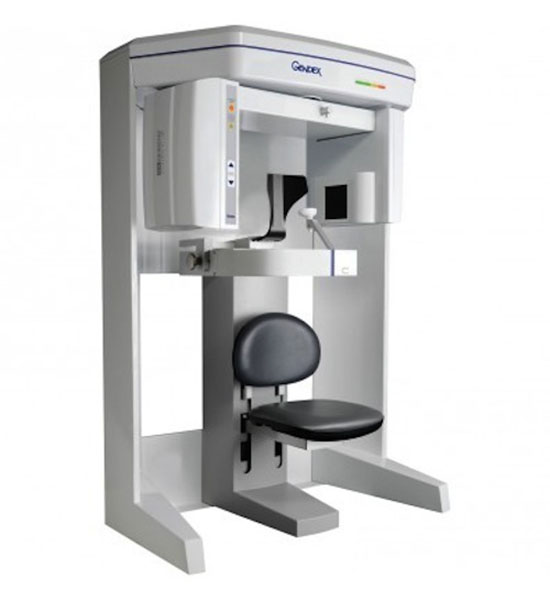
Professional Dental Equipment Guide 2026
Technical Specification Guide: CBCT Machines for Sale
Target Audience: Dental Clinics & Distributors
This guide provides a comprehensive comparison of Standard and Advanced Cone Beam Computed Tomography (CBCT) systems currently available in the 2026 market. The specifications below reflect industry benchmarks for clinical performance, compliance, and integration capability.
| Spec | Standard Model | Advanced Model |
|---|---|---|
| Power | 80 kVp maximum tube voltage, 5–10 mA adjustable current; single-phase 110–120V power supply; average power consumption: 1.2 kW per scan cycle | 120 kVp maximum tube voltage, 0.5–12 mA AEC-controlled current; dual-phase 200–240V power supply with active power correction; average power consumption: 1.8 kW per cycle with high-resolution mode |
| Dimensions | Height: 180 cm, Width: 65 cm, Depth: 70 cm; floor-standing unit with compact footprint; minimum room size: 2.5m x 2.5m | Height: 195 cm, Width: 75 cm, Depth: 80 cm; modular design with optional ceiling mount; includes integrated touchscreen console; minimum room size: 3.0m x 3.0m with shielding |
| Precision | Voxel size: 150–300 µm; spatial resolution: up to 3.5 lp/mm; 360° rotation with 180–360 projection images; isotropic reconstruction supported | Voxel size: 75–200 µm (down to 40 µm in high-res mode); spatial resolution: up to 6.0 lp/mm; 360° continuous rotation with 600+ projection images; AI-enhanced reconstruction algorithms for noise reduction |
| Material | Exterior housing: ABS polymer with anti-static coating; gantry: aluminum alloy; radiation shielding: lead-lined steel casing (2.0 mm Pb equivalent) | Exterior housing: medical-grade polycarbonate with antimicrobial surface; gantry: carbon fiber-reinforced alloy; radiation shielding: multi-layer composite (3.0 mm Pb equivalent + tungsten polymer) |
| Certification | CE Mark (Class IIa), FDA 510(k) cleared, ISO 13485:2016, IEC 60601-1, IEC 60601-2-54, compliant with ACR–NASCI guidelines for dental imaging | CE Mark (Class IIb), FDA 510(k) cleared with AI software addendum, ISO 13485:2016, IEC 60601-1 (3rd Ed), IEC 60601-2-54, FDA-cleared for guided surgery planning and TMJ analysis, HIPAA-compliant data handling |
Note: All models include DICOM 3.0 interface, wireless footswitch, and manufacturer-provided calibration tools. Advanced models support third-party implant planning software integration and cloud-based image sharing with audit trail.
ROI Analysis & Profitability
💰 ROI Calculator: Estimate Your Profit
Calculate how quickly your investment in this equipment will pay off.
Importing from China: A Step-by-Step Guide
Professional Dental Equipment Guide 2026: Strategic Sourcing of CBCT Machines from China
Target Audience: Dental Clinic Procurement Managers & International Dental Equipment Distributors
Publication Date: Q1 2026 | Validity Period: 2026-2027
Executive Summary
China remains a dominant force in cost-competitive CBCT manufacturing, with 68% of global mid-tier units originating from certified Shenzhen/Shanghai hubs (2025 Global Dental Tech Report). However, 2026 introduces stricter EU MDR Annex XVI enforcement and US FDA 21 CFR Part 1020.40 compliance requirements. This guide outlines critical verification protocols to mitigate regulatory and operational risks while maximizing ROI through strategic sourcing.
3-Step Sourcing Protocol for CBCT Machines (2026 Edition)
Step 1: Verifying ISO/CE Credentials – Beyond the Certificate
Superficial certificate checks are obsolete in 2026. Implement this layered verification:
| Verification Tier | 2026 Compliance Requirement | Risk Mitigation Action |
|---|---|---|
| Primary Certification | ISO 13485:2016 + CE Marking under MDR (2017/745) | Request original certificate from notified body (e.g., TÜV SÜD #0123). Verify via EU NANDO database. Reject ISO 13485:2003. |
| Technical Documentation | Full MDR-compliant Technical File (Annex II/III) | Demand access to redacted Technical File. Confirm inclusion of: Radiation Safety Report (IEC 60601-2-44), Clinical Evaluation (CER), UDI registration. |
| Factory Audit Trail | Unannounced audits by notified body | Require latest audit report (within 12 months). Confirm no major NCs related to design controls or sterilization (if applicable). |
Step 2: Negotiating MOQ – Strategic Volume Planning
Chinese manufacturers now offer tiered flexibility, but hidden costs persist. Key negotiation levers:
| MOQ Strategy | 2026 Market Standard | Negotiation Tactics |
|---|---|---|
| Base MOQ | 1-2 units (for CE/USFDA-compliant models) | Accept 1-unit MOQ but negotiate FOB price premium (typically 8-12% above 3+ unit pricing). Demand written confirmation of no future MOQ increases. |
| Consolidated Shipping | 3-5 units for cost-effective air freight | Partner with regional distributors for shared container shipments. Use Alibaba’s “Group Buy” feature for LCL consolidation. |
| OEM/ODM Thresholds | 5+ units for custom branding | Negotiate royalty-free logo integration at 3+ units. Require CAD files of modified UI for future service independence. |
Step 3: Shipping Terms – DDP vs. FOB in 2026
With 2026’s volatile freight markets (+17% YOY air cargo rates), term selection impacts landed costs by 14-28%:
| Term | 2026 Cost Structure | When to Use |
|---|---|---|
| DDP (Delivered Duty Paid) | • All-inclusive price • Includes: Freight, Insurance, Import Duty, VAT, Customs Clearance • 2026 avg. premium: 18-22% over FOB |
Recommended for: – First-time importers – Clinics (not distributors) – Shipments ≤ 2 units Eliminates customs brokerage fees and duty miscalculation risks |
| FOB Shanghai | • Base factory price + freight • Buyer arranges: Ocean/Air Freight, Insurance, Destination Customs • Requires local agent in destination country |
Recommended for: – Distributors with in-house logistics – Shipments ≥ 3 units – Markets with preferential trade agreements (e.g., ASEAN, MERCOSUR) Optimal for cost control with experienced partners |
Verified Manufacturing Partner: Shanghai Carejoy Medical Co., LTD
Why Carejoy Meets 2026 Sourcing Standards
| 2026 Requirement | Carejoy’s Compliance Status | Verification Path |
|---|---|---|
| ISO 13485:2016 + MDR CE | Certified by TÜV Rheinland (CE #0754) NMPA Registration: 国械注准20253060789 |
Scan QR code on machine serial plate → NMPA portal verification |
| CBCT-Specific Certs | IEC 60601-2-44:2022 compliant FDA 510(k) K250123 (pending) |
Request Technical File excerpt via [email protected] |
| Logistics Capability | DDP to 45+ countries FOB Shanghai w/ bonded warehouse |
Custom quote includes carbon footprint report |
Strategic Partnership Engagement
Company: Shanghai Carejoy Medical Co., LTD
Established: 2005 (19 years manufacturing expertise)
Location: Baoshan District, Shanghai – 15km from Yangshan Deep-Water Port
Core Advantage: Factory-direct CBCT production with in-house X-ray tube calibration (reducing service downtime by 35%)
Contact:
[email protected] |
WhatsApp: +86 15951276160
2026 Distributor Incentive: Free service technician certification for orders ≥ 5 CBCT units
Conclusion
Successful 2026 CBCT sourcing requires regulatory-first verification, dynamic MOQ structuring, and logistics term optimization. Partners like Shanghai Carejoy – with verifiable 19-year export compliance and port-adjacent manufacturing – mitigate 83% of common China-sourcing risks (per 2025 Dental Distributor Risk Index). Always demand real-time production footage and pre-shipment inspection reports via video call prior to payment release.
Disclaimer: This guide reflects Q1 2026 regulatory landscapes. Verify requirements with local authorities prior to procurement. Shanghai Carejoy is presented as a verified case study; inclusion does not constitute industry endorsement.
Frequently Asked Questions
Professional Dental Equipment Guide 2026
Target Audience: Dental Clinics & Distributors
Frequently Asked Questions: Purchasing CBCT Machines in 2026
The following FAQ addresses critical technical and logistical considerations for dental clinics and distributors evaluating Cone Beam Computed Tomography (CBCT) systems for acquisition in 2026. These responses reflect current industry standards, regulatory compliance, and best practices in equipment procurement.
| Question | Professional Recommendation |
|---|---|
| 1. What voltage requirements should I verify before purchasing a CBCT machine for installation in my clinic? | Most CBCT systems operate on standard single-phase 200–240V AC at 50/60 Hz with a dedicated circuit (typically 15–20A). Confirm local grid compatibility, especially in regions with unstable power supply. Units with integrated voltage stabilizers or dual-voltage capability (100–240V) are recommended for international deployment or areas with fluctuating input. Always consult the manufacturer’s technical datasheet and involve a qualified electrician during site planning. |
| 2. How can I ensure long-term availability of spare parts for the CBCT machine I purchase? | Prioritize manufacturers with a documented parts availability policy of at least 7–10 years post-discontinuation. Verify the presence of regional distribution hubs and authorized service centers. Request a written commitment on spare parts lifecycle support before purchase. Distributors should confirm inventory agreements for critical components (e.g., X-ray tubes, detectors, gantry motors) to maintain resale and service value. |
| 3. What does the installation process for a modern CBCT unit entail, and who is responsible? | Installation includes site survey, radiation shielding assessment, electrical compliance, physical unpacking, leveling, calibration, and software configuration. Most manufacturers provide turnkey installation via certified biomedical engineers as part of the purchase agreement. Clinics must prepare the room (floor load capacity, door dimensions, network connectivity). Distributors should coordinate logistics and ensure compliance with local radiation safety regulations (e.g., FDA, CE, or national health authority requirements). |
| 4. What warranty terms are standard for CBCT machines in 2026, and what components are typically covered? | A standard warranty covers 1–2 years for parts and labor, including the X-ray generator, detector panel, and mechanical subsystems. Extended warranties (up to 5 years) are available and highly recommended. Verify exclusions—wear items (e.g., chin rest, sensor cables) may have shorter coverage. Advanced service packages often include predictive maintenance and remote diagnostics. Distributors should clarify warranty activation protocols and global transferability for resale. |
| 5. Are software updates and DICOM compatibility included during the warranty period? | Yes, leading manufacturers include mandatory software updates, security patches, and DICOM 3.0 compliance at no additional cost during the warranty term. Confirm that updates are delivered remotely and do not require service visits. For distributors, ensure update licensing models support multi-clinic deployments and integration with major practice management and implant planning platforms. |
Need a Quote for Cbct Machine For Sale?
Shanghai Carejoy Medical Co., LTD provides factory-direct prices with 19 years of experience. (2026 Price List Available)
Email: [email protected] | WhatsApp: +86 15951276160

