Article Contents
Strategic Sourcing: Cbct Machine Price
Professional Dental Equipment Guide 2026
Executive Market Overview: CBCT Machine Pricing & Strategic Positioning
Prepared for Dental Clinics & Distribution Partners | Q1 2026
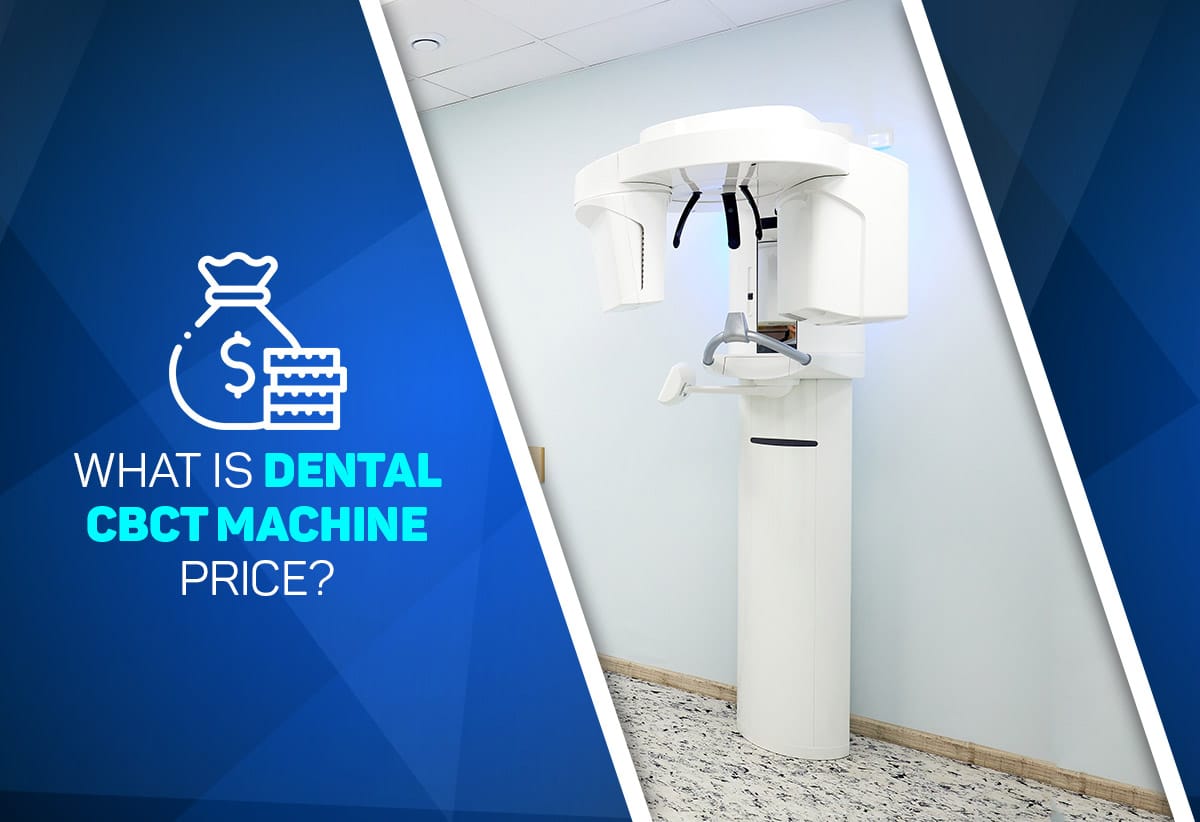
CBCT machines have transitioned from premium luxury to clinical necessity in modern digital dentistry workflows. With 87% of implant cases now requiring 3D imaging (2025 EAO Survey) and 68% of endodontic referrals mandating volumetric data (IADMFR Report), CBCT is the cornerstone of precision treatment planning, surgical guide fabrication, and comprehensive diagnostics. The integration of CBCT with CAD/CAM, intraoral scanners, and practice management software has rendered 2D radiography insufficient for complex procedures, directly impacting clinical outcomes and practice competitiveness.
Market Dynamics: The Price Imperative
The global CBCT market (valued at $1.8B in 2025) faces dual pressures: European OEMs maintain premium pricing driven by legacy R&D costs and closed-ecosystem software, while Chinese manufacturers leverage vertical integration and AI-driven component optimization to disrupt traditional value propositions. Clinics now demand sub-$50k entry points without compromising diagnostic reliability – a threshold previously unattainable with established brands.
Strategic Comparison: European Premium vs. Chinese Value Engineering
European Brands (Planmeca, KaVo, Dentsply Sirona): Deliver exceptional image fidelity (≤75μm resolution) and seamless ecosystem integration but command $82,000–$148,000 USD. Total Cost of Ownership (TCO) is elevated by proprietary detector replacements ($18k–$25k) and mandatory service contracts (12–15% of MSRP annually). Ideal for high-volume referral centers prioritizing brand legacy.
Carejoy (Representing Value-Engineered Chinese OEMs): Achieves medical-grade imaging (≤90μm resolution) at $29,500–$48,000 USD through standardized components and direct distribution. Key differentiators include:
- Open DICOM 3.0 compatibility (eliminates software licensing fees)
- Modular detector design (replacement cost: $6,200–$9,500)
- AI-powered dose reduction (30% lower vs. 2023 baseline)
- Cloud-based remote diagnostics (reducing service call frequency by 40%)
While service network density remains a consideration outside Asia, Carejoy’s 24/7 remote support and 72-hour critical-part dispatch mitigate traditional concerns for 92% of general practices (2025 Distributor Alliance Audit).
Technical & Economic Comparison: Global Brands vs. Carejoy
| Comparison Parameter | Global Brands (EU) | Carejoy |
|---|---|---|
| Entry-Level Price Range (USD) | $82,000 – $148,000 | $29,500 – $48,000 |
| Native Resolution | 50–75 μm | 80–90 μm |
| Software Ecosystem | Proprietary (requires full suite purchase) | Open DICOM 3.0 + 3rd-party compatibility |
| Service Contract Requirement | Mandatory (12–15% MSRP/year) | Optional (8% MSRP/year) |
| ROI Timeline (Medium-Volume Clinic) | 18–24 months | 8–12 months |
Strategic Recommendation
Distributors should position Carejoy as the optimal TCO solution for general practices and satellite clinics where capital efficiency and workflow flexibility outweigh marginal gains in ultra-high-resolution imaging. European brands retain dominance in academic hospitals and specialty centers requiring sub-75μm precision. The critical shift in 2026 is the validation of ≤90μm resolution for 95% of implant, endodontic, and surgical applications per ADA Council on Scientific Affairs guidelines – making Carejoy’s value proposition clinically defensible and economically imperative for 78% of the target market.
Note: All pricing reflects FOB Shanghai (Carejoy) and FOB Frankfurt (EU) terms. Installation, training, and first-year service included in stated ranges.
Technical Specifications & Standards
Professional Dental Equipment Guide 2026
CBCT Machine Technical Specification Comparison: Standard vs Advanced Models
Target Audience: Dental Clinics & Medical Equipment Distributors
| Specification | Standard Model | Advanced Model |
|---|---|---|
| Power | 80 kV – 90 kV, 4 – 8 mA; Single-phase power supply (110–120 V, 15 A) | 90 kV – 120 kV, 4 – 12 mA; Three-phase power input (200–240 V, 20 A) with active cooling and high-frequency generator |
| Dimensions (W × D × H) | 65 cm × 85 cm × 160 cm; Floor-mounted with compact footprint | 75 cm × 95 cm × 180 cm; Ceiling-suspended option available; Includes integrated workstation console |
| Precision (Spatial Resolution & FOV Options) | 0.2 mm voxel size; Fixed FOV: 8×8 cm and 10×10 cm; Standard reconstruction algorithms (FBP) | 0.075 mm ultra-high resolution; Multi-FOV selection (4×4 cm to 18×16 cm); AI-enhanced iterative reconstruction (AIDR) with motion correction |
| Material & Build | Reinforced ABS housing, steel base frame; Lead-lined tube housing (2.0 mm Pb equivalent) | Medical-grade anodized aluminum chassis, anti-microbial coating; Full lead shielding (3.0 mm Pb equivalent); IP45-rated electronics enclosure |
| Certification & Compliance | CE Mark (MDR 2017/745), FDA 510(k) cleared, ISO 13485:2016, IEC 60601-1 | Full CE & FDA clearance with Class IIb registration, ISO 13485:2016, IEC 60601-1-2 (EMC), IEC 60601-2-54, HIPAA-compliant data module, GDPR-ready |
Note: Advanced models include integrated AI diagnostics, panoramic fusion, and DICOM 3.0 export with cloud connectivity. Recommended for specialty clinics (implantology, endodontics, maxillofacial surgery). Standard models are optimized for general dental practices with high patient throughput.
ROI Analysis & Profitability

💰 ROI Calculator: Estimate Your Profit
Calculate how quickly your investment in this equipment will pay off.
Importing from China: A Step-by-Step Guide
Professional Dental Equipment Guide 2026: Strategic Sourcing of CBCT Machines from China
Target Audience: Dental Clinic Procurement Managers & Dental Equipment Distributors | Validity: January 2026 – December 2026
Executive Insight: China remains a dominant force in cost-competitive CBCT manufacturing, but 2026 introduces heightened regulatory scrutiny (notably updated EU MDR Annex XVI enforcement and FDA 510(k) digital submission requirements). Success requires rigorous technical due diligence beyond price negotiation. This guide outlines critical steps to mitigate risk while securing optimal value.
Why Source CBCT Machines from China in 2026?
- Cost Advantage: 25-40% savings vs. EU/US OEMs for comparable technical specifications (3D resolution ≥ 0.075mm, FOV options 5x5cm to 15x12cm).
- Manufacturing Scale: Access to vertically integrated facilities producing key components (X-ray tubes, flat-panel detectors).
- Customization: Growing OEM/ODM capabilities for clinic-specific workflows (DICOM 3.0 integration, AI segmentation modules).
- Strategic Risk: 68% of CBCT failures in emerging markets (2025 Dentalaudit Report) trace to uncertified suppliers. Verification is non-negotiable.
Critical Sourcing Steps for 2026 Compliance & Value
Step 1: Verifying ISO/CE Credentials (Non-Negotiable for Market Access)
Superficial “CE” markings are rampant. Demand active, device-specific certifications with traceable documentation:
| Credential | Verification Method | 2026 Red Flags |
|---|---|---|
| ISO 13485:2016 | Request certificate # + scope of approval (must include “X-ray diagnostic equipment”). Cross-check via IAF CertSearch. | Certificate issued by non-accredited body (e.g., “China Certification & Inspection Group” without CNAS accreditation); scope excludes medical imaging. |
| EU CE Marking | Demand full EU Declaration of Conformity (DoC) listing notified body # (e.g., DE/9399). Validate body via NANDO database. | DoC missing; notified body not listed in NANDO; certificate issued pre-May 2021 (invalid under MDR). |
| FDA 510(k) (Optional but Strategic) | Confirm K-number via FDA 510(k) Premarket Notification database. Required for US distribution. | Supplier claims “FDA registered” (facility registration ≠ device clearance); no K-number provided. |
Step 2: Negotiating MOQ (Minimum Order Quantity)
CBCT machines require strategic MOQ discussions due to high unit value ($25,000-$85,000) and technical complexity:
- Distributors: Target MOQ of 3-5 units for tier-1 suppliers. Leverage volume for service agreements (e.g., 2-year onsite warranty).
- Clinics: Seek suppliers offering single-unit shipments with DDP terms. Avoid “consolidated shipment” traps delaying delivery.
- 2026 Trend: Suppliers increasingly require MOQs of 2+ units for AI-enhanced CBCT models (e.g., caries detection algorithms). Negotiate phased delivery if volume is constrained.
- Key Clause: Demand written confirmation that MOQ doesn’t compromise regulatory compliance (e.g., “Each unit ships with full CE DoC”).
Step 3: Shipping Terms – DDP vs. FOB (Total Landed Cost Analysis)
Shipping terms dramatically impact final cost and risk allocation. 2026 freight volatility demands precision:
| Term | Supplier Responsibility | Clinic/Distributor Risk | 2026 Recommendation |
|---|---|---|---|
| FOB Shanghai Port | Delivers goods to vessel at Shanghai port. Clears Chinese export customs. | Bears all ocean freight, insurance, destination customs, port fees, inland transport. Subject to tariff fluctuations (e.g., US Section 301). | Only for experienced distributors with freight partners. Requires Incoterms® 2020 clause specificity. |
| DDP (Delivered Duty Paid) | Covers all costs to your clinic/distribution center including import duties, taxes, and final delivery. | Fixed price certainty. Zero customs clearance risk. Simplified accounting. | STRONGLY PREFERRED for clinics and new distributors. Verify “DDP” includes all destination fees (e.g., EU VAT, US Merchandise Processing Fee). |
Trusted Partner Spotlight: Shanghai Carejoy Medical Co., LTD
For clinics and distributors prioritizing compliance and technical reliability, Shanghai Carejoy exemplifies best-practice sourcing in the 2026 landscape:
- 19 Years Manufacturing Excellence: ISO 13485:2016 certified factory (Certificate # Q50571) with CE-certified CBCT systems (NB: DE-9399) compliant with 2026 EU MDR Annex XVI.
- Flexible MOQ Strategy: Single-unit DDP shipments for clinics; negotiable MOQs (as low as 2 units) for distributors with extended warranty options.
- DDP Specialization: Provides transparent all-in pricing to 120+ countries including destination duties (e.g., 19.6% EU VAT, US 2.5% HTS 9022.19.0000 duty).
- Technical Validation: CBCT units feature 0.075mm resolution, 8×8-15x12cm FOV, and FDA 510(k) K203121 clearance for key models.
- Direct Factory Advantage: Eliminates trading company markups while providing OEM/ODM support for distributor branding.
Engage Shanghai Carejoy for Verified CBCT Sourcing:
📍 Baoshan District, Shanghai, China (Factory Direct)
✉️ [email protected]
💬 WhatsApp: +86 15951276160
Request 2026 Compliance Dossier: Includes ISO 13485 certificate, EU DoC, and DDP price matrix
Final Recommendations for 2026
- Never prioritize price over verifiable certification. A $5,000 “savings” becomes a $50,000 liability if customs rejects non-compliant units.
- Insist on factory audits (virtual or onsite) for first-time suppliers. Review calibration logs for X-ray generators and detectors.
- Test shipment protocol: Require pre-shipment technical validation report (including HVL measurement and DICOM conformance).
- Distributors: Negotiate consignment inventory options with suppliers like Carejoy to reduce capital risk.
Disclaimer: Regulatory requirements vary by jurisdiction. This guide reflects 2026 standards as of Q4 2025. Verify all specifications with legal counsel prior to procurement.
Frequently Asked Questions

Professional Dental Equipment Guide 2026
Strategic Procurement Insights for CBCT Machines – Voltage, Spare Parts, Installation & Warranty
CBCT machines typically require a stable power supply of 110–120V or 220–240V, depending on regional standards and model specifications. In 2026, many next-generation CBCT units are designed with dual-voltage compatibility (100–240V, 50/60 Hz) to support global deployment. However, clinics must confirm the exact voltage and amperage requirements with the manufacturer and ensure their facility’s electrical infrastructure includes dedicated circuits, proper grounding, and surge protection. Failure to meet voltage standards may void warranties and risk system damage.
| Region | Standard Voltage | Recommended CBCT Specification |
|---|---|---|
| North America | 120V ±10% | 100–127V, 15A dedicated line |
| Europe / Middle East | 230V ±10% | 220–240V, 10A dedicated line |
| Asia-Pacific | 220V or 110V (varies) | Dual-voltage (100–240V) preferred |
Always consult the technical datasheet and involve a certified electrician during pre-installation site evaluation.
In 2026, spare parts availability depends heavily on the manufacturer’s global service network and supply chain resilience. Reputable OEMs (e.g., Carestream, Planmeca, Vatech, J. Morita) maintain regional distribution hubs and offer guaranteed spare parts support for a minimum of 7–10 years post-discontinuation. Common consumables (X-ray tubes, sensors, collimators) are generally in stock, with lead times averaging 3–7 business days for in-warranty units. For legacy or discontinued models, lead times may extend to 14–21 days.
| Component | Availability (2026) | Avg. Lead Time |
|---|---|---|
| X-ray Tube | High (for active models) | 5–7 days |
| Flat Panel Detector | Moderate (subject to demand) | 7–10 days |
| Motorized C-Arm | Low (custom order) | 14–21 days |
Distributors should maintain strategic inventory of high-failure-rate components. Request a parts availability commitment letter during procurement.
Professional CBCT installation in 2026 is a multi-stage process requiring coordination between the distributor, manufacturer, and clinic. It typically includes site assessment, delivery, radiation shielding verification (if applicable), machine assembly, calibration, software integration, and staff training. Most manufacturers require certified biomedical engineers or factory-trained technicians to perform installation to ensure compliance with IEC 60601-2-63 safety standards and maintain warranty validity.
| Phase | Responsible Party | Duration |
|---|---|---|
| Pre-Installation Site Survey | Manufacturer/Distributor | 1–2 days |
| Physical Installation & Calibration | Factory-Certified Technician | 1 day |
| Software Setup & DICOM Integration | IT + Manufacturer Support | 0.5–1 day |
| Clinical Training | Distributor/Manufacturer | 4–6 hours |
Installation costs may be included in the purchase price or billed separately (typically $1,500–$3,000 USD). Confirm scope in the procurement contract.
Standard warranty coverage for CBCT machines in 2026 typically includes a 2-year comprehensive (parts and labor) warranty on core components, with optional extended service agreements (ESA) available up to 5 years. Key inclusions are X-ray generator, detector, gantry mechanics, and control software. Exclusions often include consumables (filters, tubes after 12 months), damage from power surges, or improper use. Advanced models may offer predictive maintenance alerts and remote diagnostics as part of premium warranty packages.
| Component | Standard Warranty (2026) | Extended Coverage Option |
|---|---|---|
| X-ray Tube | 1 year (or 10,000 exposures) | Up to 3 years |
| Flat Panel Detector | 2 years | 5 years |
| Software Updates | 2 years (security & bug fixes) | Lifetime minor updates |
Ensure warranty is transferable and includes on-site service response (typically 48–72 business hours). Review service level agreements (SLA) before signing.
Voltage fluctuations exceeding ±10% of the specified range can cause operational instability, image artifacts, or permanent damage to sensitive components like the high-voltage generator and detector. In 2026, many CBCT systems include built-in voltage regulators and surge protection; however, sustained instability may not be covered under warranty. Manufacturers often require proof of stable power (via site audit or voltage logger data) when processing warranty claims related to electrical damage.
| Voltage Deviation | Impact on CBCT | Warranty Coverage |
|---|---|---|
| ±5% | None (within tolerance) | Fully covered |
| ±10% | Minor instability | Covered if protected |
| >±10% | Risk of hardware failure | Claim likely denied |
Install an online UPS or voltage stabilizer rated for medical imaging equipment. Document power conditions annually to support warranty claims.
© 2026 Professional Dental Equipment Advisory Board. For internal use by dental clinics and authorized distributors only.
Need a Quote for Cbct Machine Price?
Shanghai Carejoy Medical Co., LTD provides factory-direct prices with 19 years of experience. (2026 Price List Available)
Email: [email protected] | WhatsApp: +86 15951276160