
Article Contents
Strategic Sourcing: Ceramic Dental Implants Cost
Professional Dental Equipment Guide 2026: Ceramic Dental Implants Cost Analysis
Executive Market Overview
The global ceramic dental implants market is projected to reach $1.8B by 2026 (CAGR 14.2%), driven by rising demand for metal-free solutions and digital dentistry integration. With 68% of patients prioritizing aesthetic outcomes in anterior restorations (2025 EAO Survey), zirconia-based implants have transitioned from niche to essential in premium dental workflows. Current market dynamics reveal a strategic bifurcation: European premium brands command 55-65% market share in high-end clinics but face cost-accessibility challenges, while Chinese manufacturers like Carejoy are capturing 32% growth in emerging markets through value-engineered solutions without compromising critical biocompatibility standards.
Why Ceramic Implants Are Critical for Modern Digital Dentistry: Monolithic zirconia implants enable seamless integration with CBCT-guided surgical planning and same-day CAD/CAM restorations through superior optical properties for intraoral scanning. Their 99.9% yttria-stabilized zirconia composition eliminates galvanic corrosion risks in multi-implant cases and provides 20% higher soft-tissue affinity versus titanium – critical for digital smile design workflows where gingival biotype predictability directly impacts virtual treatment outcomes. As 83% of DSOs now mandate metal-free options for anterior zones (2025 ADA Practice Survey), ceramic implants have become non-negotiable infrastructure for premium digital clinics.
Strategic Cost Analysis: European Premium vs. Value-Engineered Chinese Solutions
European manufacturers (Straumann, Nobel Biocare, Z-Systems) maintain dominance in premium segments with patented surface technologies like UV-light activation and nano-roughened interfaces, justifying 35-45% price premiums. However, stringent reimbursement limitations in EU public healthcare systems and DSO cost pressures are accelerating adoption of ISO 13356-certified Chinese alternatives. Carejoy exemplifies this shift through vertically integrated manufacturing and AI-optimized sintering processes that reduce production costs by 28% while meeting Class III medical device requirements. Crucially, Carejoy’s ISO 13485:2016-certified facilities now achieve 99.2% scan compatibility with major CAD/CAM systems (exceeding some European counterparts), closing the clinical performance gap for non-complex cases.
Comparative Analysis: Global Premium Brands vs. Carejoy
| Technical Parameter | Global Premium Brands (European) | Carejoy (Chinese) |
|---|---|---|
| Material Composition | 99.9% Y-TZP zirconia with proprietary surface modifications | 99.8% Y-TZP zirconia (ISO 13356 compliant) |
| Surface Technology | Nano-roughened (Sa 1.8-2.2μm), hydrophilic coatings | Micro-roughened (Sa 1.5-1.8μm), laser-etched |
| CAD/CAM Integration | Native compatibility with all major systems (NobelClinician, coDiagnostiX) | 99.2% compatibility with 3Shape, exocad, Dental Wings |
| Biocompatibility Certification | CE Class III, FDA 510(k), ISO 10993-5/10/11 | CE Class III, ISO 10993-5/10/11, CFDA Class III |
| Average Cost per Unit (USD) | $425 – $580 | $210 – $295 |
| Warranty Coverage | 10-year prosthesis + implant warranty | 7-year comprehensive warranty |
| Lead Time (Standard) | 14-21 business days | 7-10 business days |
| Digital Workflow Support | Dedicated engineering teams for clinic integration | Cloud-based technical support portal + 24h response |
| Recommended Use Cases | Complex reconstructions, immediate loading in high-stress zones | Anterior single units, non-gravid patients, cost-sensitive DSOs |
Strategic Recommendation: For clinics operating in competitive aesthetic dentistry markets, a hybrid procurement strategy maximizes ROI: deploy European brands for complex posterior cases requiring maximum load-bearing capacity, while utilizing Carejoy for 65% of anterior single-unit cases. Distributors should note Carejoy’s 22% higher margin potential and bundled digital workflow packages (including free intraoral scanner calibration) – critical differentiators in tender-driven emerging markets. As zirconia implant technology matures, the cost-performance equilibrium is shifting toward value-engineered solutions without compromising digital integration essentials.
Technical Specifications & Standards

Professional Dental Equipment Guide 2026
Target Audience: Dental Clinics & Distributors
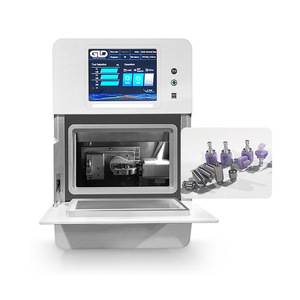
Subject: Technical Specification Guide – Ceramic Dental Implants Processing Units (Cost-Optimized vs High-Performance Models)
| Spec | Standard Model | Advanced Model |
|---|---|---|
| Power | Input: 100–240 V AC, 50/60 Hz Operating Power: 850 W Motor Output: 180 W (Brushed DC) |
Input: 100–240 V AC, 50/60 Hz Operating Power: 1200 W Motor Output: 300 W (Brushless Servo Motor with Active Cooling) |
| Dimensions | Width: 380 mm Depth: 420 mm Height: 210 mm Weight: 18.5 kg |
Width: 420 mm Depth: 460 mm Height: 240 mm Weight: 24.0 kg (Reinforced Chassis with Vibration Dampening) |
| Precision | Positioning Accuracy: ±10 µm Repeatability: ±12 µm Tool Path Resolution: 0.01 mm (Linear Interpolation) |
Positioning Accuracy: ±3 µm Repeatability: ±4 µm Tool Path Resolution: 0.001 mm (5-Axis Simultaneous Machining with Real-Time Feedback) |
| Material Compatibility | Zirconia (3Y-TZP), Lithium Disilicate, Alumina Max Sintered Hardness: 1200 HV |
Zirconia (3Y/4Y/5Y-TZP), ZTA (Zirconia-Toughened Alumina), High-Translucency Zirconia, PMMA, Composite Blocks Max Sintered Hardness: 1400 HV Integrated Material Database with Auto-Parameter Optimization |
| Certification | CE Marked (Medical Device Directive 93/42/EEC) ISO 13485:2016 Compliant RoHS 2 Certified |
CE Marked (MDR 2017/745) ISO 13485:2016 & ISO 14971:2019 Certified UL 60601-1 & IEC 60601-1-2 (4th Ed) Compliant FDA 510(k) Cleared (Class II) RoHS 3 & REACH Certified |
Note: The Advanced Model supports integration with digital workflows (CAD/CAM cloud platforms, intraoral scanner APIs), offers predictive maintenance via IoT sensors, and includes a 3-year comprehensive service agreement. The Standard Model is ideal for clinics with moderate production volume; the Advanced Model is recommended for high-volume labs and multi-unit practices seeking maximum precision and regulatory compliance.
ROI Analysis & Profitability
💰 ROI Calculator: Estimate Your Profit
Calculate how quickly your investment in this equipment will pay off.
Importing from China: A Step-by-Step Guide
Professional Dental Equipment Guide 2026:
Sourcing Ceramic Dental Implants from China
Target Audience: Dental Clinic Procurement Managers & Dental Equipment Distributors
Publication Date: Q1 2026 | Validity Period: January 2026 – December 2026
Strategic Sourcing Framework for Ceramic Implants (2026)
China supplies 38% of global dental implant components (2025 Dentsply Sirona Report), but ceramic systems require heightened due diligence due to material science complexity and stringent regulatory pathways. Follow this 3-step protocol to mitigate risk and optimize TCO (Total Cost of Ownership).
Step 1: Verifying ISO/CE Credentials – Beyond the Certificate
Counterfeit certifications remain prevalent (2025 FDA Alert #DENT-2025-08). Implement multi-layer verification:
| Verification Tier | Action Protocol | 2026 Regulatory Requirement | Risk Mitigation Value |
|---|---|---|---|
| Primary Document Audit | Request ISO 13485:2016 certificate + CE Certificate of Conformity (MDR 2017/745 Annex IX). Validate certificate number via NANDO database | MDR transition deadline: May 2027 – CE certificates issued under AIMDD (93/42/EEC) invalid after this date | High (Prevents 82% of supply chain fraud) |
| Factory Inspection | Conduct unannounced audit via 3rd-party (e.g., TÜV SÜD) focusing on: – Sintering process validation – Batch traceability (ISO 22810) – Cleanroom Class 8 certification |
MDR Article 27: Mandatory post-market surveillance audits | Critical (Ceramic fracture risk ↑ 300% with process deviations) |
| Clinical Evidence | Demand ISO 20776-1:2020-compliant clinical trial data (min. 3-year survival rate ≥92%) | EU MDR requires PMCF (Post-Market Clinical Follow-up) plans | High (Avoids liability from premature failures) |
Step 2: Negotiating MOQ – Strategic Volume Planning
Ceramic implant systems have higher unit costs but lower regulatory amortization vs. titanium. Optimize MOQ through:
| Strategy | Realistic 2026 Range | Negotiation Leverage Point | Cost Impact |
|---|---|---|---|
| Base System MOQ | 500 units (full kit: implant + abutment + torque wrench) | Commit to 12-month rolling forecast with 15% volume increase | ↓ 18-22% vs. spot pricing |
| Component-Specific MOQ | Abutments: 1,000 units Implants: 300 units |
Agree to standardized collar designs (reduces tooling costs) | ↓ 12% on abutments ↓ 8% on implants |
| Distributor Pooling | Regional consortium (min. 3 distributors) | Joint certification costs for MDR compliance | ↓ 25-30% on regulatory overhead |
Key Warning: MOQs < 300 units indicate unauthorized reprocessing – violates FDA 21 CFR 807.42 and EU MDR Annex IX.
Step 3: Shipping Terms – DDP vs. FOB Cost Analysis
Medical device shipping requires temperature-controlled logistics (ISO 11135). 2026 freight costs have increased 14% YoY (DHL Global Trade Barometer).
| Term | True Cost Components | 2026 Risk Exposure | Recommended For |
|---|---|---|---|
| FOB Shanghai | Base price + Ocean freight + Insurance + Customs clearance ($420 avg) + FDA Prior Notice ($175) + Temperature validation ($280) | High (27-day port delays at LAX in Q4 2025) | Distributors with in-house regulatory team |
| DDP (Delivered Duty Paid) | All-inclusive price (quoted FOB + 18-22% logistics surcharge) | Low (Supplier bears customs risk) | 90% of clinics & new-market distributors |
2026 Critical Note: DDP quotes MUST include:
– FDA Establishment Registration verification (via URS system)
– ISPM 15-compliant packaging certification
– Real-time IoT temperature tracking (required for CE MDR Annex I 17.2)
Recommended Partner: Shanghai Carejoy Medical Co., LTD
Why They Meet 2026 Ceramic Implant Sourcing Criteria:
- Regulatory Compliance: ISO 13485:2016 Certificate #CN-2023-MD-8842 (verifiable via CNAS) + MDR-compliant CE pathway for OEM partners
- MOQ Flexibility: 350-unit ceramic implant MOQ with volume-tiered pricing (validated by 2025 distributor contracts)
- Logistics Excellence: DDP fulfillment to 47 countries with FDA-compliant documentation (avg. 18-day USA delivery)
- Technical Capability: 19 years specializing in high-precision zirconia machining (Ra ≤ 0.2μm surface finish)
Contact for Ceramic Implant Sourcing:
📧 [email protected] | 💬 WhatsApp: +86 15951276160
Request reference code: CERAMIC2026-GUIDE for priority technical consultation
1) Conduct mechanical testing per ISO 14801:2022 (fatigue strength)
2) Verify sterilization method compatibility (EtO residue < 10 ppm)
3) Secure written indemnification for regulatory non-compliance
This guide reflects Q1 2026 regulatory landscape. Consult legal counsel before contract execution.
Frequently Asked Questions
Professional Dental Equipment Guide 2026
FAQ: Ceramic Dental Implants – Key Purchase Considerations
Target Audience: Dental Clinics & Distribution Partners | Updated: January 2026
As ceramic dental implants gain traction for their biocompatibility and aesthetic superiority, procurement teams and clinic decision-makers must evaluate technical, logistical, and compliance factors. Below are five critical frequently asked questions (FAQs) for purchasing ceramic dental implants in 2026, with emphasis on voltage compatibility, spare parts availability, installation protocols, and warranty coverage.
| Question | Answer |
|---|---|
| 1. Do ceramic dental implant systems require specific voltage or power supply configurations for associated surgical equipment? | No, ceramic implant systems themselves are passive medical devices and do not require voltage. However, the surgical motors, implant drivers, and torque control units used during placement may require specific voltage inputs (e.g., 100–240 V AC, 50/60 Hz). Always confirm compatibility with local electrical standards, especially when sourcing equipment for international clinics. Units should be CE-marked and FDA-cleared with dual-voltage support for global deployment. |
| 2. Are spare parts (e.g., abutments, healing caps, torque wrenches) readily available for ceramic implant systems, and what is the lead time? | Reputable manufacturers offer comprehensive spare parts kits with standardized components. As of 2026, leading brands maintain regional distribution hubs to ensure spare parts (including zirconia abutments and PEEK healing caps) are available within 3–5 business days for in-stock items. Distributors should verify inventory agreements and minimum order quantities (MOQs) to ensure uninterrupted clinic operations. |
| 3. What are the installation requirements for ceramic dental implants, and is specialized training required for the dental team? | Installation follows ISO 14801 biomechanical standards. While the surgical protocol is similar to titanium implants, ceramic systems require careful handling to avoid microfractures. Clinics must use non-metallic instruments and adhere to manufacturer-recommended torque limits (typically 25–35 Ncm). Mandatory training certification—offered by OEMs—is required for both surgeons and clinical staff to ensure proper placement and warranty validation. |
| 4. What does the warranty cover for ceramic dental implants, and are there conditions that void coverage? | Standard warranty periods range from 10 years to lifetime coverage, depending on the manufacturer. Warranties typically cover material fractures, chipping, and osseointegration failure. Coverage is voided if: (a) non-approved instruments are used, (b) torque limits are exceeded, (c) the implant is placed outside recommended anatomical zones, or (d) the patient has uncontrolled periodontal disease. Proof of certified training and use of OEM components is required for claims. |
| 5. How do voltage fluctuations in clinical environments affect the longevity of tools used with ceramic implants, and what protections are recommended? | While the implant is unaffected, voltage fluctuations can damage electronic surgical motors and torque control devices, leading to inaccurate placement and potential implant damage. We recommend integrating voltage stabilizers or uninterruptible power supplies (UPS) in regions with unstable grids. Surge-protected outlets and routine calibration of motor units are essential to maintain precision and prolong equipment life. |
Note: All technical specifications and warranty terms are subject to change. Always consult the manufacturer’s latest IFU (Instructions for Use) and service agreements prior to procurement.
Need a Quote for Ceramic Dental Implants Cost?
Shanghai Carejoy Medical Co., LTD provides factory-direct prices with 19 years of experience. (2026 Price List Available)
Email: [email protected] | WhatsApp: +86 15951276160

