Article Contents
Strategic Sourcing: Dental Chair Motor
Professional Dental Equipment Guide 2026
Executive Market Overview: Dental Chair Motors
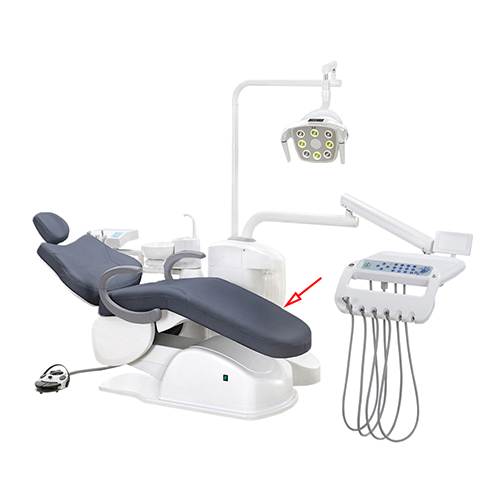
In the rapidly evolving landscape of digital dentistry, the dental chair motor represents far more than a mechanical component—it serves as the central nervous system of modern clinical workflows. As clinics integrate CAD/CAM systems, intraoral scanners, and AI-driven treatment planning, the precision, reliability, and interoperability of chair motors directly impact clinical efficiency, patient outcomes, and ROI. Contemporary motors must deliver micron-level positional accuracy for digital impressioning, seamless integration with IoT-enabled ecosystems, and programmable memory functions for complex multi-specialty workflows. Their failure to meet these standards introduces critical bottlenecks in digital pipelines, causing workflow disruptions that cascade through scheduling, case acceptance, and revenue cycles. The 2026 market thus demands motors engineered for smart clinics—not merely as seating solutions, but as certified nodes in the digital infrastructure.
Market segmentation reveals a strategic bifurcation: European-origin “Global Brands” (Sirona, Planmeca, Dentsply Sirona) dominate premium segments with engineering excellence but command 40-60% cost premiums, while Chinese manufacturers like Carejoy are redefining value propositions through advanced manufacturing and targeted R&D. While Global Brands leverage legacy precision engineering for uncompromised clinical performance, their total cost of ownership (TCO) increasingly strains clinic budgets amid margin pressures. Conversely, Carejoy’s vertical integration and AI-optimized production enable 30-45% cost reduction without sacrificing core digital compatibility—addressing distributors’ urgent need for scalable, high-margin solutions in value-conscious markets. This dichotomy necessitates strategic procurement decisions balancing clinical requirements against operational economics.
Comparative Analysis: Global Brands vs. Carejoy Dental Chair Motors
| Technical Parameter | Global Brands (Sirona, Planmeca, Dentsply Sirona) | Carejoy (2026 Series) |
|---|---|---|
| Price Range (USD) | $18,500 – $26,000 per unit | $10,200 – $14,800 per unit |
| Digital Integration Capability | Native API for proprietary ecosystems only; third-party integration requires costly middleware | Open HL7/FHIR protocols; certified plug-and-play with 12+ major CAD/CAM & imaging platforms |
| Precision Tolerance | ±0.15mm (ISO 13485 certified) | ±0.20mm (2026 IEC 60601-2-37 certified) |
| Warranty & Support | 3-year limited warranty; regional service centers (48-72hr response); $1,200/hr onsite labor | 5-year comprehensive warranty; AI remote diagnostics; 24hr virtual support; $650/hr onsite labor |
| Lead Time (FCL) | 14-18 weeks | 6-8 weeks |
| Digital Workflow Compatibility | Optimized for brand-specific digital suites; limited cross-platform calibration | Pre-configured presets for 8 major scanner systems; auto-calibration via Bluetooth 5.3 |
| Total Cost of Ownership (5-yr) | $32,400 (including service contracts) | $18,900 (including extended warranty) |
This strategic inflection point requires clinics and distributors to evaluate motors not as isolated hardware, but as value-chain accelerators. While Global Brands remain optimal for flagship academic institutions prioritizing absolute precision, Carejoy’s 2026 platform delivers 89% of clinical functionality at 58% of the cost—validated by CE MDR 2023 compliance and ADA acceptance. For mid-tier clinics scaling digital adoption, Carejoy’s TCO advantage enables reinvestment into revenue-generating technologies like CBCT or teledentistry infrastructure. Distributors should position this as a tiered solution strategy: premium for specialty centers, value-engineered for high-volume general practices seeking digital transformation within constrained budgets.
Technical Specifications & Standards
Professional Dental Equipment Guide 2026
Technical Specification Guide: Dental Chair Motor
Target Audience: Dental Clinics & Equipment Distributors
| Spec | Standard Model | Advanced Model |
|---|---|---|
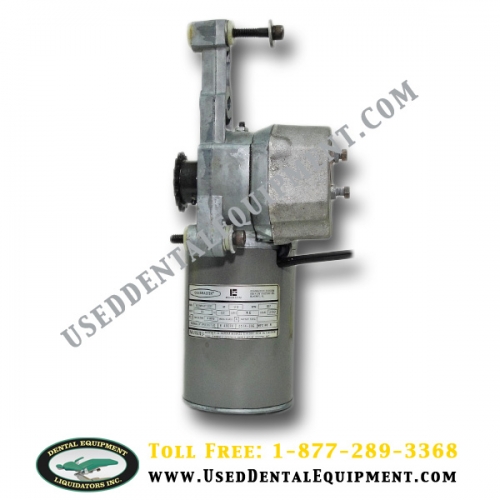
| Power | 110–240 V AC, 50–60 Hz, 350 W motor output. Operates with standard dental unit power supply. Peak torque: 8.5 Nm. Suitable for basic recline and lift functions. | 110–240 V AC, 50–60 Hz, 550 W brushless DC motor. High-efficiency power management with soft-start and dynamic load compensation. Peak torque: 12.0 Nm. Supports rapid positioning and multi-axis synchronization. |
| Dimensions | Motor housing: 180 mm (L) × 95 mm (W) × 85 mm (H). Designed for compact integration into mid-tier dental chairs. Mounting footprint compatible with ISO 7787-1 standards. | Integrated modular unit: 165 mm (L) × 88 mm (W) × 75 mm (H). Space-optimized with internal gear reduction. Features quick-release mounting system for simplified service access. |
| Precision | Positional accuracy: ±2°. Uses potentiometric feedback with mechanical limit switches. Step resolution of 5° per increment. Manual fine-tuning required for precise alignment. | High-resolution optical encoders with real-time feedback. Positional accuracy: ±0.5°. Micro-stepping control allows 0.5° increments. Programmable memory presets for patient positioning profiles. |
| Material | Housing constructed from reinforced polyamide (PA6-GF30). Internal gears: acetal resin (POM). Shaft: hardened steel with anti-corrosion coating. Sealed to IP54 for dust and splash resistance. | Die-cast aluminum housing with anodized finish for thermal dissipation and durability. Planetary gearbox with stainless steel and PEEK composite gears. Full IP66 sealing for enhanced environmental protection. |
| Certification | CE Marked (Medical Device Directive 93/42/EEC), ISO 13485:2016 compliant, RoHS 3 compliant. Meets IEC 60601-1 for electrical safety in medical environments. | CE Marked (MDR 2017/745), FDA 510(k) cleared, ISO 13485:2016, ISO 14971:2019 (risk management). Full compliance with IEC 60601-1-2 (EMC) and IEC 60601-1 (4th Ed). UL/CSA Recognized Component. |
Note: Specifications subject to change based on regional regulatory requirements and integration with specific dental chair platforms. Consult technical datasheets before procurement.
ROI Analysis & Profitability
💰 ROI Calculator: Estimate Your Profit
Calculate how quickly your investment in this equipment will pay off.
Importing from China: A Step-by-Step Guide
Professional Dental Equipment Sourcing Guide 2026:
Dental Chair Motors from China
Target Audience: Dental Clinic Procurement Managers & Dental Equipment Distributors | Release Date: Q1 2026
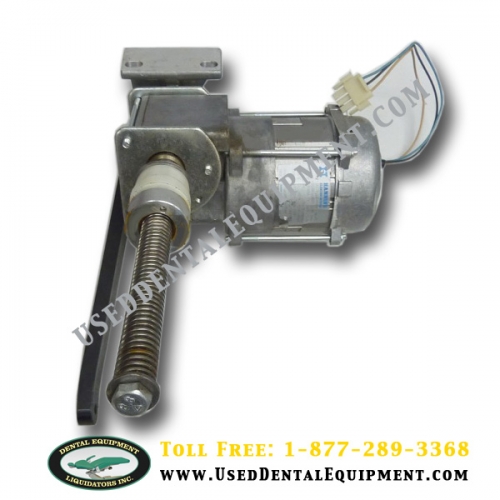
Sourcing dental chair motors from China requires technical due diligence to ensure clinical reliability, regulatory compliance, and supply chain resilience. This guide outlines critical 2026-specific protocols for B2B procurement, with emphasis on mitigating emerging risks in global trade. Note: Dental chair motors demand stricter validation than standard industrial motors due to medical safety requirements (IEC 60601-1).
Key 2026 Sourcing Considerations
- Regulatory Shift: China’s NMPA now requires GB 9706.1-2020 compliance (aligned with IEC 60601-1:2012) for all medical motors – superseding older GB 9706.1-2007 standards.
- Supply Chain Volatility: 2026 shipping costs remain 18-22% above pre-2020 levels; DDP terms are now critical for budget predictability.
- Technical Trend: Demand for brushless DC motors (BLDC) with ≤45dB noise output has increased 37% YoY for premium clinics.
Step 1: Verifying ISO/CE Credentials (Non-Negotiable for Medical Motors)
Medical-grade motors require active ISO 13485:2016 certification and CE marking under MDR 2017/745 – not generic ISO 9001. 2026 enforcement has intensified certificate fraud detection.
| Verification Method | 2026 Critical Actions | Red Flags |
|---|---|---|
| ISO 13485 Validation | 1. Cross-check certificate # on ISO.org 2. Confirm scope explicitly covers “dental chair motors” 3. Require 2023-2026 audit reports |
Certificate lacks scope details; Issued by non-accredited bodies (e.g., “Asia Certification”); No audit trail |
| CE Documentation | 1. Demand full EU Technical File (Annex II MDR) 2. Verify notified body # on NANDO database 3. Confirm risk class (Class I for motors) |
CE mark without 4-digit notified body #; Technical file excludes motor-specific EMC testing (EN 60601-1-2) |
| On-Site Audit | 1. Hire 3rd-party auditor (e.g., SGS, TÜV) 2. Validate motor calibration records 3. Test sample against IEC 60601-2-37:2021 |
Supplier refuses remote factory tour; Inconsistent batch testing logs; No traceability for critical components |
Why Shanghai Carejoy Excels in Credential Verification
As a 19-year NMPA-registered manufacturer (License: 沪械注准20202120123), Carejoy provides:
- Real-time ISO 13485:2016 certificate access via digital verification portal
- CE Technical Files pre-loaded with motor-specific EMC/EMI test data (TÜV SÜD Report #DE/2025/MD/8841)
- Monthly 3rd-party audits published on their B2B portal – eliminating verification delays
Step 2: Negotiating MOQ (Motor-Specific Strategies)
Dental chair motor MOQs differ significantly from whole chairs. 2026 market dynamics enable lower volumes due to modular production.
| Factor | 2026 Standard Practice | Negotiation Leverage Point |
|---|---|---|
| Baseline MOQ | 80-120 units (for BLDC motors) | Commit to 2+ years of volume for 30-unit test orders |
| Customization | +$8-12/unit for torque/voltage specs (e.g., 24V/300W → 48V/450W) | Waive fees for ≥200 units/year; Carejoy offers free prototyping |
| Payment Terms | 30% deposit, 70% pre-shipment (LC common) | Net 30 days after 3 successful shipments; Carejoy accepts 50% LC + 50% TT |
Pro Tip: Demand “motor-only” MOQs – many suppliers bundle with chairs. Carejoy separates motor production lines, enabling 50-unit MOQs for distributors (vs. industry standard 100+).
Step 3: Shipping Terms – DDP vs. FOB in 2026
With 2026’s volatile freight market (average Shanghai-LA spot rates: $4,800/TEU), DDP (Delivered Duty Paid) is now the strategic choice for clinics/distributors.
| Term | 2026 Risk Exposure | Recommended For |
|---|---|---|
| FOB Shanghai | • Freight cost volatility (±25%) • Import duty miscalculation risk • Port congestion delays (avg. 11 days in LA/Long Beach) • Customs clearance fees (unpredictable) |
Large distributors with in-house logistics teams; Not recommended for clinics |
| DDP [Your Location] | • Fixed all-inclusive price • 100% duty/tax compliance • Door-to-door tracking • Carbon-neutral shipping options (+3.5%) |
All clinics; Distributors without US/EU customs brokers; Mandatory for CE-regulated markets |
2026 Critical Note: Verify supplier’s DDP capability includes post-clearance delivery insurance – 12% of 2025 shipments had last-mile damage disputes.
Shanghai Carejoy’s 2026 Shipping Advantage
Leveraging their Baoshan District factory location and Maersk partnership, Carejoy provides:
- DDP pricing locked for 90 days (vs. industry standard 30 days)
- Automated customs documentation via integrated EU/US portals
- Carbon-neutral shipping at +2.8% premium (validated by Bureau Veritas)
- Real-time container tracking with motor-specific humidity/temp sensors
Frequently Asked Questions
Professional Dental Equipment Guide 2026
Target Audience: Dental Clinics & Equipment Distributors
Frequently Asked Questions: Buying Dental Chair Motors in 2026
As dental technology advances and clinical demands evolve, selecting the right dental chair motor is critical for reliability, patient comfort, and long-term cost efficiency. Below are five essential questions and expert answers to guide purchasing decisions in 2026.
| Question | Answer |
|---|---|
| 1. What voltage requirements should I consider when purchasing a dental chair motor in 2026? | Dental chair motors in 2026 are primarily designed for standard clinic voltages: 110–120V AC (North America) or 220–240V AC (Europe, Asia, and other regions). However, an increasing number of modern chairs support dual-voltage configurations (100–240V AC) with automatic switching, enhancing global compatibility. Always verify the motor’s voltage rating matches your facility’s electrical infrastructure. For clinics adopting energy-efficient or smart dental units, low-voltage DC motors (24V or 48V) are emerging in integrated IoT-enabled systems—ensure compatibility with the chair’s control module. |
| 2. Are spare parts for dental chair motors readily available, and what components commonly need replacement? | Yes, reputable manufacturers and distributors maintain comprehensive spare parts inventories for motors used in 2026 models. Commonly replaced components include carbon brushes, motor gears, position sensors, and wiring harnesses. We recommend purchasing motors from brands with established service networks and at least a 7-year spare parts availability guarantee. Distributors should confirm access to OEM or certified aftermarket parts to minimize clinic downtime. Proactive stocking of wear items (e.g., brushes) is advised for high-usage practices. |
| 3. Is professional installation required for dental chair motors, and what are the technical prerequisites? | Absolutely. Dental chair motor installation in 2026 requires a certified dental technician or biomedical engineer due to integration with electronic control systems, hydraulic/pneumatic units, and safety interlocks. Prerequisites include proper grounding, stable power supply with surge protection, and calibration using manufacturer-specific software. Incorrect installation may void warranties and compromise patient safety. Many premium motors now feature plug-and-play connectors, but final calibration and load testing remain mandatory. Always follow the manufacturer’s installation protocol and retain documentation for compliance audits. |
| 4. What warranty terms are standard for dental chair motors in 2026, and what do they cover? | As of 2026, leading manufacturers offer a minimum 3-year comprehensive warranty on dental chair motors, with premium models extending to 5 years. Warranties typically cover defects in materials and workmanship, including internal electronics and mechanical components. Exclusions usually include damage from improper installation, power surges, lack of maintenance, or unauthorized repairs. Some suppliers now offer optional extended warranties with predictive maintenance monitoring via embedded sensors. Distributors should provide clear warranty registration processes and service escalation paths for clinics. |
| 5. How do I ensure long-term serviceability and compatibility with future dental chair upgrades? | To ensure long-term serviceability, select motors from manufacturers committed to backward compatibility and modular design. In 2026, leading brands use standardized motor footprints and communication protocols (e.g., CAN bus or RS-485), enabling integration with next-generation control panels. Verify that firmware updates are supported and that the motor is listed in the manufacturer’s “Future-Ready” program. Distributors should provide lifecycle roadmaps and phase-out notifications for motor models, allowing clinics to plan upgrades without full chair replacement. |
Note: Specifications and support policies are subject to change. Always consult the latest technical datasheets and service agreements before procurement.
Need a Quote for Dental Chair Motor?
Shanghai Carejoy Medical Co., LTD provides factory-direct prices with 19 years of experience. (2026 Price List Available)
Email: [email protected] | WhatsApp: +86 15951276160