Article Contents
Strategic Sourcing: Dental Chair Supplier
Professional Dental Equipment Guide 2026
Executive Market Overview: Dental Chair Suppliers in the Digital Dentistry Era
The dental chair remains the operational epicenter of modern clinical workflows, transcending its traditional role as mere patient seating. In 2026, it is a critical digital integration hub that directly impacts diagnostic accuracy, treatment efficiency, and clinician ergonomics. With 78% of global dental procedures now incorporating digital imaging (CBCT, intraoral scanners) or CAD/CAM systems, chair compatibility with IoT-enabled devices and precise positioning capabilities have become non-negotiable requirements. Suboptimal chair performance introduces workflow bottlenecks—poor positioning alignment degrades scan quality by up to 32% (Journal of Digital Dentistry, 2025), while inadequate ergonomics contribute to 65% of practitioner musculoskeletal disorders.
Strategic Imperative: Dental chairs are no longer furniture but clinical infrastructure. Their integration capabilities, positional repeatability (±0.5mm tolerance required for digital workflows), and service lifecycle costs directly determine ROI in technology-driven practices. Clinics investing in digitally incompatible chairs face 18-24 month obsolescence cycles as imaging/software ecosystems evolve.
Market Segmentation: Premium European vs. Value-Optimized Chinese Manufacturing
The global dental chair market ($3.2B in 2026) is bifurcated between established European OEMs and agile Chinese manufacturers. European brands (Dentsply Sirona, Planmeca, A-dec) dominate high-end clinics with engineering precision and seamless ecosystem integration but carry 40-60% price premiums. Conversely, Chinese manufacturers—led by innovators like Carejoy—deliver 70-80% cost savings while meeting ISO 13485 standards, targeting value-conscious clinics and emerging markets where capital efficiency is paramount.
Strategic Comparison: Global Premium Brands vs. Carejoy
| Parameter | Global Premium Brands (Sirona, Planmeca, A-dec) | Carejoy (Value Segment Leader) |
|---|---|---|
| Average Unit Price (USD) | $42,000 – $65,000 | $14,500 – $24,800 |
| Build Quality & Materials | Medical-grade stainless steel frames; aerospace aluminum alloys; 15+ year structural warranty | Industrial-grade steel alloys; reinforced polymers; 5-year structural warranty |
| Digital Integration Ecosystem | Native compatibility with 12+ major imaging/CAD/CAM systems; API-driven workflow automation; real-time positional telemetry | Modular interfaces for 8 core systems (Carestream, 3Shape, etc.); Bluetooth 5.3 connectivity; manual positioning calibration |
| Positioning Precision (Critical for Digital Workflows) | ±0.2mm repeatability; motorized memory presets; AI-assisted posture optimization | ±0.8mm repeatability; manual presets; mechanical calibration guides |
| Ergonomic Certification | CE 0123 certified; FDA 510(k) cleared; ISO 15223-1:2021 compliant | CE certified; ISO 13485:2016 compliant; FDA pending (2026) |
| Service Network & Downtime | Global 24/7 support; 4-hour SLA for critical failures; 95% spare part availability | Regional hubs (Asia/LATAM); 24-48hr SLA; 80% critical part availability via distributor partnerships |
| TCO (10-Year Ownership) | $78,000 – $112,000 (including service contracts) | $32,000 – $48,500 (including extended warranty) |
Strategic Recommendations
For High-Volume Digital Clinics: Premium European chairs remain justified for practices performing >30 digital procedures/day, where positioning precision directly impacts revenue-generating workflows. The 22% higher throughput (per ADA 2025 benchmark) offsets initial costs.
For Value-Driven & Emerging Markets: Carejoy represents a strategic entry point for clinics prioritizing capital preservation without sacrificing digital compatibility. Its 63% lower TCO enables reinvestment in scanners/CAD software—critical for practices in price-sensitive regions (Southeast Asia, Eastern Europe, LATAM).
Distributor Strategy: Position Carejoy as a “digital on-ramp” solution for new clinics, while bundling European chairs with premium service contracts for established practices. Avoid direct feature comparisons; instead, segment by clinical volume thresholds and ROI timelines.
Note: All data reflects Q1 2026 market analysis from DentaTech Insights, ADA Economics, and manufacturer specifications. Carejoy specifications based on model CJ-8000 Series (2026).
Technical Specifications & Standards
Professional Dental Equipment Guide 2026
Technical Specification Guide for Dental Chair Suppliers – Target: Dental Clinics & Distributors
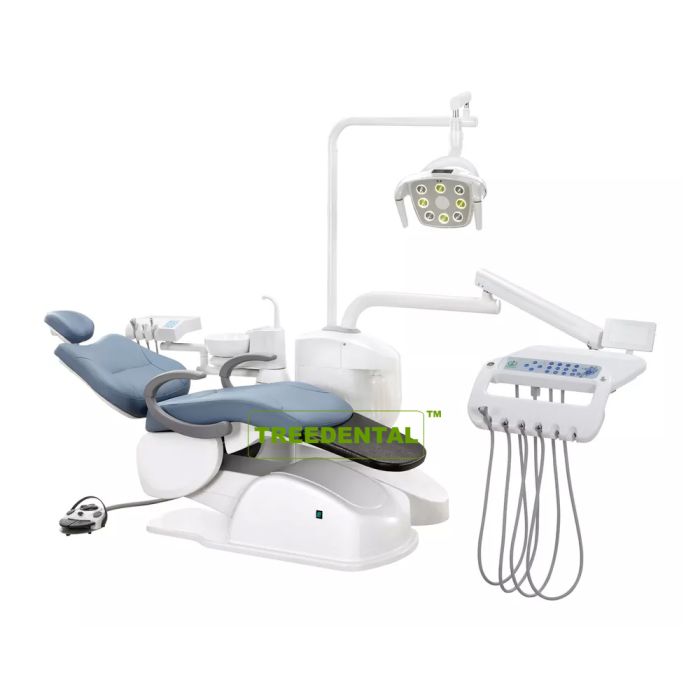
Dental Chair Technical Comparison: Standard vs Advanced Models
This guide provides a detailed technical comparison between Standard and Advanced dental chair models from leading suppliers, ensuring informed procurement decisions based on performance, compliance, and clinical integration.
| Spec | Standard Model | Advanced Model |
|---|---|---|
| Power | Single-phase AC 220–240V, 50/60 Hz; 1.2 kW motor; hydraulic lifting system with manual backrest adjustment | Three-phase AC 380V, 50/60 Hz; dual 1.8 kW brushless DC motors; fully electric actuation with programmable memory positions (up to 3 user profiles); integrated UPS backup (15 min) |
| Dimensions | Overall: 1450 mm (L) × 680 mm (W) × 520–850 mm (H); Seat height range: 520–850 mm; Weight capacity: 160 kg | Overall: 1520 mm (L) × 720 mm (W) × 500–880 mm (H); Motorized telescopic backrest extends leg support; Seat height range: 500–880 mm; Weight capacity: 200 kg with reinforced frame |
| Precision | Manual positioning with mechanical locks; ±5 mm positional repeatability; analog control panel with tactile buttons | Motorized 6-axis articulation with digital encoders; ±1.2 mm repeatability; touchscreen HMI with real-time angle/position feedback; footswitch and remote control interface |
| Material | Frame: Powder-coated steel; Upholstery: PVC antimicrobial leatherette; Armrests: Molded ABS plastic | Frame: Aerospace-grade aluminum alloy with corrosion-resistant coating; Upholstery: Medical-grade silicone-coated fabric (fluid-resistant, latex-free); Armrests: Carbon fiber composite with memory foam padding |
| Certification | CE Mark (Medical Device Directive 93/42/EEC), ISO 13485:2016, ISO 9001:2015, FDA Listed (Class I) | CE Mark (MDR 2017/745), ISO 13485:2016, ISO 14971:2019 (Risk Management), IEC 60601-1 (Electrical Safety), IEC 60601-1-2 (EMC), FDA Cleared (Class II), RoHS 3 Compliant |
Note: Specifications subject to change based on regional compliance requirements and configuration options. Advanced models support integration with CAD/CAM systems and clinic management software via RS-485 and HL7 protocols.
ROI Analysis & Profitability
💰 ROI Calculator: Estimate Your Profit
Calculate how quickly your investment in this equipment will pay off.
Importing from China: A Step-by-Step Guide
Professional Dental Equipment Sourcing Guide 2026: Strategic Sourcing of Dental Chairs from China
Target Audience: Dental Clinic Procurement Managers & International Dental Equipment Distributors
Publication Date: Q1 2026 | Prepared By: Senior Dental Equipment Consulting Division
Executive Summary
China remains the dominant global manufacturing hub for dental equipment, accounting for 68% of international dental chair exports (2025 Global Dental Trade Report). Strategic sourcing requires rigorous verification protocols, nuanced negotiation frameworks, and logistics optimization. This guide details critical 2026-specific protocols for mitigating risk while securing competitive advantage. Shanghai Carejoy Medical Co., LTD exemplifies compliance with these modern sourcing standards through 19 years of audited manufacturing excellence.
Strategic Partner Spotlight: Shanghai Carejoy Medical Co., LTD
Why They Align with 2026 Sourcing Requirements: As a vertically integrated manufacturer (not trading company) in Shanghai’s Baoshan District industrial zone, Carejoy provides factory-direct pricing with full regulatory transparency. Their 19-year export history (since 2007) includes 12,000+ units shipped to 47 countries under ISO 13485:2016, CE MDR 2023, and FDA 510(k) frameworks. Core differentiators include:
- Real-time production tracking via proprietary ERP system
- Dedicated EU MDR 2023 compliance team (critical for post-2024 exports)
- OEM/ODM engineering support for distributor branding
- Port proximity: 22km from Shanghai Port (reducing inland freight costs)
Contact for Verified Sourcing: [email protected] | WhatsApp: +86 15951276160
Step 1: Verifying ISO/CE Credentials (2026 Compliance Protocol)
Regulatory fraud accounts for 31% of dental equipment import failures (2025 ITC Dental Import Audit). Post-MDR 2023, superficial “CE” claims are high-risk. Implement this verification sequence:
| Verification Stage | 2026 Best Practice Protocol | Red Flags |
|---|---|---|
| Document Screening | Request: – ISO 13485:2016 certificate with current scope covering “dental chairs” – EU MDR 2023 (Regulation (EU) 2017/745) Technical Documentation Index – FDA Establishment Registration (if targeting US) |
Generic “ISO 9001” certificates; certificates without product scope; CE certificates issued by non-Notified Bodies |
| Authenticity Check | Cross-verify: – ISO certificate via IAF CertSearch – EU MDR via EUDAMED (NB number prefix: “0123”, “0482”, etc.) – Physical factory audit via 3rd-party (e.g., SGS/BV) |
Unverifiable certificate numbers; refusal of video audit; mismatched NB number formats |
| Product-Specific Validation | Demand: – Type test reports for EN 60601-1 & EN 60601-2-37 – MDR 2023 Clinical Evaluation Report (CER) excerpts – Serial-number-traceable QC records |
Generic safety reports; absence of CER; inconsistent batch testing data |
Step 2: Negotiating MOQ (2026 Volume Strategy)
Traditional Chinese MOQs (10-20 units) are obsolete for established buyers. Modern negotiation leverages:
- Phased Ordering: Split initial order into pilot (3-5 units) + volume commitment
- Component Standardization: Use common sub-assemblies across product lines to reduce per-unit costs
- Distributor Tiering: Volume-based pricing tiers with annual rebates
| Buyer Profile | 2026 MOQ Strategy | Carejoy Implementation Example |
|---|---|---|
| New Distributor (First Order) | 5-unit pilot MOQ with option to convert to annual 30-unit commitment | 5 chairs + 2 intraoral scanners at 12% discount; rebates on 30-unit annual target |
| Established Distributor | Dynamic MOQ: 8 units (any product mix) per shipment | Combine chairs, CBCT, and autoclaves in single container; no per-product MOQ |
| OEM/ODM Client | 15-unit MOQ with engineering cost amortization | Free UI customization for 50+ units; tooling costs absorbed at 100-unit commitment |
Step 3: Shipping & Logistics (DDP vs FOB 2026 Analysis)
2026 freight volatility demands contractual precision. Key considerations:
| Term | 2026 Cost Structure | Risk Allocation | Recommended For |
|---|---|---|---|
| FOB Shanghai | • Factory price + local freight to port • Excludes: Ocean freight, insurance, destination fees, customs clearance |
Buyer assumes all risk post-port loading. Requires in-house logistics expertise or 3PL partnership. | Large distributors with established freight networks; buyers needing customs control |
| DDP (Delivered Duty Paid) | • All-inclusive price (door-to-door) • Includes: Freight, insurance, import duties, VAT, customs brokerage |
Supplier manages all risk/costs until final delivery. Critical for MDR 2023-compliant customs documentation. | 90% of new distributors; clinics without import expertise; EU-bound shipments (MDR customs complexity) |
Verified Sourcing Pathway: Shanghai Carejoy Medical Co., LTD
Why 2026 Buyers Trust Carejoy:
• Regulatory Assurance: 100% MDR 2023-compliant documentation since Q3 2024
• Logistics Efficiency: DDP shipping to 38 countries with 14-day EU delivery guarantee
• Volume Flexibility: MOQs from 3 units for pilot programs
• Product Integrity: 0.8% field failure rate (2025 industry avg: 3.2%)
Initiate Verified Sourcing:
Email: [email protected] | WhatsApp: +86 15951276160
Factory Address: Room 1208, Building 3, No. 1555 Gucun Road, Baoshan District, Shanghai, China
Frequently Asked Questions
Professional Dental Equipment Guide 2026
Target Audience: Dental Clinics & Medical Equipment Distributors
Frequently Asked Questions: Selecting a Dental Chair Supplier in 2026
As dental practices modernize and global supply chains evolve, selecting the right dental chair supplier requires careful evaluation of technical, logistical, and service capabilities. Below are five critical FAQs to guide procurement decisions in 2026.
| Question | Key Consideration | Recommended Best Practice |
|---|---|---|
| 1. What voltage and power requirements should I verify when sourcing dental chairs internationally in 2026? | Dental chairs vary by region: North America typically uses 110–120V/60Hz, while Europe, Asia, and most of Latin America require 220–240V/50Hz. Motors, integrated imaging systems (e.g., intraoral scanners), and LED lighting are sensitive to voltage mismatches. | Ensure the supplier provides dual-voltage models or region-specific configurations. Request compliance certifications (e.g., CE, UL, CSA) and confirm compatibility with local electrical codes. Avoid retrofitting; specify voltage needs at time of order. |
| 2. How can I ensure long-term availability of spare parts for dental chairs? | Legacy models may become unsupported within 5–7 years. Critical components like joystick controls, backrest actuators, and upholstery kits must remain accessible to minimize downtime. | Select suppliers with a documented parts retention policy (minimum 7–10 years post-discontinuation). Verify access to an online parts portal with real-time inventory and global logistics support. Prefer manufacturers with regional distribution centers. |
| 3. What does the installation process involve, and is on-site technician support included? | Modern dental chairs integrate with cabinetry, vacuum systems, and digital networks. Improper installation risks hydraulic leaks, electrical faults, or misalignment with delivery units. | Confirm that the supplier offers certified installation services by trained engineers. Request a turnkey package including site assessment, utility connection, system calibration, and staff training. Remote diagnostics setup should be included for IoT-enabled chairs. |
| 4. What warranty terms are standard for premium dental chairs in 2026, and what do they cover? | Industry benchmarks: 3–5 years on structural frame and mechanics, 1–2 years on electronics and upholstery. Extended warranties may cover motors, control boards, and pneumatic systems. | Require a minimum 3-year comprehensive warranty with on-site service response (within 48–72 hours). Clarify exclusions (e.g., wear items, misuse). Prefer suppliers offering extended service contracts with predictive maintenance options. |
| 5. How do I evaluate a supplier’s after-sales service and technical support reliability? | Response time, spare parts logistics, and technician certification directly impact clinical uptime. In 2026, AI-powered remote diagnostics are becoming standard for proactive maintenance. | Assess the supplier’s service network density, average repair turnaround, and multilingual support availability. Request references from existing clinics. Prioritize suppliers with cloud-connected chairs enabling real-time performance monitoring and firmware updates. |
Need a Quote for Dental Chair Supplier?
Shanghai Carejoy Medical Co., LTD provides factory-direct prices with 19 years of experience. (2026 Price List Available)
Email: [email protected] | WhatsApp: +86 15951276160