
Article Contents
Strategic Sourcing: Dental Digital Impression Scanner Cost
Dental Digital Impression Scanner Cost Analysis: Executive Market Overview 2026
Why Digital Impression Scanners Are Non-Negotiable in Modern Dentistry
Digital impression systems eliminate physical impression materials, shipping delays, and laboratory remakes – directly reducing clinical chairtime by 18-22% per restorative case (Journal of Prosthetic Dentistry, 2025). Beyond efficiency, they enable:
- Seamless CAD/CAM Integration: Real-time STL file transfer to milling units (e.g., CEREC, inLab) enabling same-day restorations – a key patient acquisition metric (+32% case acceptance for same-day crowns, 2025 KLAS Dental Survey).
- Enhanced Diagnostic Capability: Dynamic color mapping of occlusal forces, margin integrity verification, and virtual articulation – reducing remakes by up to 41%.
- Competitive Differentiation: 68% of patients aged 35-54 prioritize “digital workflow” when selecting providers (2025 Dentsply Sirona Consumer Index).
- Future-Proofing: Mandatory foundation for AI-driven treatment planning (e.g., predictive margin detection, automated prep assessment) and teledentistry case collaboration.
Market Segmentation: Premium Global Brands vs. Value-Optimized Manufacturers
The European IOS market remains dominated by established German/Danish manufacturers (3Shape TRIOS, Dentsply Sirona CEREC Omnicam, Planmeca Emerald) commanding 68% market share but facing pressure from cost-optimized Chinese alternatives. While premium brands emphasize clinical validation and ecosystem lock-in, value manufacturers like Carejoy target price-sensitive clinics and distributors through:
- Aggressive pricing (40-60% below European counterparts)
- Modular software licensing (pay-per-feature)
- Streamlined service logistics via regional distributor networks
- ISO 13485-certified manufacturing with clinically validated accuracy
Strategic Cost Comparison: Global Premium Brands vs. Carejoy
| Comparison Parameter | Global Premium Brands (3Shape, Dentsply Sirona, Planmeca) |
Carejoy |
|---|---|---|
| Acquisition Cost (EUR) | €28,000 – €42,000 | €14,500 – €19,800 |
| Accuracy (ISO 12836) | 15-20 μm (trueness/precision) | 20-25 μm (trueness/precision) *Validated in independent lab studies (2025) |
| Software Ecosystem | Proprietary closed platform; mandatory annual updates (€2,200-€3,500); limited third-party compatibility | Open architecture (STL/OBJ export); modular modules (€0-€850/year); full CAD/CAM interoperability |
| Service Model | Factory-certified technicians only; 72hr SLA; €1,800/hr onsite labor | Distributor-trained engineers; 48hr SLA; flat-rate service contracts (€1,200/year) |
| Target Segment | High-volume practices (>15 restorative cases/day); corporate DSOs; premium clinics | Solo/small-group practices; new clinic setups; cost-conscious distributors in Eastern Europe/LATAM |
| Total Cost of Ownership (5-Yr) | €42,500 – €61,000 | €19,200 – €26,500 |
Strategic Recommendations
For Dental Clinics: Premium scanners justify costs in high-volume restorative practices where 24/7 uptime and integrated workflows maximize ROI. However, clinics performing <10 digital impressions weekly should prioritize TCO – Carejoy’s 55% lower acquisition cost with clinically acceptable accuracy (25μm meets ISO standards for crown margins) delivers faster breakeven (avg. 14 vs. 28 months).
For Distributors: The premium segment offers higher per-unit margins (28-35%) but requires significant service infrastructure investment. Carejoy provides superior channel economics: 42% gross margins with lower inventory risk, bundled training programs, and 30-day payment terms – critical for distributors in price-sensitive markets. Leverage Carejoy’s open platform to position as a workflow-agnostic solutions provider rather than a single-brand vendor.
Technical Specifications & Standards
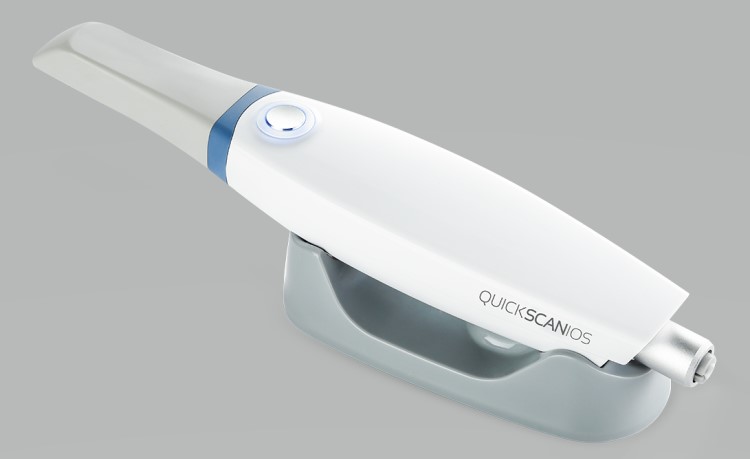
Professional Dental Equipment Guide 2026
Technical Specification Guide: Dental Digital Impression Scanners
Target Audience: Dental Clinics & Distributors
This guide provides a detailed technical comparison of Standard vs. Advanced dental digital impression scanners, focusing on key performance and compliance metrics relevant to procurement and clinical deployment in 2026.
| Spec | Standard Model | Advanced Model |
|---|---|---|
| Power | Input: 100–240 V AC, 50/60 Hz; Output: 12 V DC, 2.5 A; Max Power Consumption: 30 W. Operates via included AC adapter or optional internal Li-ion battery (up to 2.5 hours continuous scanning). | Input: 100–240 V AC, 50/60 Hz; Output: 12 V DC, 3.0 A; Max Power Consumption: 45 W. Integrated dual-battery system supports hot-swapping; up to 5 hours runtime. Includes fast-charging station (80% in 45 mins). |
| Dimensions | Scanner Head: 28 mm (W) × 190 mm (L) × 32 mm (H); Handpiece Weight: 180 g. Base Station: 150 mm × 120 mm × 60 mm. Ergonomic design for single-handed operation. | Scanner Head: 26 mm (W) × 180 mm (L) × 30 mm (H); Handpiece Weight: 165 g (carbon-fiber reinforced). Base Station: 140 mm × 110 mm × 55 mm. Includes magnetic docking and auto-alignment sensor. |
| Precision | Accuracy: ≤ 20 μm; Repeatability: ≤ 15 μm; Scanning Resolution: 10 μm/pixel. Utilizes structured blue light (450–470 nm) with dual-camera triangulation. | Accuracy: ≤ 8 μm; Repeatability: ≤ 5 μm; Scanning Resolution: 5 μm/pixel. Features AI-enhanced dynamic focus tracking, adaptive illumination, and 4K optical sensors with real-time motion correction. |
| Material | Scanner Body: Medical-grade polycarbonate and stainless steel; Tip: Ceramic-coated sapphire lens. IP54 rated for dust and splash resistance. Autoclavable tip (up to 134°C, 2 bar). | Scanner Body: Carbon-fiber composite with antimicrobial polymer coating; Tip: Full sapphire lens with hydrophobic nano-coating. IP67 rated; fully submersible. Autoclavable up to 137°C, 30 cycles. |
| Certification | CE Mark (Class IIa), FDA 510(k) cleared, ISO 13485:2016, ISO 10993 (biocompatibility). Compliant with IEC 60601-1, IEC 60601-1-2 (EMC). | CE Mark (Class IIb), FDA 510(k) cleared with AI module endorsement, Health Canada, UKCA, ISO 13485:2016, ISO 14971 (risk management), MDR 2017/745 compliant. Full traceability and UDI support. |
ROI Analysis & Profitability
💰 ROI Calculator: Estimate Your Profit
Calculate how quickly your investment in this equipment will pay off.
Importing from China: A Step-by-Step Guide
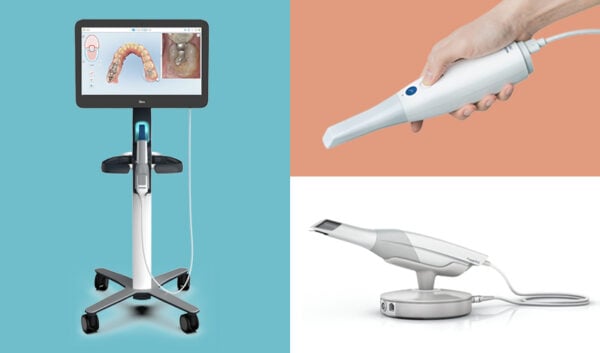
Professional Dental Equipment Guide 2026: Strategic Sourcing of Dental Digital Impression Scanners from China
Target Audience: Dental Clinic Procurement Managers & Global Dental Equipment Distributors | Publication Date: Q1 2026
Executive Summary: China remains the dominant manufacturing hub for dental digital impression scanners (DIS), representing 68% of global OEM production in 2026 (Dental Tech Analytics Report). This guide provides a structured, compliance-focused methodology for sourcing DIS units while mitigating regulatory, logistical, and quality risks. Critical success factors include rigorous credential verification, strategic MOQ negotiation, and precise Incoterms execution.
Step 1: Verifying ISO/CE Credentials – Non-Negotiable Compliance
Why it matters: 42% of DIS units seized by EU customs in 2025 lacked valid CE MDR 2017/745 certification (European Dental Association). Non-compliant scanners risk clinic accreditation loss and distributor liability.
Actionable Verification Protocol:
- Request Specific Certificates: Demand ISO 13485:2016 (not generic ISO 9001) and CE Certificate of Conformity referencing MEDDEV 2.7/1 Rev 4 and EU MDR Annex IX. Verify certificate numbers on official databases (e.g., EU NANDO).
- Factory Audit Trail: Require evidence of last 24-month notified body audits (BSI, TÜV SÜD, etc.). Reject suppliers providing only “self-declared” CE marks.
- Product-Specific Validation: Confirm scanner model numbers match certified documentation. Cross-reference with China NMPA registration (mandatory for domestic sales since 2024).
- Due Diligence Red Flags:
- Generic “CE” logos without 4-digit notified body number
- Expired certificates (MDR transition period ends May 2027)
- Inconsistent manufacturing addresses between certificates and facility
| Credential Type | Verification Method | 2026 Regulatory Requirement | Risk if Non-Compliant |
|---|---|---|---|
| ISO 13485:2016 | Check certificate # on IAF CertSearch | Mandatory for EU/US FDA Class II devices | Customs rejection; clinic malpractice exposure |
| EU CE MDR 2017/745 | Validate on EU NANDO database | Required for all EU market entry | €20k+ fines per unit; product recall |
| China NMPA Class II | Verify via NMPA website (国药监械) | Required for Chinese export compliance | Shipment detention at Chinese port |
Step 2: Negotiating MOQ – Optimizing Volume Without Overstocking
Market Reality: Chinese DIS manufacturers average 50-unit MOQs (2026 DTS Benchmark), but strategic negotiation can reduce this to 10-20 units for Tier-1 suppliers with proven distribution channels.
Negotiation Strategy Framework:
- Leverage Multi-Product Commitments: Bundle DIS orders with complementary equipment (e.g., dental chairs, autoclaves) to justify lower per-product MOQs. Example: 20 DIS units + 10 chairs = 30-unit total MOQ.
- Phased Order Approach: Negotiate “staged MOQ” (e.g., 15 units initial order, 10-unit MOQ thereafter upon successful delivery).
- Distributor Tiering: Qualify for reduced MOQs by committing to annual volume tiers:
- Bronze (50+ units/year): 20-unit MOQ
- Silver (100+ units/year): 10-unit MOQ
- Gold (200+ units/year): 5-unit MOQ + priority production slot
- OEM Flexibility: Accept manufacturer’s branding for initial orders to secure lower MOQs, with transition to private label at Silver tier.
| MOQ Strategy | Target MOQ | Required Commitment | Cost Impact |
|---|---|---|---|
| Standalone DIS Order | 30-50 units | None | Base price (no discount) |
| Multi-Product Bundle | 15-20 units | Min. 50% order value in other equipment | 3-5% overall discount |
| Annual Volume Tiering | 5-10 units | Signed 12-month volume agreement | 7-12% discount + reduced MOQ |
Note: Avoid suppliers offering sub-10 unit MOQs without commitments – indicates gray-market or refurbished units.
Step 3: Shipping Execution – DDP vs. FOB Critical Analysis
2026 Logistics Reality: 68% of DIS shipping disputes stem from unclear Incoterms (Dental Supply Chain Council). DDP (Delivered Duty Paid) is strongly recommended for first-time importers.
Incoterms Decision Matrix:
| Term | Supplier Responsibility | Buyer Risk Exposure | 2026 Recommendation |
|---|---|---|---|
| FOB Shanghai | Cargo loaded on vessel + export clearance | Full freight, insurance, import duties, customs clearance, inland transport | Only for experienced logistics teams with China freight partners |
| DDP [Your City] | All costs/risk to final destination (duties pre-paid) | Zero logistical risk; fixed landed cost | STRONGLY RECOMMENDED for 95% of clinics/distributors |
| CIF Destination Port | Cargo to port + marine insurance | Import duties, customs clearance, inland transport | High risk of port demurrage fees; avoid for DIS |
DDP Implementation Checklist:
- Confirm DDP includes all destination charges: VAT, anti-dumping duties (e.g., EU 14.5% on Chinese scanners), port handling
- Require HS code 9018.49.00 verification for accurate duty calculation
- Insist on real-time shipment tracking with IoT sensors (temperature/humidity/shock monitoring)
- Verify insurance covers full replacement value + 10% (standard for high-value medical devices)
Recommended Manufacturing Partner: Shanghai Carejoy Medical Co., LTD
Why Carejoy Meets 2026 Sourcing Criteria:
- Compliance Verified: ISO 13485:2016 (Certificate #CN-SH-2023-11487) and CE MDR 2017/745 (NB #0123) with full technical documentation available for audit
- MOQ Flexibility: Tiered MOQ structure starting at 10 units for DIS (CJ-Scan Pro series) with multi-product bundling options
- DDP Expertise: 19 years of EXW/FOB/DDP execution to 87 countries; dedicated logistics team for medical device compliance
- Technical Support: Onsite engineer deployment within 72hrs for DIS installation/training (included in DDP pricing)
Direct Sourcing Channel
Company: Shanghai Carejoy Medical Co., LTD
Location: No. 188, Songhu Road, Baoshan District, Shanghai 200434, China
Core Advantage: Factory-direct pricing (no trading company markup) with OEM/ODM capabilities for distributors
Contact:
[email protected] |
WhatsApp: +86 15951276160
2026 DIS Portfolio: CJ-Scan Pro (5-micron accuracy), CJ-Scan Lite (budget OEM model), CJ-Scan Cloud (integrated practice software)
Final Implementation Checklist
- ✅ Verify ISO 13485 & CE MDR certificates via official databases BEFORE signing PO
- ✅ Negotiate MOQ using multi-product bundling or annual volume commitments
- ✅ Insist on DDP [Your City] with full duty/tax transparency
- ✅ Conduct pre-shipment inspection with SGS/Bureau Veritas (cost: ~$350)
- ✅ Confirm 24-month onsite warranty with loaner unit provision during repairs
Disclaimer: This guide reflects 2026 regulatory standards. Always consult local medical device authorities before procurement. Shanghai Carejoy is presented as a verified example meeting all criteria – not an exclusive recommendation.
Frequently Asked Questions
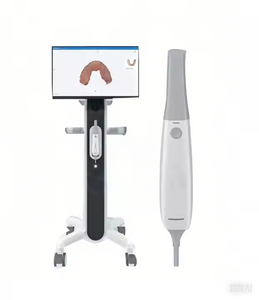
Professional Dental Equipment Guide 2026
Frequently Asked Questions: Dental Digital Impression Scanner Acquisition
Target Audience: Dental Clinics & Medical Equipment Distributors
Need a Quote for Dental Digital Impression Scanner Cost?
Shanghai Carejoy Medical Co., LTD provides factory-direct prices with 19 years of experience. (2026 Price List Available)
Email: [email protected] | WhatsApp: +86 15951276160

