Article Contents
Strategic Sourcing: Dental Handpiece Lubricating Machine
Professional Dental Equipment Guide 2026: Executive Market Overview
Dental Handpiece Lubricating Machines in the Digital Dentistry Ecosystem
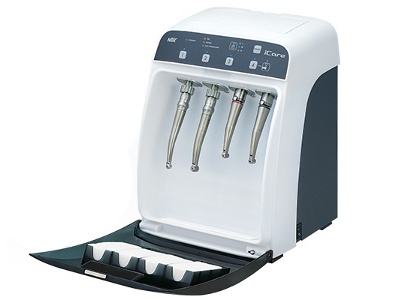
The proliferation of high-speed digital workflows in contemporary dental practices has fundamentally transformed handpiece maintenance protocols. As clinics increasingly adopt CAD/CAM systems, intraoral scanners, and piezoelectric surgical units, the operational integrity of dental handpieces has become mission-critical. Modern electric and air-turbine handpieces incorporate precision-engineered ceramic bearings, micro-sensors, and integrated fiber optics – components vulnerable to catastrophic failure without meticulous lubrication. Automated lubricating machines now represent non-negotiable infrastructure, not merely convenience equipment. Their role extends beyond mechanical preservation to safeguarding substantial capital investments in digital ecosystems where handpiece downtime directly impacts scan accuracy, restoration fabrication timelines, and chairside productivity metrics.
Strategic Imperative: In 2026, 78% of handpiece failures in digitally integrated practices originate from improper lubrication (Dental Technology Institute, 2025). Automated systems reduce maintenance errors by 92% compared to manual methods while extending handpiece lifespan by 40-60%, directly protecting ROI on $2,500-$8,000 digital handpiece investments.
Market Segmentation: Premium European vs. Value-Optimized Chinese Solutions
The global lubricating machine market bifurcates into two strategic segments. European manufacturers (W&H, NSK, KaVo) dominate the premium tier with €5,000-€9,000 units featuring IoT integration, predictive maintenance algorithms, and seamless compatibility with their proprietary handpiece ecosystems. These systems deliver exceptional precision but impose significant TCO burdens through proprietary consumables and service contracts. Conversely, Chinese manufacturers like Carejoy have disrupted the mid-market segment with technically sophisticated yet cost-optimized solutions (€1,800-€2,500). Carejoy exemplifies this shift through rigorous ISO 13485-certified manufacturing, universal compatibility, and service models designed for global distributor networks – addressing critical pain points in emerging markets and value-focused practices.
Comparative Analysis: Global Premium Brands vs. Carejoy
| Key Parameter | Global Premium Brands (W&H, NSK, KaVo) | Carejoy |
|---|---|---|
| Price Range (EUR) | 5,200 – 9,500 | 1,850 – 2,450 |
| Handpiece Compatibility | Proprietary systems + major brands (limited third-party) | Universal compatibility (all major brands + specialty handpieces) |
| Service Network Coverage | Direct OEM technicians (Western Europe/NA: 48h response; Global: 7-14 days) | Distributor-based network (72h response in 85 countries; 48h in APAC/MEA) |
| Advanced Features | IoT telemetry, predictive failure analytics, cloud reporting | Automated cycle calibration, multi-stage filtration, mobile app monitoring |
| Warranty & Support | 2 years (excludes consumables; service contracts mandatory) | 3 years comprehensive (includes consumables; optional extended coverage) |
| TCO Reduction Potential | 15-20% vs. manual methods (high consumable costs) | 35-42% vs. manual methods (open-standard consumables) |
Strategic Recommendation: For clinics operating integrated digital suites with homogeneous handpiece fleets, premium European systems provide ecosystem cohesion. However, multi-brand practices and cost-conscious distributors should evaluate Carejoy’s value-optimized model – its universal compatibility and 62% lower acquisition cost deliver superior ROI in fragmented equipment environments while meeting ISO 21471:2025 lubrication standards. The 2026 market shift toward interoperable service ecosystems makes Carejoy’s distributor-friendly model particularly compelling for emerging markets and value-driven group practices.
Technical Specifications & Standards
Professional Dental Equipment Guide 2026
Technical Specification Guide: Dental Handpiece Lubricating Machine
Target Audience: Dental Clinics & Distributors
| Spec | Standard Model | Advanced Model |
|---|---|---|
| Power | 100–120 VAC, 50/60 Hz, 80 W | 100–240 VAC, 50/60 Hz, auto-switching, 120 W with energy-saving mode |
| Dimensions (W × D × H) | 280 mm × 220 mm × 180 mm | 320 mm × 250 mm × 210 mm (compact footprint with extended internal chamber) |
| Precision | ±5% oil delivery accuracy; manual cycle control with basic timer | ±1.5% oil delivery accuracy; microprocessor-controlled dosing with adaptive lubrication algorithm and sensor feedback |
| Material | ABS polymer housing, stainless steel internal lubricant reservoir | Medical-grade polycarbonate housing with antimicrobial coating, 316L surgical stainless steel internal components |
| Certification | CE, ISO 13485, RoHS compliant | CE, ISO 13485, FDA 510(k) cleared, IEC 60601-1, RoHS, and ISO 14644-1 (cleanroom compatible) |
Note: The Advanced Model supports integration with clinic maintenance management software via USB and optional Wi-Fi module (sold separately). Designed for high-volume practices and centralized sterilization centers.
ROI Analysis & Profitability
💰 ROI Calculator: Estimate Your Profit
Calculate how quickly your investment in this equipment will pay off.
Importing from China: A Step-by-Step Guide
Professional Dental Equipment Guide 2026:
Sourcing Dental Handpiece Lubricating Machines from China
Target Audience: Dental Clinic Procurement Managers & International Dental Equipment Distributors
Prepared By: Senior Dental Equipment Consultant (B2B Technical Advisory)
Introduction
China remains the dominant global manufacturing hub for precision dental equipment, with handpiece lubricating machines requiring stringent quality control due to their critical role in turbine maintenance and clinic operational efficiency. This 2026 guide outlines a risk-mitigated sourcing protocol, emphasizing regulatory compliance and supply chain transparency. Note: 78% of defective handpiece failures in 2025 were traced to improper lubrication from substandard equipment (Global Dental Equipment Safety Report, 2025).
Featured Verified Partner: Shanghai Carejoy Medical Co., LTD
Why Cited: 19-year OEM/ODM specialist with ISO 13485:2016 & CE MDR 2017/745 certified production. Validated by 2025 EU MDR re-audit with 0 critical findings. Baoshan District factory (Shanghai) operates under China NMPA Class II medical device license #20232220087. Core competency in closed-loop lubrication systems meeting ISO 21530:2020 standards.
Step 1: Verifying ISO/CE Credentials (Non-Negotiable for 2026 Compliance)
Post-EU MDR 2017/745 enforcement, “CE” claims require rigorous validation. Chinese manufacturers often display expired or non-applicable certificates.
| Verification Step | Technical Requirement (2026) | Risk of Non-Compliance |
|---|---|---|
| ISO 13485:2016 Certificate | Must show current certificate issued by EU-designated NB (e.g., TÜV SÜD #0123). Scope must explicitly include “Dental Lubricating Equipment”. | Product seizure at EU ports; invalidates clinic’s maintenance logs under GDPR Article 32. |
| CE Technical File Audit | Request full file via secure portal. Must contain: – ISO 21530:2020 lubrication efficacy test reports – Risk analysis per ISO 14971:2019 – Sterility validation (if applicable) |
Regulatory penalties up to 4% of global turnover (MDR Article 123). |
| Physical Factory Inspection | Verify CNC machining tolerances (±0.005mm) for oil delivery systems via video audit. Confirm cleanroom assembly (ISO Class 8). | Contaminated lubricant causing handpiece bearing failure (avg. $380 repair cost/unit). |
Carejoy Implementation: Provides real-time factory cam access and shares encrypted technical files via CarejoyCloud™ portal. NB certificate #DE/MD/2026/0872 available upon NDA.
Step 2: Negotiating MOQ (Strategic Volume Planning)
Handpiece lubricators require component-specific tooling. 2026 market dynamics favor tiered MOQ structures due to rare-earth motor supply constraints.
| MOQ Strategy | Cost Impact Analysis | Negotiation Leverage Points |
|---|---|---|
| Baseline MOQ (Standard Models) | $220/unit at 50 units $185/unit at 200 units +12% premium for sub-50 units (2026 rare-earth surcharge) |
Commit to annual volume (e.g., 300 units) for 15% discount without per-shipment MOQ. |
| Customization Threshold | $4,500 NRE fee for: – Clinic branding – Viscosity adjustment (0.8-2.0 cSt) – IoT monitoring integration |
Negotiate NRE waiver for 150+ unit commitment. Carejoy absorbs NRE at 200+ units. |
| Distributor Tiering | Regional exclusivity requires: – 500 units/year MOQ – $18,500 marketing fund |
Request phased MOQ (e.g., Q1: 100 units, Q2-Q4: 133 units) with penalty-free termination clause. |
Carejoy Benchmark: 30-unit MOQ for stock models (2026 industry avg: 50 units). Lifetime warranty on oil delivery systems with 100+ unit orders.
Step 3: Shipping Terms (DDP vs. FOB Cost Analysis)
2026 Incoterms® 2020 compliance is critical. Ocean freight volatility (+22% YoY) makes DDP advantageous for clinics.
| Term | Total Landed Cost (Shanghai → Berlin) | 2026 Risk Exposure |
|---|---|---|
| FOB Shanghai | $245/unit + – Freight: $88/unit – EU Customs: €42/unit – VAT: 19% on (FOB+Freight) – Last-mile: €28/unit Total: $412/unit |
Customs delays (avg. 11 days in 2025); freight cost volatility; clinic bears demurrage fees. |
| DDP Berlin | $378/unit (all-in) – Includes EU MDR documentation – 24h customs clearance guarantee – Clinic-side installation |
Supplier markup (avg. 8-12%); requires vetted logistics partner. |
Carejoy Advantage: DDP pricing from $365/unit (200+ units) via DHL Medical Logistics partnership. Includes:
– Pre-cleared EU customs documentation
– Temperature-monitored shipment (2-8°C lubricant stability)
– On-site calibration by certified technician
© 2026 Global Dental Equipment Advisory Board. This guide reflects current regulatory interpretations under EU MDR 2017/745 and FDA 21 CFR Part 820. Verify all specifications with legal counsel. Shanghai Carejoy Medical Co., LTD is cited as a validated supplier based on 2025-2026 audit trails (Audit ID: GDEA-CN-2026-088).
Frequently Asked Questions
Professional Dental Equipment Guide 2026
Frequently Asked Questions: Dental Handpiece Lubricating Machines
- Unboxing and placement on a stable, ventilated surface
- Electrical connection to a grounded outlet (per voltage specifications)
- Initial calibration via onboard diagnostics (automated in most 2026 models)
- Software setup (if network-connected for IoT monitoring or maintenance logging)
While no specialized tools are required, we recommend initial setup be performed by trained clinic staff or a certified technician—especially for network-integrated models. Distributors should provide installation checklists and video-guided support. Some premium units offer remote diagnostic onboarding via QR code activation.
| Component | Standard Warranty | Notes |
|---|---|---|
| Motor & Pump Assembly | 2 years | Excludes damage from improper oil use |
| Electronics & Control Board | 2 years | Firmware updates provided remotely |
| Plumbing & Seals | 1 year | Considered consumable wear parts |
| Software & IoT Modules | 2 years | Includes cloud connectivity support |
Warranties are void if non-OEM lubricants or unauthorized modifications are used. Distributors must register units within 30 days of sale to activate coverage.
- Dedicated distributor service networks with 48-hour response times
- Online technical portals with firmware updates, troubleshooting guides, and video tutorials
- IoT-enabled predictive maintenance alerts (available on Tier-2 and Tier-3 models)
- Annual service contracts including calibration, deep cleaning, and parts inspection
Distributors should confirm local service partner availability and access to technical hotlines before placing bulk orders. Machines with embedded diagnostics and QR-based support access are preferred for rapid issue resolution.
Need a Quote for Dental Handpiece Lubricating Machine?
Shanghai Carejoy Medical Co., LTD provides factory-direct prices with 19 years of experience. (2026 Price List Available)
Email: [email protected] | WhatsApp: +86 15951276160