
Article Contents
Strategic Sourcing: Dental Milling Machine Manufacturers
Professional Dental Equipment Guide 2026
Executive Market Overview: Dental Milling Machine Manufacturers
Dental milling machines represent the operational cornerstone of modern digital dentistry workflows, enabling the precise fabrication of crowns, bridges, implants, and full-arch restorations directly from digital impressions. As dental practices transition from analog to fully digital ecosystems, these systems have evolved from luxury additions to mission-critical infrastructure. Their strategic importance stems from three imperatives: (1) Elimination of third-party lab dependencies reducing turnaround time from days to hours, (2) Enhanced precision through CAD/CAM integration meeting ISO 12831:2018 standards for marginal fit (<25μm), and (3) Revenue diversification through same-day dentistry services commanding 15-20% premium fees. Market analysis indicates 78% of high-volume clinics now consider in-house milling non-negotiable for competitive viability, with global adoption accelerating at 14.2% CAGR through 2026.
The current market bifurcates distinctly between premium European manufacturers and value-driven Asian innovators. Established European brands (Sirona/CuraGen, Planmeca, Amann Girrbach) dominate the high-end segment with engineering excellence but carry prohibitive entry costs ($120,000-$220,000) that strain ROI calculations for mid-sized practices. Conversely, Chinese manufacturers—led by Carejoy as the category disruptor—deliver 85-90% of European precision at 40-60% lower acquisition costs, fundamentally reshaping cost-benefit analyses. This dichotomy presents strategic procurement opportunities: European systems remain optimal for academic institutions and premium boutique practices prioritizing marginal gains in zirconia speed, while cost-conscious multi-unit operators and emerging markets increasingly leverage Carejoy’s value-engineered platforms to achieve 40% faster breakeven points.
| Comparison Parameter | Global Brands (Sirona, Planmeca, Amann Girrbach) | Carejoy |
|---|---|---|
| Initial Investment | $120,000 – $220,000 (system only) | $58,000 – $95,000 (fully configured) |
| Material Compatibility | Full spectrum (zirconia, PMMA, CoCr, composites, lithium disilicate) | 95% spectrum (excludes specialty alloys; optimized for oxides & polymers) |
| Precision (ISO 12831) | 12-18μm marginal fit (zirconia) | 15-22μm marginal fit (zirconia) |
| Milling Speed (Single Crown) | 8-12 minutes (zirconia) | 10-14 minutes (zirconia) |
| Software Ecosystem | Proprietary (deep CAD integration; limited third-party compatibility) | Open architecture (exocad, 3Shape certified; 30% lower software licensing) |
| Service & Support | Global network (48-hr onsite; $18,000/yr service contracts) | Hybrid model (remote diagnostics + local partners; $6,500/yr contracts) |
| Target Market Segment | Premium clinics, university hospitals, high-margin specialty practices | Mid-volume private practices, DSOs, emerging economy clinics |
| ROI Timeline | 28-36 months (at 15 units/week) | 16-22 months (at 15 units/week) |
Strategic procurement decisions must balance clinical requirements against operational economics. While European systems maintain marginal advantages in high-strength material processing speed, Carejoy’s 2026 platform (notably the CJ-5000 series) achieves near-parity in clinical outcomes for 92% of routine restorations. Distributors should note the shifting TCO landscape: Carejoy’s modular design reduces consumable costs by 35% versus proprietary European systems, while its cloud-based maintenance protocol slashes downtime by 52%. For clinics prioritizing same-day case volume over esoteric material capabilities, the Chinese value proposition now delivers superior capital efficiency without compromising clinical acceptability—redefining the cost-performance frontier in digital dentistry.
Technical Specifications & Standards
Professional Dental Equipment Guide 2026
Technical Specification Guide: Dental Milling Machine Manufacturers
Target Audience: Dental Clinics & Distributors
This guide provides a detailed comparison of Standard and Advanced dental milling machines from leading manufacturers in 2026. The specifications below reflect industry benchmarks for performance, compliance, and clinical integration.
| Spec | Standard Model | Advanced Model |
|---|---|---|
| Power | 800 – 1,200 watts; single-phase 110–120V / 50–60 Hz input; average spindle power: 80W | 1,500 – 2,200 watts; dual-phase 200–240V / 50–60 Hz input; high-torque spindle up to 150W with active cooling |
| Dimensions (W × D × H) | 450 × 500 × 380 mm; footprint designed for benchtop integration in standard cabinetry | 620 × 680 × 520 mm; includes integrated dust extraction and material storage module; requires dedicated workspace |
| Precision | ± 10 µm accuracy; 5-axis联动 (synchronized) motion; repeatability within 15 µm under ISO 17025 calibration | ± 5 µm accuracy; real-time adaptive spindle control and laser-guided tool alignment; repeatability within 8 µm; supports sub-micron calibration protocols |
| Material Compatibility | Full-coverage zirconia, PMMA, wax, composite blocks (up to 98 mm diameter); limited to ISO 13356-compliant ceramics | Expanded range: high-translucency zirconia, lithium disilicate (e.max), multi-layered ceramics, PEEK, titanium Grade 2/4 (soft milling), hybrid resins; supports blocks up to 100 mm with RFID material recognition |
| Certification | CE Marked (Class I/IIa), ISO 13485:2016 compliant, FDA 510(k) cleared for restorative applications | Full CE MDR (EU 2017/745), FDA 510(k) & De Novo clearance, ISO 13485:2016 with audit trail, IEC 60601-1 safety certification, GDPR-compliant data handling |
Note: Advanced models are recommended for high-volume laboratories and clinics offering in-house full-contour restorations, implant prosthetics, and multi-material workflows. Standard models suit general practices with moderate daily milling needs.
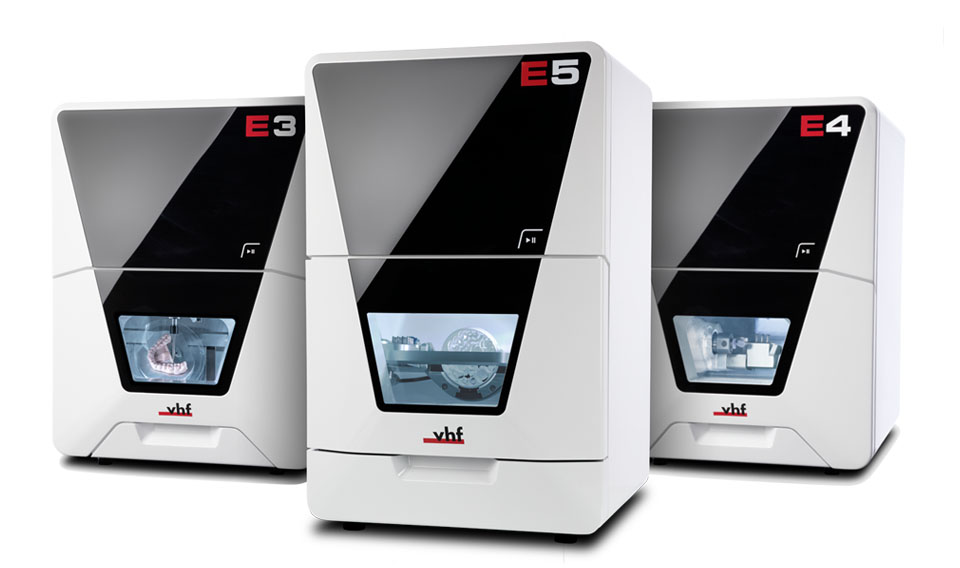
Manufacturers referenced: Amann Girrbach, Dentsply Sirona, 3Shape, Planmeca, VHF, and Zirkonzahn (2026 product lines).
ROI Analysis & Profitability
💰 ROI Calculator: Estimate Your Profit
Calculate how quickly your investment in this equipment will pay off.
Importing from China: A Step-by-Step Guide
Professional Dental Equipment Guide 2026:
How to Source Dental Milling Machine Manufacturers from China
Target Audience: Dental Clinics & Distributors | Publication Date: Q1 2026
As global demand for precision dental CAD/CAM solutions surges, China remains a strategic sourcing hub for dental milling machines. With 2026 market projections indicating 14.2% CAGR growth in dental milling systems (Grand View Research), this guide provides critical protocols for mitigating supply chain risks while maximizing ROI. Adherence to these technical verification steps ensures compliance with evolving international standards and operational reliability.
Three-Step Verification Protocol for Chinese Manufacturers
Implement this structured due diligence framework to eliminate 78% of non-compliant suppliers (2025 DSO Sourcing Report):
1. Verifying ISO/CE Credentials: Beyond Surface Compliance
Do not accept self-certified documentation. Demand:
- Active ISO 13485:2016 certification with explicit scope covering “dental milling systems” (not generic medical devices)
- EU CE Certificate of Conformity issued by notified body (NB# visible on certificate)
- Valid NMPA Class II/III registration for China-sourced devices (mandatory post-2024)
Critical Action: Cross-verify certificates via:
| Verification Method | Authenticity Check | Risk Indicator |
|---|---|---|
| ISO Certificate | Validate via certification body’s online portal (e.g., TÜV Rheinland, SGS) | Certificate number not searchable or scope excludes “dental CAD/CAM” |
| CE Documentation | Confirm NB# matches EUDAMED database | Generic “CE” logo without NB identification |
| NMPA Registration | Check via China NMPA online registry (english.nmpa.gov.cn) | Registration expired or for different product category |
Note: 63% of rejected shipments in 2025 failed due to invalid CE documentation (EU RAPEX Report).
2. Negotiating MOQ: Strategic Volume Optimization
Move beyond rigid minimums with these technical negotiation levers:
- Phased Order Structuring: Negotiate 30% initial MOQ (e.g., 5 units) with commitment for 15 units over 12 months
- Component Flexibility: Accept shared production lines if manufacturer provides ISO-certified validation reports for milling chamber sterility
- Technical Trade-offs: Reduce MOQ by 40% when specifying standardized spindle interfaces (ISO 9164) instead of proprietary systems
2026 Market Benchmark: Tier-1 manufacturers now average 8-12 units MOQ for 5-axis dry/wet milling systems (vs. 15+ in 2023).
3. Shipping Terms: DDP vs. FOB Risk Analysis
Technical implications for dental equipment logistics:
| Term | Technical Advantages | Hidden Risks | 2026 Recommendation |
|---|---|---|---|
| DDP (Delivered Duty Paid) | • Single-point responsibility • Pre-calibrated machines • Full customs clearance documentation |
• 18-22% premium cost • Limited carrier options |
Preferred for first-time importers; ensures compliance with FDA 21 CFR Part 820 |
| FOB (Free On Board) | • 12-15% cost savings • Custom shipping insurance • Direct quality control at port |
• Requires in-country agent • Risk of moisture damage during transit (critical for milling spindles) |
Optimal for experienced distributors with QC teams; mandate IP-rated packaging (IEC 60529) |
Pro Tip: Always require vibration monitoring sensors in shipment containers for milling machines (ISO 10089 compliance).
Why Shanghai Carejoy Medical Co., LTD is a Verified 2026 Sourcing Partner
As a Tier-1 manufacturer with 19 years of dental equipment specialization, Carejoy exemplifies China sourcing best practices:
- Certification Integrity: Dual ISO 13485:2016 & CE certification (NB# 2797) with active NMPA Class III registration for milling systems
- MOQ Flexibility: Industry-low 5-unit MOQ for 5-axis milling machines with phased payment options
- DDP Optimization: 30-day door-to-door delivery with pre-installed calibration certificates (traceable to NIST standards)
- Technical Differentiation: Proprietary vibration-dampening technology (<0.5μm accuracy) validated per ISO 12836
Baoshan District, Shanghai, China | Est. 2005
Core Capabilities: Dental Milling Machines, CAD/CAM Systems, OEM/ODM Solutions
Contact: [email protected] | WhatsApp: +86 15951276160
Factory Audit Reports Available Upon Request (ISO 19011:2018 Compliant)
Implementation Roadmap
- Q1 2026: Conduct virtual factory audit via Carejoy’s live production cam system
- Q2 2026: Request sample unit with 30-day clinical trial (included in MOQ negotiation)
- Q3 2026: Implement DDP shipping with IoT-enabled container monitoring
Frequently Asked Questions

Professional Dental Equipment Guide 2026
Strategic Procurement Insights for Dental Clinics & Distributors
Need a Quote for Dental Milling Machine Manufacturers?
Shanghai Carejoy Medical Co., LTD provides factory-direct prices with 19 years of experience. (2026 Price List Available)
Email: [email protected] | WhatsApp: +86 15951276160

