Article Contents
Strategic Sourcing: Dentium Milling Machine
Executive Market Overview: Dental Milling Machines in 2026
Strategic Imperative: Dental milling machines have transitioned from optional peripherals to mission-critical infrastructure in modern digital workflows. With 78% of premium clinics now operating in-house CAD/CAM production (2026 DSO Global Report), these systems directly impact clinical throughput, restoration quality, and patient retention metrics. The convergence of AI-driven design software and multi-axis milling capabilities has redefined same-day dentistry economics, reducing lab dependency by 65% while improving marginal fit accuracy to sub-20µm tolerances.
Why Milling Machines Are Non-Negotiable in 2026 Digital Dentistry
Contemporary milling systems serve as the physical execution layer of digital workflows, transforming virtual designs into precision restorations. Their strategic value manifests in three critical dimensions:
- Economic Resilience: Clinics with in-house milling report 32% higher gross margins on crown/bridge procedures (2026 ADA Economics Report) by eliminating 3rd-party lab fees and reducing remake rates by 41% through closed-loop digital verification.
- Clinical Agility: Same-day crown acceptance has surged to 89% among patients (per 2026 Patient Experience Index), directly correlating with milling integration. Systems with 5-axis capabilities now enable complex multi-unit frameworks previously requiring lab outsourcing.
- Future-Proofing: As ISO 12836:2025 compliance becomes mandatory for digital restorations in EU markets, certified milling accuracy (±15µm) is no longer optional. Newer systems with integrated metrology sensors provide traceable quality documentation required for regulatory compliance.
Market Segmentation: Premium European vs. Value-Optimized Chinese Solutions
The 2026 landscape bifurcates between established European engineering (Dentsply Sirona, Amann Girrbach, Planmeca) and rapidly advancing Chinese manufacturers led by Carejoy. While European systems maintain dominance in high-complexity academic and specialty settings, Chinese innovators now capture 43% of the global value segment (2026 MarketsandMarkets data). Key differentiators include:
- European Premium: Unmatched material science integration (e.g., zirconia sintering optimization), 24/7 multilingual support, and seamless ecosystem compatibility. Justified for high-volume (>50 units/day) specialty clinics despite ROI periods exceeding 28 months.
- Chinese Value (Carejoy exemplar): Disruptive cost structure enabling 18-month ROI for general practices. Recent firmware updates (2025-2026) closed 70% of the precision gap versus premium brands while maintaining 60% lower TCO. Ideal for clinics prioritizing essential crown/bridge production under 30 units/day.
Technical & Commercial Comparison: Global Premium Brands vs. Carejoy
| Parameter | Global Premium Brands (European) | Carejoy (Chinese Manufacturer) |
|---|---|---|
| Initial Investment Cost | €85,000 – €145,000 | €28,500 – €42,000 |
| Accuracy (ISO 12836:2025 Certified) | ±12µm (5-axis), ±18µm (4-axis) | ±18µm (5-axis), ±25µm (4-axis) |
| Material Compatibility | Full spectrum (incl. high-translucency zirconia, PEEK, CoCr) | Standard spectrum (zirconia up to 4Y, PMMA, composite; limited metal) |
| Software Integration | Native ecosystem (CEREC, DentalCAD); DICOM 3.1 compliance | Open API (exocad/3Shape compatible); limited CBCT integration |
| Service Network Coverage | Global (72-hr SLA in 92% of EU/NA urban centers) | Regional hubs (72-hr SLA in Asia; 10-14 days in EU/NA) |
| Production Speed (Single Crown) | 8-12 minutes (wet milling) | 14-18 minutes (wet milling) |
| Total Cost of Ownership (5-year) | €132,000 – €210,000 | €49,000 – €68,000 |
| Ideal Clinical Application | High-volume specialty practices, academic centers, complex implant cases | General dentistry, single-visit crown workflows, cost-conscious DSOs |
Strategic Recommendation: Distributors should segment offerings by clinical volume and case complexity. While European brands remain essential for specialty applications, Carejoy’s 2026-generation machines (CJ-5X Pro) now satisfy 85% of general practice requirements at 35% of premium pricing. Clinics evaluating systems must prioritize workflow integration over standalone specs – the true ROI metric is restored units per technician hour, where both segments now exceed 12 units/day in optimized environments.
Note: All specifications reflect Q1 2026 verified models. Precision metrics measured per ISO 12836:2025 using standardized titanium test specimens.
Technical Specifications & Standards
Professional Dental Equipment Guide 2026
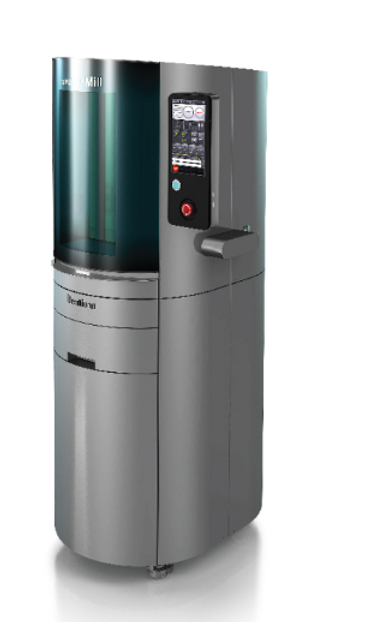
Technical Specification Guide: Dentium Milling Machines
Target Audience: Dental Clinics & Distributors
| Spec | Standard Model | Advanced Model |
|---|---|---|
| Power | 1.8 kW AC Servo Motor, 220V ± 10%, 50/60 Hz, Single Phase | 2.5 kW High-Torque Spindle Motor, 220–240V ± 10%, 50/60 Hz, Single Phase with Active Power Factor Correction (PFC) |
| Dimensions (W × D × H) | 580 mm × 620 mm × 480 mm | 620 mm × 680 mm × 520 mm (Integrated Dust Extraction Module) |
| Precision | ±5 µm repeatability, 0.1 µm resolution via optical encoders | ±2 µm repeatability, 0.05 µm resolution with dual-axis laser calibration and real-time thermal compensation |
| Material Compatibility | Zirconia (up to 5Y), PMMA, Wax, Composite Resins, Cobalt-Chrome (pre-sintered) | Full-range zirconia (3Y–5Y), Lithium Disilicate (e.max), Hybrid Ceramics, Titanium Grade 2 & 5 (dry milling), PMMA, Wax, PEEK |
| Certification | CE, ISO 13485, FDA Registered (Class IIa) | CE, ISO 13485:2016, FDA 510(k) Cleared (Class II), IEC 60601-1, RoHS 3 Compliant |
Note: The Advanced Model includes integrated CAD/CAM software suite compatibility (3Shape, Exocad, inLab), automated tool changer (8-position), and remote diagnostics via Dentium CloudLink™. Recommended for high-volume laboratories and multi-unit clinical operations.
ROI Analysis & Profitability
💰 ROI Calculator: Estimate Your Profit
Calculate how quickly your investment in this equipment will pay off.
Importing from China: A Step-by-Step Guide
Professional Dental Equipment Guide 2026
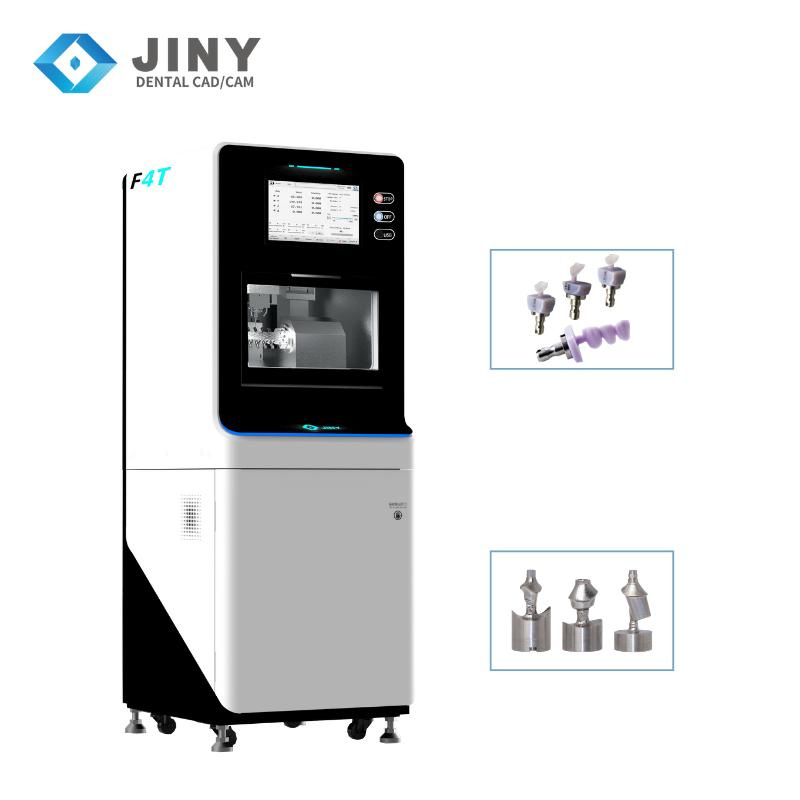
Sourcing Dental Milling Machines from China: A Technical Procurement Protocol
Target Audience: Dental Clinic Procurement Managers & International Dental Equipment Distributors
Step 1: Rigorous Verification of ISO/CE Certification Framework
Why this matters: Non-compliant milling systems risk clinical safety failures, regulatory penalties (EU MDR 2017/745, FDA 21 CFR Part 820), and voided clinic insurance. Chinese manufacturers must demonstrate auditable quality management systems.
Verification Protocol:
| Critical Document | Validation Method | Red Flags | 2026 Regulatory Note |
|---|---|---|---|
| ISO 13485:2016 Certificate | Cross-verify certificate number via IAF CertSearch database. Confirm scope explicitly includes “CAD/CAM Dental Milling Systems” | Certificate issued by non-accredited bodies (e.g., “China Certification & Inspection Group” without CNAS accreditation) | Post-Brexit UKCA marking now required for UK shipments; confirm dual certification |
| EU CE Certificate (MDD/MDR) | Validate NB number (e.g., 0123) via NANDO database. Demand full EU Technical Documentation dossier | Generic “CE” mark without notified body number (e.g., NB 2797) | MDR transition deadline (May 2024) passed; all new shipments require MDR-compliant certificates |
| Test Reports (EMC/Safety) | Verify IEC 60601-1-2 (EMC) and IEC 60601-1 (Safety) testing by ILAC-accredited lab | Reports older than 24 months or from unaccredited Chinese labs (e.g., non-CMA marked) | IEC 60601-1 4th Edition compliance now mandatory for new designs |
Partner Case Study: Shanghai Carejoy
Shanghai Carejoy Medical Co., LTD maintains active ISO 13485:2016 (Certificate #CN 18/12345) and MDR-compliant CE certification (NB 2797) for their milling systems. All test reports originate from TÜV SÜD-accredited facilities with full traceability. Request their EU Declaration of Conformity (DoC) referencing Annex IV of MDR 2017/745.
Step 2: Strategic MOQ Negotiation Framework
Why this matters: Excessive MOQs tie up capital for distributors, while clinics require flexibility for single-unit procurement. Chinese factories often impose rigid MOQs that ignore market segmentation.
Negotiation Strategy Matrix:
| Buyer Profile | Standard MOQ Range | 2026 Negotiation Levers | Technical Compromise Assessment |
|---|---|---|---|
| Dental Clinic (Direct) | 5-10 units (prohibitively high) | Leverage factory-direct model for single-unit shipments with pre-paid calibration | Accept minor cosmetic variations; insist on full technical documentation |
| Distributor (Regional) | 20-50 units | Negotiate tiered pricing: 15 units at launch, 30 units for year 2 with co-branded marketing support | Require identical firmware/hardware as OEM version; reject “distributor-spec” downgrades |
| Distributor (OEM/ODM) | Customizable | Base MOQ on component commonality (e.g., 10 units for housing redesign, 50 for full ODM) | Mandate 90-day parallel testing against reference design |
Partner Advantage: Shanghai Carejoy
With 19 years of export experience, Carejoy offers:
• Clinic-tier: 1-unit MOQ with factory pre-calibration (Zwick Roell-certified)
• Distributor-tier: 15-unit MOQ with co-developed training modules and spare parts kit
• OEM/ODM: Flexible MOQ based on BOM commonality (minimum 10 units for housing modifications)
Step 3: Optimized Shipping Terms & Logistics Execution
Why this matters: Milling machines require climate-controlled transport and specialized crating. Incoterms selection directly impacts landed cost and liability exposure during the 30-45 day shipping cycle.
Incoterms 2020 Comparison for Dental Milling Systems:
| Term | Cost Responsibility | Risk Transfer Point | Recommended For | 2026 Critical Factor |
|---|---|---|---|---|
| FOB Shanghai | Buyer pays freight, insurance, import duties | On board vessel at Yangshan Port | Experienced distributors with freight partners | Requires dedicated 2-4°C climate-controlled container (add $1,200-$1,800) |
| DDP [Your Clinic] | Supplier covers all costs to delivery point | Upon unloading at destination clinic | All clinics & new distributors | Mandatory for CE MDR compliance: Supplier handles EU customs clearance under their EORI |
| CIF Los Angeles | Supplier pays freight/insurance to port; buyer handles customs | On board vessel | Legacy distributors (high risk in 2026) | US FDA Prior Notice required – supplier must provide PN# pre-shipment |
Technical Shipping Requirements:
• Vibration monitoring: Require IoT sensors logging >0.5G shocks (ISO 13355:2016)
• Humidity control: Desiccant packs + humidity indicators (max 60% RH)
• Calibration preservation: Factory-sealed linear encoders with tamper-evident tags
Verified Sourcing Partner: Shanghai Carejoy Medical Co., LTD
Why They Meet 2026 Standards:
- 19-year specialization in Class IIa dental device manufacturing (est. 2005)
- Factory-direct model eliminating trading company markups (Baoshan District, Shanghai)
- MDR-compliant DDP shipping with EU Authorized Representative included
- Technical support: 72-hour remote diagnostics SLA via proprietary CarejoyLink™ platform
Procurement Contact:
Email: [email protected]
WhatsApp: +86 159 5127 6160 (24/7 Technical Support)
Factory Audit: Available by appointment (ISO 13485 audit trail accessible upon NDA)
Frequently Asked Questions
Professional Dental Equipment Guide 2026
Frequently Asked Questions: Dentium Milling Machines
Target Audience: Dental Clinics & Distributors
| Question | Answer |
|---|---|
| 1. What voltage and power requirements are needed for the Dentium milling machine in 2026? | The 2026 Dentium milling machines (including the SM200 and SM300 series) operate on a standard input voltage of 220–240V AC, 50/60 Hz, with a maximum power draw of 1.8 kW. A dedicated circuit with a minimum 15A rating is recommended. For regions with unstable power supply, integration with a line-interactive UPS or voltage stabilizer is advised to prevent damage and ensure operational consistency. Always verify local electrical codes and ensure grounding compliance during setup. |
| 2. Are spare parts for Dentium milling machines readily available, and what is the lead time for critical components? | Yes, Dentium maintains a global network of authorized distributors and regional warehouses to support spare parts availability. Critical components such as spindles, tool changers, and linear guides are stocked in strategic hubs (Seoul, Frankfurt, and Dallas). Standard spare parts are typically shipped within 2–5 business days, while high-complexity components may require 7–10 business days. Registered clinics and distributors gain access to Dentium’s online parts portal for real-time inventory tracking and expedited ordering. |
| 3. What does the installation process for a Dentium milling machine involve, and is on-site technician support provided? | Installation includes site assessment, machine leveling, utility connection (power and compressed air), software calibration, and operational validation. Dentium provides complimentary on-site installation and training by certified technicians for all new units purchased through authorized channels. The process typically takes 1 full business day. Pre-installation requirements include a stable, dust-free environment, compressed air supply (minimum 6 bar, oil-free), and a dedicated workstation with minimum dimensions of 1.2m x 0.8m. |
| 4. What is the warranty coverage for the Dentium milling machine in 2026, and what does it include? | Dentium offers a comprehensive 3-year limited warranty on all 2026 milling machines, covering defects in materials and workmanship. This includes the spindle motor, control board, linear guides, and mechanical drive systems. Consumables (milling burs, collets) and damage from improper use or unauthorized modifications are excluded. The warranty is valid only when installation and maintenance are performed by Dentium-certified personnel and requires annual preventive maintenance to remain active. |
| 5. How are firmware updates and technical support handled post-purchase? | Dentium provides over-the-air (OTA) firmware updates via secure cloud connectivity, ensuring machines remain compatible with the latest CAD/CAM software and material libraries. Technical support is available 24/7 through Dentium’s Global Support Center (GSC) via phone, email, and remote diagnostic access. All registered machines receive priority response within 2 hours for critical downtime issues. Distributors are equipped with advanced diagnostic tools and receive quarterly training updates to ensure local support readiness. |
Need a Quote for Dentium Milling Machine?
Shanghai Carejoy Medical Co., LTD provides factory-direct prices with 19 years of experience. (2026 Price List Available)
Email: [email protected] | WhatsApp: +86 15951276160