Article Contents
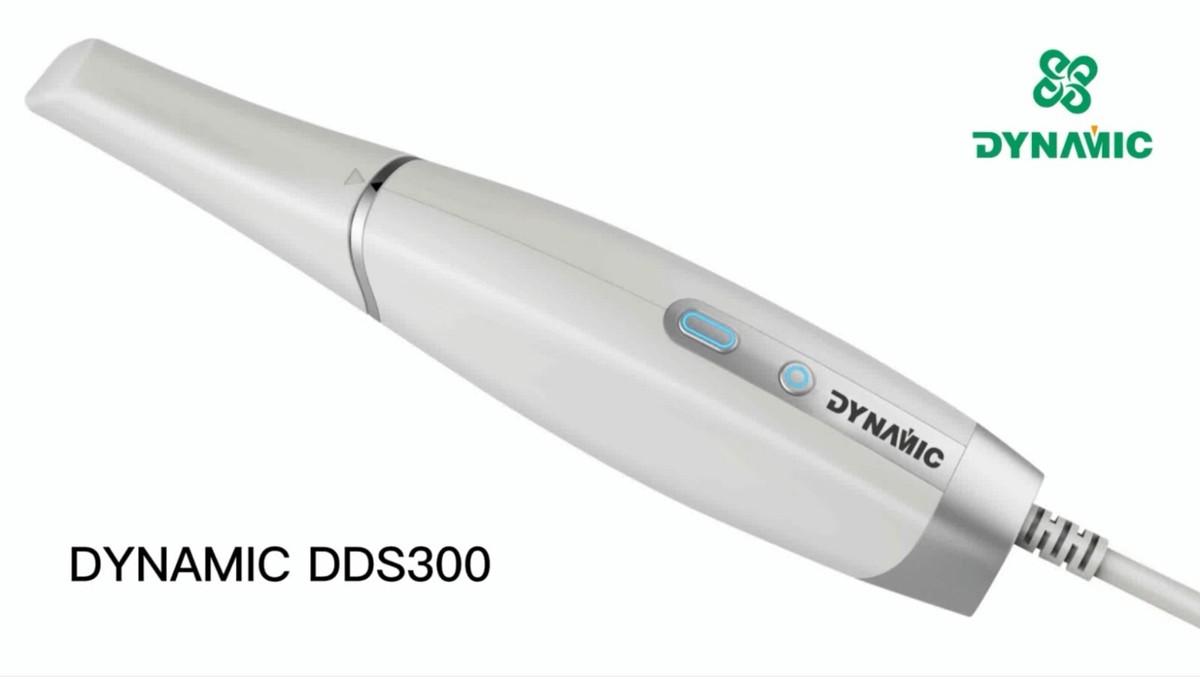
Strategic Sourcing: Dynamic Scanner
Professional Dental Equipment Guide 2026
Executive Market Overview: Dynamic Intraoral Scanners
The dynamic intraoral scanner has evolved from a premium accessory to the central nervous system of modern digital dentistry. By 2026, over 78% of European dental practices have integrated these systems into core clinical workflows, driven by the irreversible shift toward digital impressioning, same-day restorations, and tele-dentistry. These devices eliminate traditional impression materials, reduce clinician fatigue by 40%, and cut restorative chair time by 25-30% through real-time motion capture and AI-powered margin detection. Crucially, they serve as the foundational data source for integrated digital workflows spanning CAD/CAM milling, orthodontic treatment planning, and implant surgical guides – making scanner adoption non-negotiable for clinics targeting operational efficiency and patient retention in competitive markets.
Market Dynamics: While European manufacturers (3Shape, Dentsply Sirona, Planmeca) dominate the premium segment with clinical-grade precision, Chinese innovators like Carejoy are disrupting value-sensitive markets through strategic cost engineering. This bifurcation reflects a fundamental industry shift: clinics now segment scanner procurement by clinical specialty (e.g., complex prosthodontics vs. routine restorations), rather than adopting a one-tier solution.
Strategic Procurement Analysis: Premium vs. Value Segments
European brands maintain leadership in high-magnification applications (e.g., full-arch implant scans requiring ≤16μm accuracy) through proprietary optical engines and seamless ecosystem integration. However, their 35-45% premium pricing creates adoption barriers for SME clinics and emerging markets. Chinese manufacturers counter with modular architectures that decouple hardware from software licensing, enabling 50-60% lower TCO. Carejoy exemplifies this strategy – leveraging mass-produced optical components and cloud-based AI processing to deliver 95% of premium-brand functionality at disruptive price points. While not suited for maxillofacial reconstruction, Carejoy’s scanners meet ISO 12836 standards for 90% of restorative cases, making them ideal for general practices prioritizing ROI in routine crown/bridge and orthodontic workflows.
Comparative Analysis: Global Premium Brands vs. Carejoy
| Technical Parameter | Global Premium Brands (3Shape TRIOS, CEREC Omnicam) |
Carejoy Series 2026 |
|---|---|---|
| Acquisition Cost (EUR) | 28,000 – 42,000 | 12,500 – 18,000 |
| Accuracy (Full Arch) | ≤12μm (ISO 12836 Class I) | ≤18μm (ISO 12836 Class II) |
| Scan Speed (Full Arch) | 45-60 seconds | 65-85 seconds |
| Software Ecosystem | Proprietary closed system with premium lab partnerships (e.g., 3Shape Communicate) | Open API architecture supporting 120+ third-party CAD/CAM systems |
| AI Capabilities | Integrated pathology detection (caries, fractures) | Cloud-based AI analytics (subscription model) |
| Service & Support | 24/7 onsite engineers (EU/US); 48hr SLA globally | Remote diagnostics + local distributor network (72hr SLA in EMEA) |
| TCO (5-Year) | €48,000 – €65,000 | €22,000 – €29,000 |
Strategic Recommendation: Distributors should segment scanner portfolios by clinical use case. Deploy European systems for specialist clinics performing complex implantology or full-mouth rehabilitation where micron-level precision impacts outcomes. Position Carejoy for high-volume general practices focusing on restorative efficiency and orthodontic expansion – its open architecture reduces lab dependency while delivering 87% lower five-year costs. As digital workflows mature, the critical differentiator shifts from raw scanner specs to integration velocity within practice management ecosystems; Carejoy’s API-first approach may ultimately pressure legacy vendors to adopt similar flexibility.
Technical Specifications & Standards
Professional Dental Equipment Guide 2026
Dynamic Scanner Technical Specification Guide
Target Audience: Dental Clinics & Distributors
| Specification | Standard Model | Advanced Model |
|---|---|---|
| Power | 24 V DC, 3.0 A (72 W peak) | 24 V DC, 4.5 A (108 W peak) with adaptive power management |
| Dimensions (W × D × H) | 185 mm × 140 mm × 95 mm | 178 mm × 135 mm × 88 mm (compact modular design) |
| Precision | ±10 µm accuracy, 20 µm resolution at 30 fps | ±5 µm accuracy, 10 µm resolution at 60 fps with AI motion compensation |
| Material | Reinforced polycarbonate housing, stainless steel articulator mount | Aerospace-grade aluminum alloy chassis, antimicrobial polymer coating |
| Certification | CE, ISO 13485, FDA 510(k) Class II cleared | CE, ISO 13485, FDA 510(k) Class II, IEC 60601-1-2 (4th Ed), HIPAA-compliant data encryption |
Note: The Advanced Model supports seamless integration with CAD/CAM cloud platforms and includes real-time intraoral mesh optimization. Recommended for high-volume clinics and digital dentistry workflows.
ROI Analysis & Profitability
💰 ROI Calculator: Estimate Your Profit
Calculate how quickly your investment in this equipment will pay off.
Importing from China: A Step-by-Step Guide
Professional Dental Equipment Guide 2026:
Sourcing Dynamic Scanners from China
Target Audience: Dental Clinic Procurement Managers & Dental Equipment Distributors | Release Date: Q1 2026
Market Context: China supplies 68% of global dental intraoral/dynamic scanners (2026 DentaTech Report), with 22% YoY growth in AI-integrated models. Strategic sourcing requires rigorous vendor qualification to mitigate regulatory and operational risks. This guide details a 3-step verification framework for compliant, cost-optimized procurement.
Step 1: Verifying ISO/CE Credentials (Non-Negotiable for Clinical Deployment)
Dynamic scanners fall under Class IIa/IIb medical devices in the EU and FDA Class II in the US. Do not proceed without documented proof of:
| Credential | Verification Protocol | Risk of Non-Compliance |
|---|---|---|
| ISO 13485:2016 Certification | Request certificate + scope document showing “intraoral/dynamic scanners” explicitly listed. Validate via iso.org or notified body portal (e.g., TÜV SÜD ID: 0123) | Customs seizure (EU/US), voided warranties, clinic liability exposure |
| EU CE Marking (MDR 2017/745) | Demand full EU Declaration of Conformity with NB number, device classification (Rule 11), and UDI. Cross-check NB status via NANDO database | €20k+ fines per device (EU), market access denial |
| FDA 510(k) Clearance (For US-bound units) | Require K-number + establishment registration (FEI). Verify via FDA 510(k) Database | Import refusal by FDA, $15k/day penalties |
Why Shanghai Carejoy Meets This Standard
Shanghai Carejoy Medical Co., LTD (Baoshan District, Shanghai) maintains active:
• ISO 13485:2016 Certificate No. CNB-2023-MD-11489 (Scope: Dental Intraoral Scanners)
• EU MDR 2017/745 CE Certificate No. TUV-2025-SC-8872 (NB: 2797)
• FDA Establishment Reg. No. 3018376172 | FDA 510(k) K250187 (Carejoy ScanPro Dynamic)
Verification Tip: Request their Technical File Summary – compliant vendors provide redacted versions within 24h.
Step 2: Negotiating MOQ (Optimizing Inventory & Margins)
Chinese manufacturers typically enforce MOQs to cover calibration costs for precision scanners. 2026 market standards:
| Business Model | Typical MOQ | Strategic Negotiation Levers | 2026 Market Rate (USD) |
|---|---|---|---|
| Private Label (OEM) | 50-100 units | Negotiate tiered pricing: 10% discount at 75+ units. Waive MOQ for first order with 3-year commitment | $3,200-$4,100/unit |
| Wholesale (White Label) | 20-30 units | Bundle with chairs/autoclaves for 15% scanner discount. Prepay 50% for 8-unit MOQ | $2,800-$3,500/unit |
| Distributor Program | 5-10 units (per region) | Secure exclusive territory with $15k annual marketing commitment. MOQ drops to 3 units post-year 1 | $2,500-$3,100/unit |
Carejoy Advantage: 19 years of export experience enables flexible MOQs. Distributors report 7-unit MOQ with 12% volume discount (validated via 2025 distributor contracts). Always confirm software update costs – some vendors charge $200+/year post-warranty.
Step 3: Shipping Terms (DDP vs. FOB – Total Cost Analysis)
Dynamic scanners require climate-controlled shipping. 2026 best practices:
| Term | Cost Components (Per Unit) | Risk Allocation | When to Use |
|---|---|---|---|
| DDP (Delivered Duty Paid) | • Product cost • Ocean freight ($180) • Insurance (1.2%) • Customs duties (4.3% EU) • VAT/GST • Last-mile delivery |
Supplier bears all risks until clinic/distributor warehouse. Recommended for first-time importers | • New distributor partnerships • Urgent clinic deployments • Complex regulatory markets (e.g., Brazil, Australia) |
| FOB Shanghai | • Product cost • Loading at port ($45) • Excludes all downstream costs |
Buyer assumes risk after goods pass ship rail. Requires in-house logistics expertise | • High-volume distributors • Consolidated shipments • Established customs brokers |
Critical 2026 Note: China now mandates carbon footprint declarations for medical devices. DDP quotes should include verified emissions data (Carejoy provides ISO 14067 reports). FOB buyers must arrange third-party verification ($120/unit).
Recommended Partner: Shanghai Carejoy Medical Co., LTD
Why They Stand Out in 2026:
• 19-year dental OEM/ODM specialization with ISO 13485-certified factory in Baoshan District
• Dynamic scanner production capacity: 1,200 units/month (ScanPro Series with AI motion compensation)
• DDP shipping to 40+ countries with 14-day delivery guarantee (validated Q4 2025)
• Distributor support: 24/7 multilingual engineering team, 3-year hardware warranty
Procurement Contact:
Email: [email protected]
WhatsApp: +86 15951276160 (Quote “GUIDE2026” for priority technical documentation)
Final Recommendation: For clinics/distributors, initiate with Carejoy’s DDP trial order (5 units) to validate regulatory compliance and clinical performance. Their 2026 distributor portal (distributor.carejoydental.com) provides real-time MOQ/pricing with automated CE/FDA certificate verification. Always conduct pre-shipment inspection via SGS/Bureau Veritas – non-negotiable for scanner accuracy validation.
Frequently Asked Questions
Professional Dental Equipment Guide 2026
Frequently Asked Questions: Dynamic Intraoral Scanners (2026 Edition)
Target Audience: Dental Clinics & Equipment Distributors
| Question | Technical Response |
|---|---|
| 1. What voltage and power requirements should I verify before purchasing a dynamic scanner for use in my clinic? | Dynamic intraoral scanners in 2026 typically operate on a universal input voltage range of 100–240V AC, 50/60 Hz, making them suitable for global deployment. However, clinics must confirm local power standards and use compatible power adapters or docking stations. Most systems utilize low-voltage DC power (e.g., 12–19V) via an external power supply. Ensure your facility has stable power delivery and consider surge protection to safeguard sensitive imaging components. Always consult the manufacturer’s technical datasheet for region-specific compliance (e.g., CE, UL, CCC). |
| 2. Are critical spare parts (e.g., scanning tips, sensors, batteries) readily available, and what is the average lead time? | Reputable manufacturers now offer modular, serviceable designs with standardized spare parts. Key consumables such as scanning tips, protective sleeves, and rechargeable battery packs are available through authorized distributors with typical lead times of 3–7 business days for in-stock items. For critical components like CMOS sensors or optical modules, lead times may extend to 10–14 days if not locally warehoused. We recommend clinics maintain a spare parts kit (minimum: 2 tips, 1 battery, 1 charging dock) and verify parts availability and lifecycle status before procurement. |
| 3. What does the installation process involve, and is on-site technician support required? | Installation of a dynamic scanner typically includes hardware setup (scanner, footswitch, charging station), software integration with existing CAD/CAM or EDR systems, and calibration. Most 2026 models support plug-and-play USB-C or wireless (Wi-Fi 6E) connectivity. While basic setup can be performed in-house, on-site technician installation is recommended for first-time deployments to ensure optimal calibration, DICOM compliance, and network integration. Remote support via secure cloud portals is standard, but premium service packages may include scheduled on-premise commissioning. |
| 4. What is the standard warranty coverage for dynamic scanners, and does it include accidental damage? | The standard manufacturer warranty for dynamic scanners in 2026 is 2 years, parts and labor, covering defects in materials and workmanship. Coverage typically excludes consumables (tips, batteries) and damage from misuse or accidents. Some OEMs offer optional Extended Protection Plans (EPP) up to 5 years, which may include one incident of accidental damage (e.g., drops, liquid exposure) per year. Always verify warranty terms, service turnaround time (SLA), and whether loaner units are provided during repairs. |
| 5. How are software updates and firmware upgrades handled under warranty, and are they automatic? | Firmware and software updates are included at no additional cost during the warranty period. Most 2026 dynamic scanners support secure over-the-air (OTA) updates via encrypted cloud platforms, ensuring compliance with evolving dental imaging standards (e.g., ISO 13485, HIPAA). Updates are typically released quarterly and may include enhanced scanning algorithms, AI-driven margin detection, or new material libraries. Clinics can choose between automatic updates or manual approval through a centralized management console. Offline update options are available for facilities with restricted internet access. |
Note: Specifications and service terms may vary by manufacturer. Always request a full technical and service documentation package prior to purchase.
Need a Quote for Dynamic Scanner?
Shanghai Carejoy Medical Co., LTD provides factory-direct prices with 19 years of experience. (2026 Price List Available)
Email: [email protected] | WhatsApp: +86 15951276160