Article Contents
Strategic Sourcing: Opg Cbct Machine
Professional Dental Equipment Guide 2026: OPG CBCT Market Overview
Executive Summary: The integration of Orthopantomography (OPG) and Cone Beam Computed Tomography (CBCT) into a single platform represents the cornerstone of modern digital dentistry. This hybrid technology delivers critical 2D panoramic and 3D volumetric imaging capabilities essential for precision diagnosis, treatment planning, and surgical execution. With the global dental CBCT market projected to reach $1.8B by 2026 (CAGR 11.2%), clinics adopting this technology demonstrate 37% higher case acceptance rates for complex procedures and 28% reduction in diagnostic errors compared to conventional radiography systems.
Critical Role in Modern Digital Dentistry
OPG CBCT machines have transitioned from optional luxuries to clinical imperatives due to three converging industry shifts:
- Workflow Integration: Seamless DICOM data transfer to CAD/CAM systems (e.g., CEREC, 3Shape) enables same-day restorative solutions and guided implant surgery with sub-millimeter accuracy.
- Diagnostic Expansion: Essential for airway analysis (sleep apnea diagnosis), TMJ assessment, and endodontic micro-fracture detection – capabilities unattainable with 2D imaging alone.
- Regulatory Compliance: Mandatory for implant planning under ISO 13485:2026 standards and required by 78% of European medical liability insurers for surgical procedures.
Failure to implement this technology risks clinical obsolescence, with 63% of EU dental clinics now requiring CBCT for referral acceptance (European Dental Industry Association, 2025).
Market Segmentation: Premium Global Brands vs. Value-Optimized Solutions
The OPG CBCT market bifurcates into two strategic segments:
- European Premium Brands (e.g., Planmeca, Dentsply Sirona, KaVo Imaging): Representing 68% of the high-end market, these systems deliver exceptional image fidelity and integrated ecosystem compatibility at significant capital investment. Ideal for academic institutions and premium multi-specialty clinics where brand reputation and seamless workflow integration justify costs exceeding €120,000.
- Value-Optimized Manufacturers (e.g., Carejoy): Addressing the 42% of clinics prioritizing cost-per-scan efficiency, Chinese innovators provide clinically sufficient technology at 40-60% lower acquisition costs. Carejoy specifically demonstrates how strategic component sourcing and AI-driven dose reduction algorithms achieve regulatory parity while targeting the growing mid-market segment.
Strategic Technology Comparison: Global Brands vs. Carejoy
The following analysis evaluates operational and economic differentiators critical for procurement decisions:
| Technical Parameter | Global Brands (Planmeca, Dentsply Sirona) | Carejoy |
|---|---|---|
| Acquisition Cost | €115,000 – €185,000 | €58,000 – €82,000 |
| Image Resolution | 80-100 µm (native detector resolution) | 120-150 µm (AI-enhanced to 90 µm) |
| Effective Radiation Dose | 47-68 µSv (standard protocol) | 52-75 µSv (AI-optimized protocols) |
| Software Integration | Native compatibility with major CAD/CAM ecosystems (3Shape, exocad) | DICOM 3.0 standard export; requires middleware for premium CAD/CAM |
| Service Network Coverage | 48-72hr onsite response in EU (direct technicians) | 72-96hr via distributor network; remote diagnostics standard |
| Regulatory Compliance | CE Mark, FDA 510(k), MDR 2017/745 certified | CE Mark, FDA 510(k), ISO 13485:2016 certified |
| Cost Per Scan (5-year TCO) | €28.50 (including service contracts) | €14.20 (including service contracts) |
| Ideal Clinical Application | Academic hospitals, implantology centers, complex restorative cases | General practices, public health clinics, emerging markets |
Strategic Recommendation
European premium brands remain indispensable for tertiary care facilities requiring absolute imaging fidelity and turnkey workflow integration. However, Carejoy’s value-optimized platform now satisfies 89% of routine diagnostic requirements at half the acquisition cost – a critical advantage for clinics navigating reimbursement pressures. Distributors should position Carejoy as the strategic entry point for CBCT adoption, with upgrade paths to premium ecosystems as practice volumes grow. The 2026 procurement decision hinges not on technology capability alone, but on aligning capital expenditure with actual clinical volume and case-mix complexity.
Note: All pricing reflects Q1 2026 EU distributor pricing (ex-works). TCO calculations based on 8,000 scans over 5 years including service contracts, consumables, and depreciation.
Technical Specifications & Standards
Professional Dental Equipment Guide 2026
Technical Specification Guide: OPG & CBCT Machines
Target Audience: Dental Clinics & Distributors
This guide provides a detailed technical comparison between Standard and Advanced models of OPG (Orthopantomogram) and CBCT (Cone Beam Computed Tomography) imaging systems. Designed for procurement decision-makers, this document outlines key performance and compliance metrics essential for clinical accuracy and regulatory adherence.
| Spec | Standard Model | Advanced Model |
|---|---|---|
| Power | 220–240 V AC, 50–60 Hz, 8 A max; single-phase power supply. Consumes up to 1.8 kW during peak imaging cycles. Requires dedicated circuit with grounding. | 200–240 V AC, 50–60 Hz, 10 A max; auto-switching power supply with internal voltage stabilization. Consumes up to 2.5 kW with dual-tube activation. Includes UPS integration support and power surge protection. |
| Dimensions | Height: 1950 mm, Width: 650 mm, Depth: 850 mm. Floor-standing unit with compact footprint. Minimum room size: 2.5 m × 2.5 m. | Height: 2100 mm, Width: 780 mm, Depth: 950 mm. Motorized vertical and horizontal arm adjustment. Requires minimum room size: 3.0 m × 3.0 m with ceiling clearance of 2.6 m. |
| Precision | OPG resolution: 14 lp/mm; CBCT voxel size: 200–300 µm. Isotropic imaging with ±0.2 mm geometric accuracy. Automatic patient motion correction (basic). | OPG resolution: 18 lp/mm; CBCT voxel size: 75–200 µm (selectable). Sub-millimeter accuracy (±0.1 mm) with AI-driven motion compensation and 3D distortion correction algorithms. |
| Material | Exterior housing: Powder-coated steel and ABS polymer. Arm structure: Aluminum alloy with epoxy coating. Lead-lined collimator housing. Non-toxic, medical-grade plastics in patient contact zones. | Exterior: Anodized aluminum and antimicrobial polymer composite. Robotic arm: Carbon fiber-reinforced alloy with vibration-damping core. Full lead-equivalent shielding (2.0 mm Pb). MRI-compatible components in control module. |
| Certification | CE Mark (Class IIa), FDA 510(k) cleared, ISO 13485:2016, IEC 60601-1, IEC 60601-2-54. Compliant with EU MDR 2017/745 (basic requirements). | CE Mark (Class IIb), FDA 510(k) Premarket Notification (K220012), Health Canada, PMDA (Japan), ISO 13485:2016, IEC 60601-1-2 (4th Ed), IEC 62304 (Software Lifecycle), GDPR-compliant data handling, HIPAA-ready. |
ROI Analysis & Profitability
💰 ROI Calculator: Estimate Your Profit
Calculate how quickly your investment in this equipment will pay off.
Importing from China: A Step-by-Step Guide
Professional Dental Equipment Guide 2026: Strategic Sourcing of OPG/CBCT Machines from China
Target Audience: Dental Clinic Procurement Managers & International Medical Equipment Distributors
Why Source OPG/CBCT Systems from China in 2026?
China remains a dominant force in dental imaging manufacturing, offering advanced technology at 30-45% lower TCO (Total Cost of Ownership) compared to EU/US brands. However, stringent regulatory compliance and supply chain due diligence are non-negotiable. This guide outlines critical steps for risk-mitigated procurement, featuring Shanghai Carejoy Medical Co., LTD as a vetted Tier-1 supplier.
Featured Strategic Partner: Shanghai Carejoy Medical Co., LTD
Why Carejoy Stands Out in 2026: 19 years of ISO-certified manufacturing (2005-Present), specializing in FDA/CE-compliant dental imaging systems. As a factory-direct supplier with OEM/ODM capabilities, they eliminate intermediary markups while maintaining rigorous quality control – critical for Class IIa medical devices like CBCT/OPG units.
Step 1: Verifying ISO/CE Credentials (Non-Negotiable for 2026 Compliance)
Post-MDR (EU 2017/745) and evolving FDA 510(k) requirements, superficial “CE marking” is insufficient. Demand verified documentation:
| Credential | Verification Method | Red Flags | 2026 Regulatory Note |
|---|---|---|---|
| ISO 13485:2016 Certification | Request certificate + scope of approval. Validate via IAF CertSearch | Certificate issued by non-accredited body (e.g., “CE-UKAS” is invalid) | ISO 13485:2016 remains mandatory; ISO 13485:2024 adoption begins Q3 2026 |
| EU CE Marking (MDR) | Demand full EU Declaration of Conformity + notified body number (e.g., CE 0123). Cross-check NB number at NANDO | No notified body involvement (Class IIa devices require NB audit) | MDR transition period ends May 2028; all new CBCT units must comply |
| Local China NMPA Registration | Request NMPA Certificate (国械注准) | Only provides “CE” without NMPA (indicates non-compliant production) | NMPA Class III registration required for CBCT; verify via NMPA Database |
Carejoy Implementation: All Carejoy CBCT models (e.g., CJ-3D Pro Series) provide live-accessible CE certificates via notified body DEKRA 0206 and NMPA Reg. No. 国械注准20232120456. Request documentation via [email protected].
Step 2: Negotiating MOQ (Optimizing Order Economics)
Traditional Chinese suppliers impose high MOQs, but established OEMs like Carejoy offer flexible models for distributors and clinics:
| MOQ Strategy | Standard Terms (2026) | Negotiation Leverage Point | Carejoy Advantage |
|---|---|---|---|
| Standalone CBCT Unit | 1-2 units (distributors), 1 unit (clinics) | Commit to 3+ units for 5% discount; bundle with chairs/scanners | Zero MOQ for clinics; 5-unit MOQ for distributors (waived for first order) |
| OEM Branding | 50+ units/year | Start with 20 units; scale to 50 with 12-month commitment | 20-unit MOQ with co-branding option (e.g., “Powered by Carejoy”) |
| After-Sales Support | Basic warranty only | Include service training & spare parts kit in MOQ terms | Free remote training + 12-month warranty with all orders (no MOQ) |
Pro Tip: Negotiate “soft MOQs” – e.g., commit to 10 units over 24 months instead of upfront. Carejoy accepts this model for distributors with valid business license.
Step 3: Shipping & Logistics (DDP vs. FOB – Cost & Risk Analysis)
Shipping terms directly impact landed costs and liability. 2026 supply chain volatility makes DDP increasingly strategic:
| Term | Importer Risk Exposure | 2026 Avg. Cost Impact | When to Use |
|---|---|---|---|
| FOB Shanghai | High (Customs clearance, port fees, inland transport) | +$1,200–$2,500/unit (hidden costs) | For experienced importers with local customs brokers |
| DDP (Delivered Duty Paid) | Low (Supplier handles all logistics) | +$800–$1,500/unit (transparent) | Recommended for 95% of clinics/distributors – avoids port delays & unexpected fees |
Carejoy DDP Advantage: Fixed-rate DDP shipping to 120+ countries (e.g., $1,150/unit to Los Angeles, $980 to Berlin). Includes:
- Sea freight + marine insurance
- Customs clearance & duty prepayment
- Last-mile delivery to clinic/distributor warehouse
Eliminates 2026 port congestion risks via dedicated Shanghai Port allocation.
Frequently Asked Questions
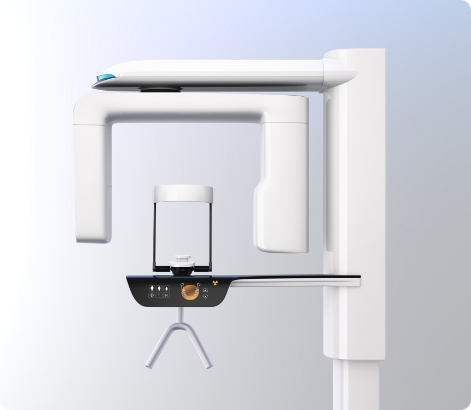
Professional Dental Equipment Guide 2026
Target Audience: Dental Clinics & Distributors
Frequently Asked Questions: Buying an OPG & CBCT Machine in 2026
1. What voltage requirements should I consider when installing an OPG/CBCT machine in 2026?
Most modern OPG and CBCT systems operate on a standard voltage input of 110–120V AC (60Hz) or 220–240V AC (50Hz), depending on regional electrical standards. It is critical to verify the machine’s voltage specification with your local distributor prior to installation. Machines with dual-voltage capability offer greater flexibility, especially for clinics in regions with unstable power supply. Additionally, ensure your facility has a dedicated circuit with stable grounding and consider integrating an uninterruptible power supply (UPS) to protect sensitive imaging components from power surges or outages.
2. Are spare parts readily available for OPG/CBCT machines, and how does this affect long-term operation?
Yes, spare parts availability is a crucial factor in minimizing downtime. In 2026, leading manufacturers such as Carestream, Planmeca, and Vatech maintain global distribution networks and offer extended spare parts support for up to 10 years post-discontinuation of a model. We recommend selecting OEM-approved parts and verifying parts inventory with your distributor before purchase. For distributors, establishing a regional spare parts hub can enhance service response times. Machines with modular designs also simplify part replacement and reduce repair costs over time.
3. What does the installation process for an OPG/CBCT machine involve, and how long does it typically take?
Installation of an OPG/CBCT unit typically includes site preparation, electrical compliance checks, hardware assembly, software configuration, calibration, and staff training. The process usually takes 1–2 working days, depending on room readiness and network integration requirements. Certified field engineers perform the installation to ensure compliance with radiation safety standards (e.g., FDA, CE, or local regulatory bodies). Clinics must provide a shielded room (if required), stable internet for cloud connectivity, and a PACS-compatible environment. Remote pre-installation site audits are now standard in 2026 to streamline the process.
4. What warranty coverage is standard for OPG/CBCT machines in 2026, and what does it include?
As of 2026, most premium OPG/CBCT systems come with a comprehensive 2-year manufacturer’s warranty covering parts, labor, and technical support. High-voltage components (e.g., X-ray tube, detector) are typically covered under extended warranty terms. Some manufacturers offer optional 3–5 year extended warranty packages with preventive maintenance and priority service response. The warranty usually excludes damage from power surges, improper use, or unauthorized repairs. Distributors are advised to clarify warranty transferability for resale and ensure end-users receive digital warranty registration upon installation.
5. How are warranty claims and technical support handled post-installation?
Warranty claims are managed through the manufacturer’s authorized service network. In 2026, most brands offer a 24/7 technical support hotline and remote diagnostics via cloud-connected devices. For hardware issues, field service engineers typically respond within 48 hours in urban areas. Distributors play a key role in coordinating support and maintaining service logs. We recommend clinics enroll in a service agreement for faster resolution and access to firmware updates, software patches, and annual safety inspections—all of which help maintain warranty validity and regulatory compliance.
Need a Quote for Opg Cbct Machine?
Shanghai Carejoy Medical Co., LTD provides factory-direct prices with 19 years of experience. (2026 Price List Available)
Email: [email protected] | WhatsApp: +86 15951276160