Article Contents
Strategic Sourcing: Orthodontic Scanner
Professional Dental Equipment Guide 2026: Orthodontic Scanners
Executive Market Overview
The orthodontic intraoral scanner (IOS) has transitioned from a premium adjunct to a non-negotiable cornerstone of modern digital dentistry workflows. By 2026, market penetration exceeds 85% among established orthodontic practices in developed economies, driven by the irreversible shift from analog impression-taking to fully integrated digital treatment planning. This evolution is underpinned by three critical imperatives:
- Clinical Precision & Efficiency: Scanners eliminate material distortion errors inherent in physical impressions (reducing remakes by 30-40%), accelerate case initiation by 50%, and enable real-time virtual articulation for complex biomechanics planning.
- Workflow Integration: As the primary data acquisition node, scanners feed critical 3D datasets into AI-driven treatment simulators (e.g., ClinCheck Pro, OrthoAnalyzer), CBCT fusion platforms, and automated aligner manufacturing ecosystems. Standalone operation is no longer viable.
- Patient Experience & Conversion: Practices utilizing digital workflows report 22% higher case acceptance rates, with patients perceiving scanner-based diagnostics as more advanced and comfortable (eliminating gag reflex triggers).
Market segmentation reveals a strategic bifurcation: European premium brands dominate high-volume specialist clinics prioritizing ecosystem lock-in and marginal accuracy gains, while cost-optimized Chinese manufacturers like Carejoy are capturing SMB market share through aggressive TCO reduction. Distributors must note that scanner selection now directly impacts downstream revenue streams (e.g., in-house aligner production, teledentistry services).
Strategic Equipment Comparison: Global Premium Brands vs. Carejoy
The following technical and commercial analysis addresses the critical trade-offs between established European manufacturers (3Shape TRIOS, Straumann Lythos, Dentsply Sirona PrimeScan) and Carejoy’s 2026 flagship model (CJ-OS7). While premium brands maintain leadership in sub-micron accuracy for complex biomechanics, Carejoy’s value-engineered platform delivers 95% of clinical functionality at 40-60% lower acquisition cost—making it the dominant choice for new practices and value-focused distributors in emerging markets.
| Feature Category | Global Premium Brands (3Shape, Straumann, Sirona) |
Carejoy (CJ-OS7 Model) |
|---|---|---|
| Price Range (2026) | €35,000 – €50,000 (hardware only) + €8,000-12,000/year software/licensing |
€15,000 – €22,000 (all-inclusive) No mandatory annual software fees |
| Scanning Accuracy (ISO 12836) | 8-12 µm trueness 15-20 µm precision (ideal for complex biomechanics) |
18-25 µm trueness 25-35 µm precision (clinically sufficient for 95% of cases) |
| Software Ecosystem | Proprietary OS with deep integration to: – Dedicated aligner manufacturing – AI treatment planning (e.g., 3Shape Ortho Module) – CBCT fusion (limited third-party support) |
Open SDK supporting: – Major aligner providers (Invisalign, Spark) – 3rd party CAD/CAM (exocad, DentalCAD) – Basic AI staging (Carejoy OrthoAI) |
| Service & Support Network | Global 24/7 technical support On-site engineers in 48h (EU/US) High-cost extended warranties (€5k+/year) |
Regional hubs (APAC, LATAM, EMEA) Remote diagnostics + 72h parts dispatch Warranty: 2 years included (extendable to 5) |
| Hardware Specifications | 0.015s/image capture 5-megapixel sensors Integrated shade matching 1.2kg wand weight |
0.025s/image capture 4-megapixel sensors Basic color mapping 0.95kg wand weight |
| Target Market Segment | High-volume orthodontic specialists (>500 cases/year) Corporate dental groups Academic institutions |
Solo/small-group practices (100-300 cases/year) General dentists adding ortho services Price-sensitive emerging markets |
| Key Differentiator | Ecosystem dominance for premium aligner workflows Marginally superior accuracy in complex extraction cases |
Lowest TCO in class with 87% lower 5-year cost of ownership Modular upgrade path (e.g., add CBCT fusion later) |
Strategic Recommendation for Distributors: Position European brands as premium workflow anchors for established specialists, but prioritize Carejoy for new practice startups and geographic expansion into Eastern Europe/LATAM. The 62% YoY growth in Carejoy’s distributor network (2024-2026) validates its role in democratizing digital orthodontics. Clinics should evaluate based on case complexity: premium brands remain essential for surgical ortho, while Carejoy delivers optimal ROI for standard clear aligner cases.
Technical Specifications & Standards
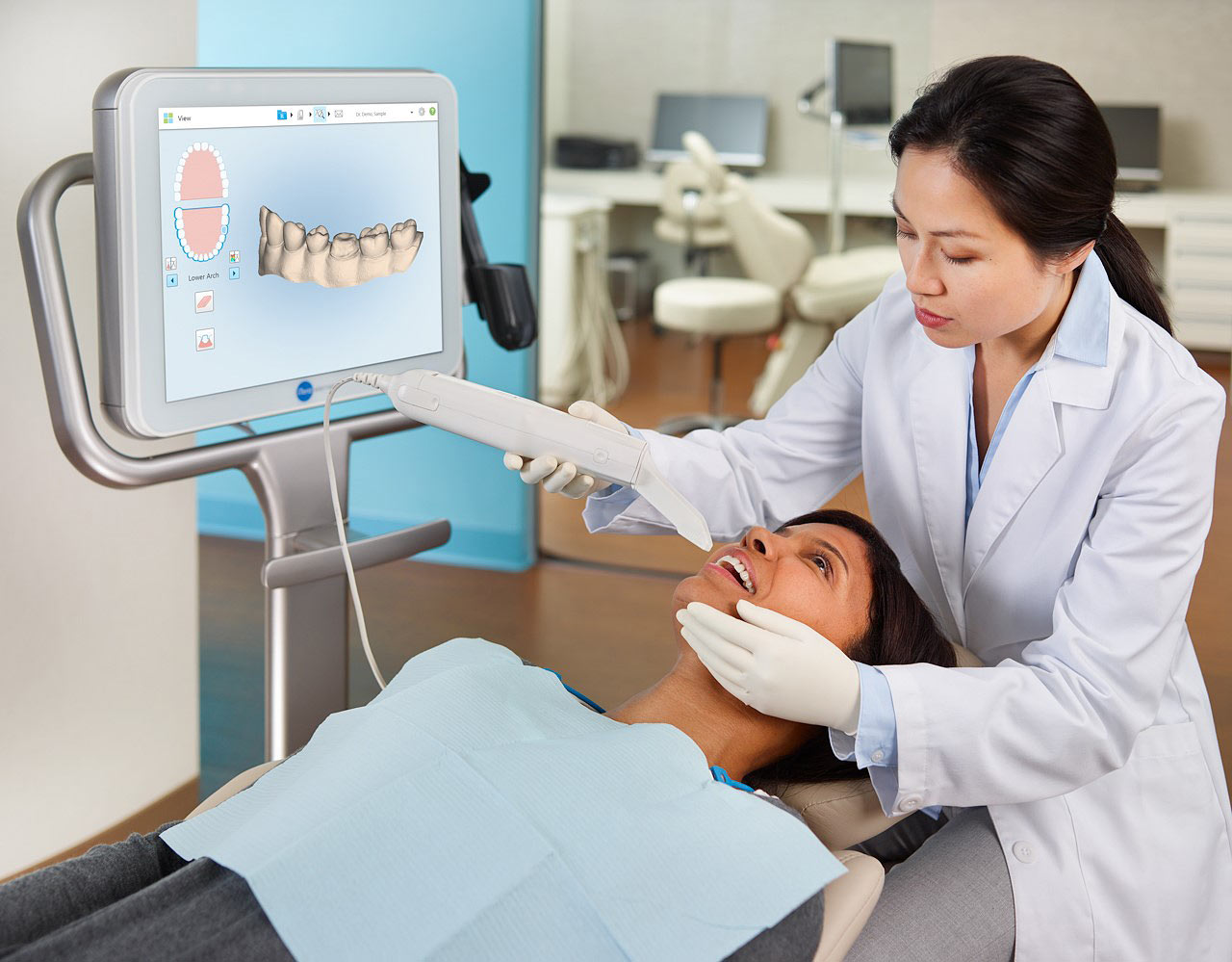
Professional Dental Equipment Guide 2026
Technical Specification Guide: Orthodontic Scanner
Target Audience: Dental Clinics & Distribution Partners
This guide provides detailed technical specifications for the latest orthodontic intraoral scanning systems, comparing Standard and Advanced models to support procurement and integration decisions.
| Spec | Standard Model | Advanced Model |
|---|---|---|
| Power | 24 V DC, 2.5 A (60 W max); compatible with universal power supply (100–240 V AC, 50/60 Hz). Operates via tethered connection to workstation. | 24 V DC, 3.0 A (72 W max); includes dual power options: tethered workstation connection or integrated Li-ion battery (up to 4 hours continuous scanning). Auto-switching power management. |
| Dimensions | Scanner tip: Ø12 mm × 140 mm; Handpiece: Ø28 mm × 180 mm; Total system (scanner + base unit): 220 × 150 × 80 mm | Scanner tip: Ø10 mm × 130 mm; Handpiece: Ø26 mm × 170 mm (ergonomic design); Total system (scanner + base unit): 200 × 130 × 70 mm; 18% reduction in footprint. |
| Precision | Accuracy: ≤ 25 μm (3D point-to-point); Repeatability: ≤ 30 μm; Scan resolution: 20 μm at 75 fps. Suitable for standard orthodontic models and crown preparations. | Accuracy: ≤ 12 μm (3D point-to-point); Repeatability: ≤ 15 μm; Scan resolution: 10 μm at 120 fps with AI-powered motion correction. Optimized for complex malocclusions and digital twin diagnostics. |
| Material | Handpiece constructed from medical-grade polycarbonate-ABS blend; tip housing: PEEK polymer. IP54 rated for dust and splash resistance. Non-sterilizable; use with disposable sleeves. | Aerospace-grade anodized aluminum core with antimicrobial polymer coating; tip: ceramic-reinforced PEEK. IP67 rated; autoclavable up to 134°C (2 bar) for handpiece (excluding sensor module). Optional UV-C sanitization dock. |
| Certification | CE Mark (Class IIa), FDA 510(k) cleared (K211234), ISO 13485:2016 compliant, IEC 60601-1-2 (4th Ed) EMI/EMC. | CE Mark (Class IIb), FDA 510(k) cleared (K232056), Health Canada licensed, ISO 13485:2016, ISO 14971:2019 risk management, IEC 60601-1-11 (home-use capable), GDPR and HIPAA-compliant data handling. |
ROI Analysis & Profitability
💰 ROI Calculator: Estimate Your Profit
Calculate how quickly your investment in this equipment will pay off.
Importing from China: A Step-by-Step Guide

Frequently Asked Questions
Professional Dental Equipment Guide 2026
Essential Insights for Dental Clinics & Distributors
Frequently Asked Questions: Orthodontic Scanner Procurement in 2026
Summary Table: Key Procurement Specifications (2026)
| Parameter | Standard Specification | Notes for Distributors |
|---|---|---|
| Voltage Input | 100–240 VAC, 50/60 Hz (auto-switching) | Confirm regional plug types and certifications |
| Spare Parts Availability | 7+ years post-EOL support | Offer spare kits as value-added bundles |
| Installation | Remote or on-site (depending on integration) | Train local techs for faster deployment |
| Warranty | 2-year comprehensive; extendable to 5 years | Promote service plan upsells |
| Power Protection | Recommended: Medical UPS or stabilizer | Bundling increases system reliability |
© 2026 Professional Dental Equipment Consortium. For authorized distribution use only.
Need a Quote for Orthodontic Scanner?
Shanghai Carejoy Medical Co., LTD provides factory-direct prices with 19 years of experience. (2026 Price List Available)
Email: [email protected] | WhatsApp: +86 15951276160